Baby Humidifier UK: Do You Need One? NHS Safety Guide
Do you need a baby humidifier this winter? NHS cold advice doesn't recommend one. We explain scald, mould and overheating risks, compare types, and give a safer checklist if you still want one.
You do not need a baby humidifier, and NHS cold and cough advice for babies doesn't recommend one. If your baby has a blocked nose, saline drops, fluids and a safely cool room do the job. If you still want a baby humidifier, buy a simple cool-mist model, keep it out of reach, and clean it often.
What the NHS actually says about colds and stuffy noses
The NHS advice for colds in children is short and practical: make sure your child drinks plenty of fluids, and use saline nose drops to loosen dried snot and relieve a stuffy nose (a pharmacist, GP or health visitor can advise on them). Children's paracetamol or ibuprofen can help if they have a high temperature and seem distressed. Most colds in younger children get better within about 2 weeks. A humidifier isn't part of that list, so treat one as an optional comfort extra rather than treatment. Our guide to baby colds and blocked noses walks through the full NHS advice and the warning signs.
There's one firm warning worth knowing. For croup, the NHS says not to put your child in a steamy room or get them to inhale steam. That matters because the old "run a hot shower and sit in the bathroom" advice still circulates in parent groups. If your child has a barking cough, read our croup guide and follow the NHS steps instead.
Why parents buy one anyway
Winter in a UK home usually means central heating, which can make bedroom air feel dry, and a baby who is snuffly at 3am. A humidifier looks like a gentle, drug-free fix. We understand the appeal. The honest position, though, is that the NHS pages for colds, croup and bronchiolitis don't list a humidifier as something to use, so any benefit is comfort rather than proven treatment. That doesn't make it dangerous when used carefully; it means you shouldn't feel guilty about skipping one, and you shouldn't delay seeking help because the machine is running.
The risks to weigh before you buy
Scalds from steam and hot water
The NHS explains that scalds are caused by hot liquids or steam. Warm-mist and steam vaporisers heat water, which means a hot surface, hot water in a tank and a cable, all within reach of a curious baby or toddler as soon as they start to crawl. A cool-mist unit removes the heating element, but it still holds water and has a cable, so placement matters either way.
Damp, mould and a cold room
Adding moisture to a bedroom that already has condensation, cold walls or poor ventilation is the wrong direction. GOV.UK guidance on damp and mould in the home treats excess moisture as the root of mould growth and the health risks that come with it. If your nursery windows stream with water in the morning, you have too much moisture, not too little; our damp and mould in the nursery guide explains what to do first.
Dirty tanks
Standing water in a tank is something to keep clean. Follow the manufacturer's cleaning and descaling instructions to the letter, empty and dry the tank between uses, and use the water type the instructions specify. If you can't commit to a daily routine, that's a good reason not to buy one.
Overheating
The Lullaby Trust and NHS both say to keep a baby's room at about 16 to 20°C, because the risk of sudden infant death syndrome is higher in babies who get too hot. A warm-mist humidifier or any heater running in a small room can push temperatures up. Use a room thermometer rather than guessing; our winter room temperature guide explains how to dress your baby for sleep at each temperature. The NHS adds that babies should never sleep next to a radiator, heater or fire.
Humidifier types compared
| Type | How it works | Main concern | Typical UK price* |
|---|---|---|---|
| Cool-mist ultrasonic | Vibrating plate makes a fine mist, no heating | Tank hygiene, mist can leave residue if the water is hard | About £20 to £60 |
| Evaporative | Fan blows air over a wet wick | Wick needs replacing, fan noise | About £40 to £100 |
| Warm-mist / steam | Heats water to produce vapour | Hot water and steam are a scald risk; adds heat to the room | About £25 to £70 |
| Hygrometer only | Measures humidity, no moisture added | None, but it only tells you what is happening | About £5 to £15 |
*Typical high-street and online ranges, which vary by retailer and change often; check current prices before buying. If you do buy, choose a model with UK plug and safety marking from a recognised retailer; see our advice on buying baby gear safely, and avoid unknown marketplace sellers.
If you decide to use one: a safer checklist
- Pick cool-mist, not steam. It avoids a heating element and hot water.
- Place it well out of reach. Put it on a stable shelf or table on the far side of the room, never inside or on the cot, and route the cable where nobody can pull or reach it.
- Keep it away from the cot. Nothing should be attached to or draped over the cot, and mist shouldn't land on bedding.
- Check the room with a thermometer. Stay within about 16 to 20°C, as the Lullaby Trust recommends.
- Watch for condensation. If windows or walls get wet, switch it off and ventilate.
- Clean it daily or as the manufacturer instructs. Empty, rinse and dry the tank.
- Turn it off when the cold has passed. There is no benefit to running one all winter.
What works better for a snuffly baby
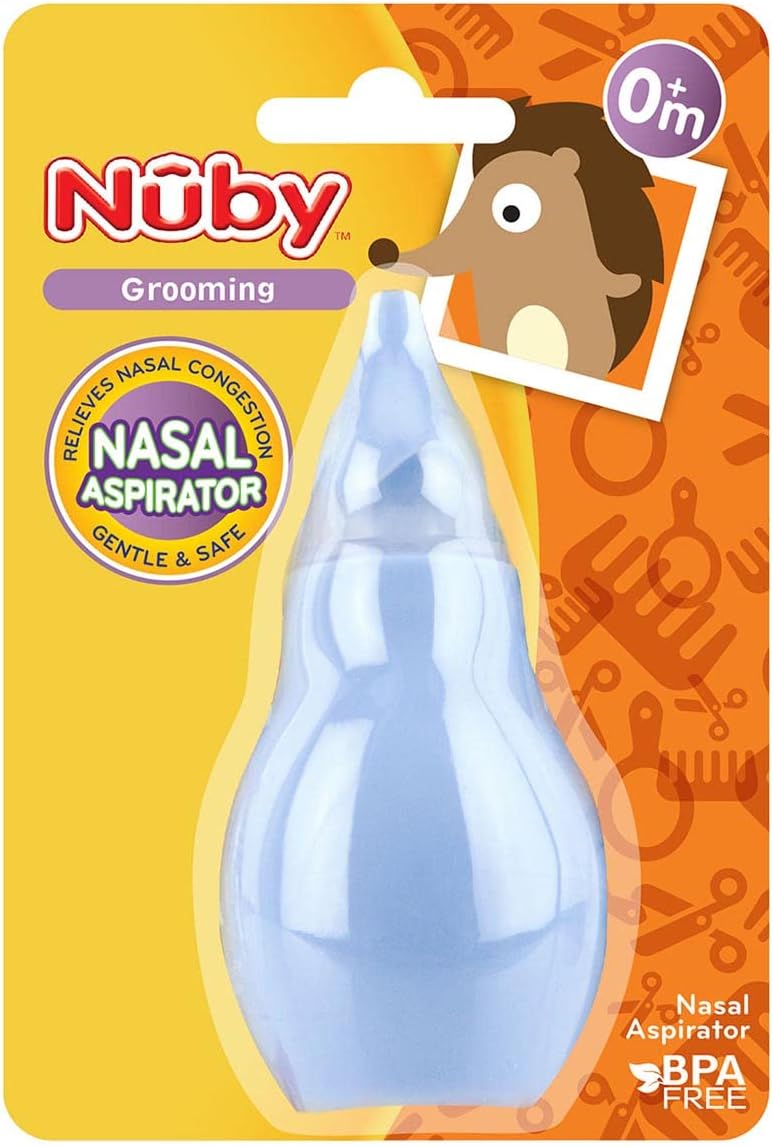
Start with the NHS basics. Offer feeds more often if your baby will take them, because a blocked nose makes feeding tiring. Use saline drops before feeds and sleep as the NHS suggests. A gentle nasal aspirator can help some families clear the nose after saline drops, but it is a convenience, not a requirement. Keep the room within 16 to 20°C and keep your baby on their back to sleep, on a firm flat mattress, in line with the Lullaby Trust safer sleep advice. Put a few essentials in your baby first aid and health kit and add them to your checklist so you aren't hunting for them in the night.
When to get help, humidifier or not
A humidifier will not fix a breathing problem. The NHS says to call 999 or go to A&E if your child is struggling to breathe: look for grunting, the tummy sucking in under the ribcage, or blue, grey, pale or blotchy skin, lips or tongue. Seek urgent advice from NHS 111 if you are worried, and note that for children under 5 you can call 111 for advice. Our guides to bronchiolitis and fever list the signs in more detail. Don't wait for a machine to work if you are worried about your baby's breathing.
The verdict
Skip the humidifier unless your baby is comfortable with it and you will clean and place it carefully. The cheapest useful purchase is a room thermometer, not a humidifier, because it tells you whether the room is the 16 to 20°C that the Lullaby Trust and NHS recommend. If condensation or mould is your real problem, fix ventilation and damp first. Everything else is optional, and your pharmacist or health visitor can help if your baby's cold is dragging on.
Mentioned in this guide
Frequently asked questions
Is a humidifier safe for a baby's room?+
It can be if used carefully, but the NHS doesn't list humidifiers in its advice for colds, croup or bronchiolitis, so it is an optional comfort item. Choose a cool-mist model rather than steam, because the NHS explains that scalds are caused by hot liquids or steam. Keep the unit and its cable well out of reach, away from the cot, clean the tank as the manufacturer says, and use a room thermometer so the room stays at about 16 to 20°C as the Lullaby Trust recommends. Switch it off if windows become wet with condensation.
Does a humidifier help a baby with a blocked nose?+
The NHS advice for colds in children suggests plenty of fluids and saline nose drops to loosen dried snot and relieve a stuffy nose. It doesn't mention humidifiers, so any benefit is comfort rather than proven treatment. Ask a pharmacist, GP or health visitor about saline drops. Most colds in younger children get better within about 2 weeks. If your baby is struggling to feed, breathing fast or seems unwell, get advice from NHS 111 rather than relying on a machine.
Should I sit my child in a steamy bathroom for croup?+
No. The NHS says not to put your child in a steamy room or get them to inhale steam if they have croup. Keep them calm, because crying can make symptoms worse, give plenty of fluids, check on them regularly including at night, and give paracetamol or ibuprofen for a high temperature or discomfort. Call 999 or go to A&E if your child is struggling to breathe, has grunting noises, a sucking-in tummy under the ribcage, or blue, grey, pale or blotchy skin.
Can a humidifier make the room too warm or damp?+
Yes, it can. Warm-mist and steam units add heat, and the Lullaby Trust and NHS say babies' rooms should stay at about 16 to 20°C because the risk of sudden infant death syndrome is higher in babies who get too hot. Extra moisture can also worsen condensation, and GOV.UK guidance links excess moisture with mould growth. If windows stream with water or you notice mould, stop using it, ventilate and tackle the damp problem first.
Sources
Related guides
Britax Römer SMILE Pushchair Recall: Check Front Wheels
OPSS and Britax Römer have recalled the SMILE III, SMILE 4 and some SMILE 5Z pushchairs because the front wheel locking mechanism can wear and the wheel may detach. Here is which models are affected, the two-minute wheel check, and what to do next.

Christmas Dinner for Babies and Toddlers: What's Safe (UK)
A plate-by-plate guide to Christmas dinner for babies and toddlers in the UK, built on NHS advice: which foods are fine, what to leave off (honey, salty gravy, whole nuts), how to cut food safely and what to do if baby chokes.

Urban Arrow Cargo Bike Seat Post Replacement: UK Check
On 6 November 2026 the OPSS published a safety report on Urban Arrow cargo bikes fitted with a Satori Trident seat post, where a clamp bolt can break and the saddle detach. Models from 2016 to 2022 are in a free replacement programme. Here is what the notice says and what family-bike owners should do.

Written by
Sepehr
Software engineer, soon-to-be dad, uncle to four — the tech-obsessed half of the two of us testing this stuff. Currently building this site with my wife, ahead of our own baby arriving.