Baby Fever: NHS Guidance on When to Get Help
A fever in a baby is 38°C or higher. The NHS says under 3 months, get medical advice straight away; at 3 to 6 months the threshold is 39°C. Here are the red flags, what to do at home and the paracetamol and ibuprofen age rules.
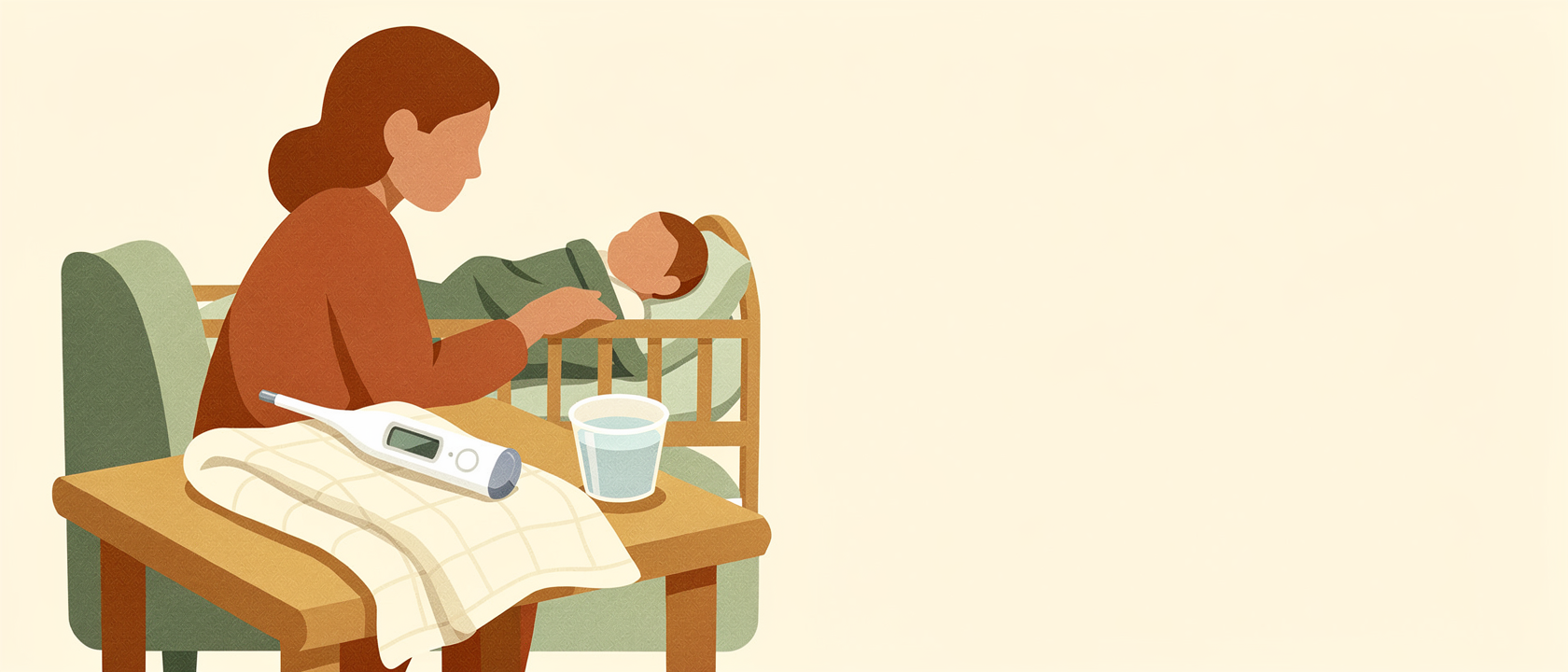
A fever in a baby means a temperature of 38°C or higher, and the NHS says the age of your baby decides how urgently you need help. Under 3 months, 38°C or above means getting medical advice from a GP or NHS 111. From 3 to 6 months, the NHS threshold is 39°C or above. For older babies and toddlers, most fevers settle at home with fluids and comfort, but there are clear red flags that need urgent care.
Autumn is when coughs, colds and nursery bugs return, so it is worth knowing the numbers before you need them at 2am. This guide follows the NHS advice on high temperature in children, which is the source for every health point below. It is general information, not a substitute for advice from a GP, NHS 111 or a health visitor.
What counts as a fever in a baby?
The NHS defines a high temperature in children as 38°C or more. It also says a temperature usually returns to normal within 1 to 4 days. A baby can feel hot, look flushed or sweaty, or seem more unsettled than usual, but the only reliable way to know is to take their temperature.
How to take a baby's temperature
The NHS advises using a digital thermometer under the arm:
- Place the tip in the top of the armpit.
- Gently close your baby's arm over it, keeping it pressed against their body.
- Leave it in place for as long as the thermometer's instructions say.
If your baby has just had a bath or been wrapped in blankets, the NHS suggests waiting a few minutes before checking again, so you do not get a falsely high reading. A digital thermometer is a small, cheap item worth adding to your baby first aid kit before you need it.
When to get help: what the NHS says by age
| Situation | NHS advice |
|---|---|
| Under 3 months with a temperature of 38°C or higher | Get medical advice: GP or NHS 111 |
| 3 to 6 months with a temperature of 39°C or higher | Get medical advice: GP or NHS 111 |
| Any age, with a high temperature and a rash | Get medical advice |
| Fever lasting 5 days or more | Get medical advice |
| Not feeding or eating well, unusually behaving, or signs of dehydration | Get medical advice |
The NHS lists signs of dehydration as fewer wet nappies than usual, sunken eyes and no tears when crying. If your baby is in any of the groups above, ring NHS 111 or your GP practice rather than waiting to see whether the fever passes.
When to call 999 or go to A&E
The NHS says to call 999 or go to A&E if a child with a high temperature has any of the following:
- A stiff neck.
- A rash that does not fade when you press a glass against it (the "glass test").
- Discomfort when looking at bright lights.
- A first-ever seizure (fit).
- Cold hands and feet, or blotchy, blue, grey or pale skin.
- Being very drowsy, hard to wake, or extremely agitated.
- Difficulty breathing.
- Being floppy or unresponsive.
If you are unsure whether it is an emergency, trust your instincts and call. Nobody will mind a precautionary call about a poorly baby.
What to do at home when a baby or toddler has a fever
If your child is over the age thresholds above and none of the red flags apply, the NHS suggests looking after them at home:
- Offer plenty of fluids. If you are breastfeeding, keep offering feeds as often as your baby wants them.
- Look out for dehydration (see the signs above).
- Offer food if they want it, but do not force it.
- Check on them regularly, including through the night.
- Keep them at home until they feel better.
Equally important is what not to do. The NHS says not to undress your child or sponge them down to cool them, and not to cover them in too many clothes or bedclothes. Dress them lightly in a breathable sleepsuit, and keep following our safer sleep guidance at night rather than adding extra layers to "sweat it out".
Paracetamol and ibuprofen: the NHS age rules
Medicine is for comfort, not for bringing the number down. The NHS says you can give paracetamol or ibuprofen if your child seems distressed, but check the product is suitable for their age first, and follow the packet or your pharmacist's dosing advice. Key NHS cautions:
- Paracetamol should not be given to babies under 2 months; check with a doctor first.
- Ibuprofen should not be given to babies under 3 months or under 5kg, and needs care (check with a doctor first) for children with chickenpox, dehydration, or asthma.
- Never give aspirin to children under 16.
- Do not alternate paracetamol and ibuprofen unless a health professional has told you to.
We cover the paracetamol question for the youngest babies in more detail in can you give a newborn Calpol?
Fever, teething and vaccinations
Do not assume a high temperature is down to teething or a recent jab: the NHS advice above applies whatever the likely cause, so use the age thresholds and red flags. Our guide to teething signs and what actually helps covers what is typical. If your baby has recently had jabs, see our UK vaccination schedule explained and ask your health visitor, GP or pharmacist how to manage a temperature afterwards, particularly for a baby under 3 months.
Keeping a record helps
Note the temperature, the time you took it, what your baby has had to drink, the number of wet nappies and any medicine given, with the time and dose. Having this written down makes a call to NHS 111 or a GP appointment quicker and more useful, and helps you spot whether things are improving over the 1 to 4 days the NHS says a fever usually lasts.
A quick fever checklist to keep handy
- Digital thermometer that works (check the battery).
- Your GP practice number and NHS 111 saved in your phone.
- A baby-suitable paracetamol or ibuprofen suspension in date, and a dosing syringe.
- Light sleepsuits and a room that is comfortable, not hot.
- A clear head on the numbers: 38°C under 3 months, 39°C at 3 to 6 months.
Frequently asked questions
What temperature is a fever in a baby?+
The NHS says a high temperature in children is 38°C or more. For babies under 3 months, that means getting medical advice from a GP or NHS 111.
When should I take my baby to A&E with a fever?+
The NHS says to call 999 or go to A&E if a feverish child has a rash that does not fade under a glass, a stiff neck, a first seizure, breathing difficulty, cold or blotchy skin, or is very drowsy or floppy.
Should I undress my baby to bring a fever down?+
No. The NHS says not to undress your child or sponge them down to cool them, and to avoid too many clothes or bedclothes.
Can I give a baby paracetamol or ibuprofen for a fever?+
The NHS says paracetamol should not be given under 2 months and ibuprofen not under 3 months or under 5kg, unless a doctor advises. Never give aspirin to under-16s.
Sources

Written by
Sepehr
Software engineer, soon-to-be dad, uncle to four — the tech-obsessed half of the two of us testing this stuff. Currently building this site with my wife, ahead of our own baby arriving.