Christmas Dinner for Babies and Toddlers: What's Safe (UK)
A plate-by-plate guide to Christmas dinner for babies and toddlers in the UK, built on NHS advice: which foods are fine, what to leave off (honey, salty gravy, whole nuts), how to cut food safely and what to do if baby chokes.
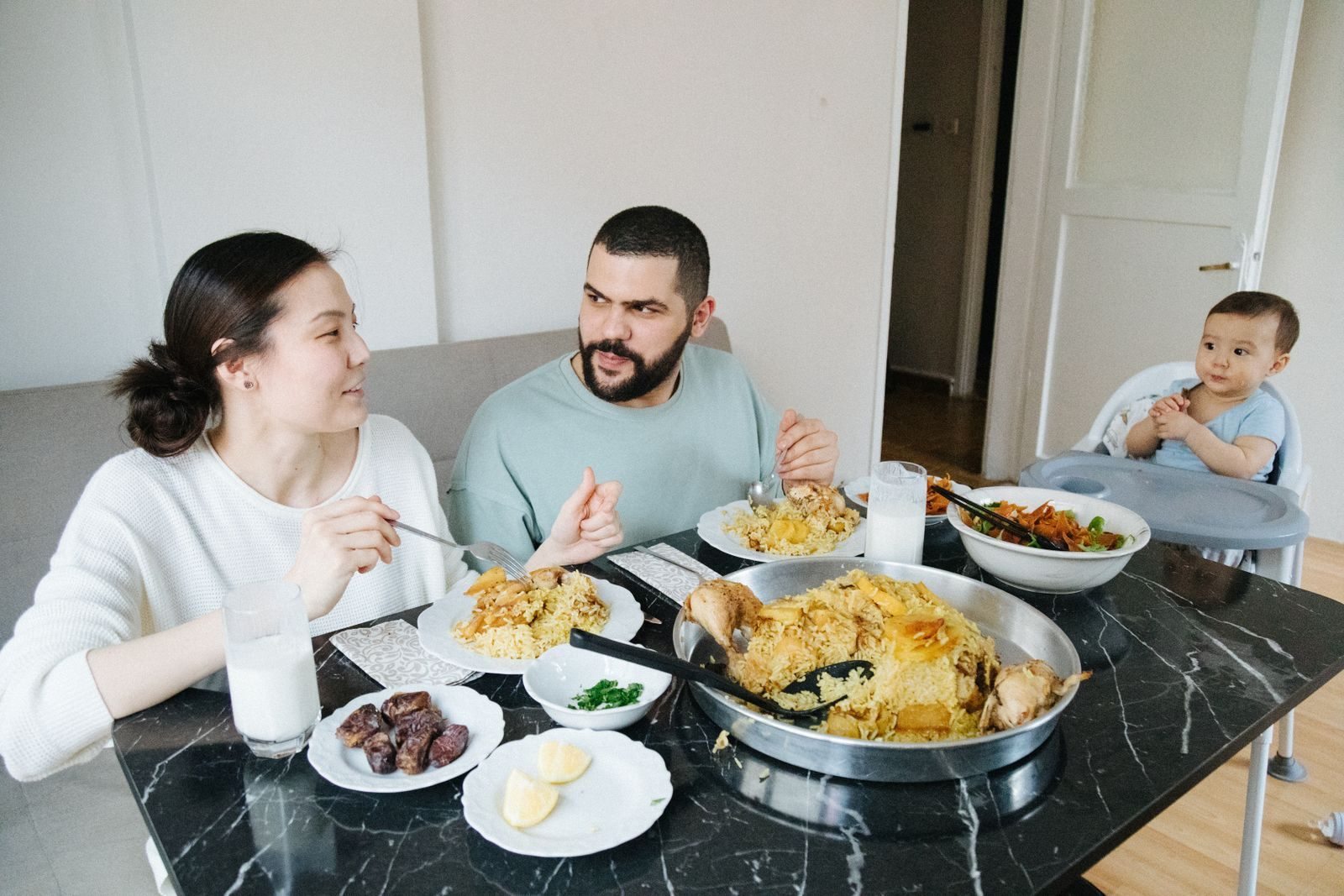
Christmas dinner for babies is mostly fine: soft roast turkey, well-cooked vegetables and unsalted potato can all go on a baby's tray from about six months. The NHS hot spots are honey, added salt, gravy and stock, whole nuts, hard raw veg, whole grapes and cranberry-sized round foods. This guide shows what to plate, and what to leave off.
Christmas lunch is a gift for baby-led weaning: lots of soft, plain, family-sized food on the table at once. It is also the meal where the saltiest, stickiest and riskiest foods of the year all arrive together, usually while six adults are talking and nobody is watching the high chair. Below is a plate-by-plate walk-through built on NHS weaning guidance, with a few practical rules for the day itself.
The short version: what to serve and what to skip
Babies who have started solids (the NHS says around six months, see our when to start weaning guide) can share most of the meal, as long as you take their portion out before you season it, and prepare each food in a shape they can safely hold and chew. Use this table as a quick check at the stove.
| Christmas food | Baby (6-12 months) | Toddler (1-4 years) | How to serve it |
|---|---|---|---|
| Roast turkey (white or dark) | Yes | Yes | Fully cooked, no skin, no bones; finger-width strips or shredded and moistened with a little unsalted cooking liquid or breast/formula milk |
| Roast potatoes, mash, parsnips, carrots | Yes | Yes | Cook until very soft; take out before adding salt, butter-heavy glazing, honey or maple glaze |
| Brussels sprouts, broccoli, peas | Yes | Yes | Well cooked and soft; halve or quarter sprouts; squash peas |
| Pigs in blankets, stuffing | Better avoided | Occasionally, small pieces | Both are salty; the NHS lists sausages and bacon among salty foods to limit |
| Gravy, bread sauce, stock | Unsalted only | Unsalted only | The NHS says not to use stock cubes or gravy because they are often high in salt; make a separate unsalted version |
| Honey- or maple-glazed veg or ham | No honey under 1 | Fine over 1 in small amounts | The NHS says do not give honey until over 1 year old |
| Cranberry sauce | Tiny taste | Small amount | Usually sugary; the NHS advises avoiding sweeteners and sugar in food for under-5s where you can |
| Nuts (nut roast, mixed nuts bowl) | Only finely ground | Only ground or crushed | The NHS says whole nuts should not be given to under-5s because they can choke on them |
| Christmas pudding, mince pies, cake | Skip or tiny taste | Small slice, no alcohol | Very sweet and often high in saturated fat; check for whole nuts and sticky dried fruit |
Start with the real dealbreakers
Honey
The NHS is blunt: do not give honey to a child until they are over one year old. That includes honey-roast ham, honey-glazed parsnips and carrots, and honey mustard dressings. The NHS page cites infant botulism as the reason. Check labels on shop-bought glazed meats and sauces; if honey is listed, it is not for the baby's plate.
Salt, gravy and stock
The NHS says babies should not eat much salt because it is not good for their kidneys, and not to add salt to food or cooking water. It also names stock cubes and gravy as foods to avoid giving because they are often high in salt, and lists bacon, sausages, crisps and crackers among salty foods. Christmas dinner is built from precisely these things. The easy fix is to cook the baby's vegetables, potatoes and turkey in plain unsalted water or steam them, set aside a small portion, and then season the family's food.
Whole nuts and hard raw foods
According to the NHS, whole nuts should not be given to children under five because they can choke on them, though nuts can be included from the start of weaning if they are crushed or ground and added to food. The NHS first-solid-foods page also says to avoid hard foods like whole nuts or raw carrot or apple. That means the bowl of mixed nuts on the coffee table, the crunchy crudités platter, and chunks of raw celery or carrot are all things to place out of reach of a crawling or toddling child.
Small, round foods
The NHS advises cutting small, round foods such as grapes and cherry tomatoes into quarters. At Christmas that also applies to sprouts and large peas on the fork-end of a toddler's meal, chipolata slices, cocktail sausages, olives with stones, and anything on a cheeseboard that is cut into small cubes. Remove hard pips and stones from fruit and bones from meat or fish. Cocktail sticks and the little paper umbrellas from drinks do not belong anywhere near a child's tray.
Making a baby-safe plate in ten minutes
If you are cooking for a crowd, you do not need a second meal, only a separate pan. A plan that works well on the day:
- Before you season anything, scoop out a baby portion of boiled or steamed carrots, parsnips, broccoli and potato.
- Carve the turkey first. Take a few slices of fully cooked breast or leg before it has been drizzled with gravy. Remove skin, which is salty and fatty, and check for bones.
- Cut for the stage. The NHS suggests finger foods that are soft or cooked and can be cut into pieces big enough for your baby to hold in their fist, around the size of your own finger. For babies who are not yet picking up food well, mash or shred and offer on a preloaded spoon.
- Make a quick unsalted gravy. Simmer a spoonful of the vegetable cooking water with a little unsalted turkey juice and thicken it lightly. Skip stock cubes.
- Cool it to lukewarm. The NHS says to cook food thoroughly and cool it until lukewarm before giving it to your child. Test a bit on your wrist, and warn relatives that a plate straight from the oven will be too hot.
- Offer a drink of water in an open or free-flow cup alongside, rather than squash or sugary fizz.
The kit that helps is cheap. At the time of writing, a silicone catch-bib such as the Bumkins silicone bib and an open cup like the Doidy cup typically cost somewhere in the region of £6 to £12 each, and a suction plate is similar. Our weaning cups and bibs comparison covers the options. If you are still deciding whether the baby will sit at the table at all, our weaning highchair picks and the full highchair comparison explain which models fold small enough for a Christmas dining room.
Choking and gagging: know the difference before the day
The NHS says choking is different from gagging, and that babies often gag when they first meet solid foods. Gagging is noisy, with watering eyes, a pushed-out tongue, and sometimes retching, and the baby usually clears it themselves. Choking is when the airway is blocked. The NHS choking page says that if your child suddenly starts coughing, is not ill and has been eating, there is a good chance they are choking, and that a cough which is silent or a child who cannot breathe in properly means shouting for help immediately.
For a baby under one, the NHS advises sitting down, laying the baby face down along your thigh or forearm supporting their head and neck, and giving up to five sharp back blows between the shoulder blades with the heel of your hand. If that does not work, turn the baby face up along your thighs, head lower than their feet, and give up to five chest thrusts using two fingers in the middle of the chest just below the nipple line. Alternate the two and call 999 if the blockage does not come out, keeping the cycle going until help arrives. It is worth reading the NHS page properly, and a hands-on baby first aid class is a useful use of an evening before Christmas. If you are building a kit at the same time, our baby first aid kit checklist lists what to keep to hand.
The NHS also says to always stay with your baby when they are eating. At a busy Christmas table, name one adult as the person watching the high chair for each course, then hand over the job. It is the simplest and most effective safety measure of the day.
Food safety on the day: leftovers, reheating, and eggs
Christmas lunch tends to sit out for a long time. The NHS food safety page says to cool food as quickly as possible, ideally within one to two hours, then put it in the fridge or freezer, and eat chilled food within two days. It adds that reheated food should be steaming hot all the way through and then cooled again before serving, and that food should not be reheated more than once. It also says not to save and reuse food that your child has left on their plate, so if baby has been sharing turkey with a spoon that has been in their mouth, bin what is left.
Rice is not usually on a British Christmas plate, but it appears in leftover turkey risotto and curry. The NHS says to cool rice as quickly as possible, within one hour, eat it within 24 hours from the fridge, and never reheat it more than once.
Eggs turn up in homemade bread sauce, Yorkshire puddings, meringues and eggnog-style desserts. The NHS says British Lion eggs (marked with the red lion stamp) are fine for babies raw or lightly cooked, including in homemade mayonnaise, while other hens' eggs should be cooked until the white and yolk are solid. Check cheeses too: the NHS says pasteurised full-fat cheese such as mild cheddar is fine from six months, but to avoid mould-ripened soft cheeses like brie or camembert, adding that baked brie is a safer option. That is a handy note for the cheeseboard.
Allergies: do not use Christmas to introduce everything at once
If baby has not yet tried egg, peanut, wheat or fish, the NHS advises introducing allergens one at a time so you can spot any reaction, with nuts and peanuts served finely ground or as nut butter. It also says allergic reactions usually happen within minutes but can take up to two hours, and that anaphylaxis is a medical emergency needing urgent treatment. That is why a first taste of a new allergen should not be on 25 December with a house full of guests, when you may be travelling, away from your GP, or distracted. Trial new foods earlier in the month, at home, in the morning, and stick to familiar foods on the day itself.
Pouches, purees and shortcuts that are fine
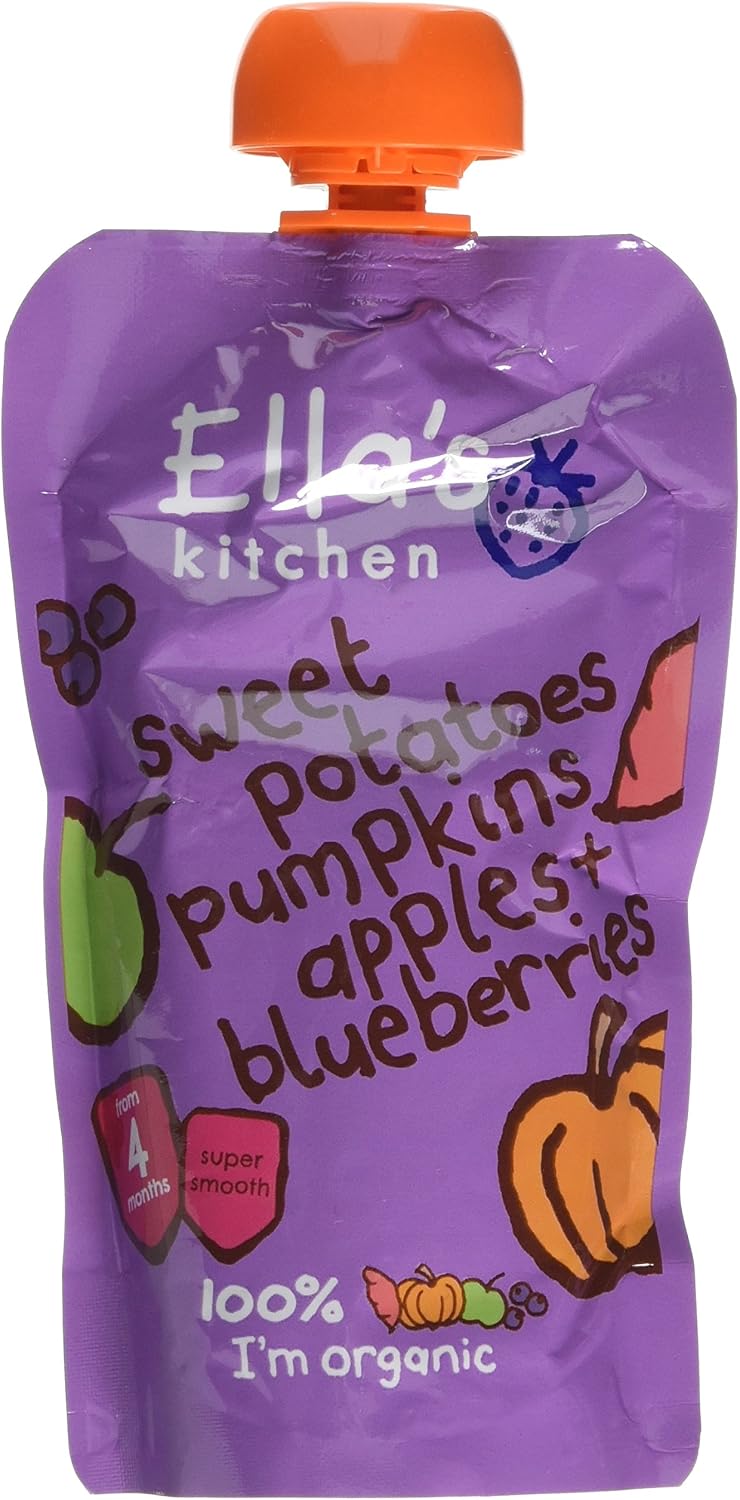
You do not need to cook a separate meal. A pouch such as Ella's Kitchen first tastes is a perfectly reasonable backup if the baby is overtired, or if you are on the road, and our baby food pouch guide compares UK options. If you are still deciding how to feed the baby in general, our baby-led weaning vs purees piece explains how the two approaches fit together, and many families mix them. For a travelling family, put the weaning kit on your personal checklist so the bib, cup and portable sterilised spoon do not get left behind at home.
Common Christmas mistakes
- Adding gravy before taking the baby's portion. It is much harder to rinse salt off than to leave it out.
- Letting guests hand over food. Relatives mean well. Tell them in advance that the baby only eats what is on the baby's tray, and that grapes, nuts and sweets are off the menu.
- Leaving small foods on low tables. Nut bowls, chocolate coins, sweets and dried fruit are choking and sugar hazards within a crawler's reach. For the rest of the room, see our guides to tree and decoration safety and safe Christmas gifts.
- Letting a toddler graze while walking about. The NHS says to stay with children while they eat. Keep eating sitting down, at the table.
- Introducing too many new foods on the day. A reaction is harder to read when several things are new.
Frequently overlooked: toddlers have limits too
The same rules apply well beyond the first birthday. The NHS says honey is fine after one, but that whole nuts should wait until five, that children aged four or younger should avoid food and drink with added sweeteners or sugar where possible, and that saturated-fat foods like crisps, biscuits and cakes should not be given in large amounts. Realistically a toddler will have a sliver of Christmas pudding and a chocolate. The goal is not perfection but to keep the highest-risk items (whole nuts, whole grapes, honey for under-ones) off the plate, and to keep a grown-up sitting next to them while they eat.
Mentioned in this guide
Frequently asked questions
Can my baby eat Christmas dinner?+
Yes, from around six months once they have started solids, most of a Christmas dinner can be adapted. Plain roast turkey without skin or bones, well-cooked vegetables and potato are all suitable. Take the baby's portion out before adding salt, gravy or glaze, cut food into finger-sized strips, and cool it to lukewarm. Avoid honey for under-ones, whole nuts, and salty extras such as pigs in blankets, stock-based gravy and stuffing, which the NHS says are high in salt or choking risks.
Can babies have gravy at Christmas?+
Only an unsalted version. The NHS says not to use stock cubes or gravy for babies because they are often high in salt, and that babies should not eat much salt because it is not good for their kidneys. Make a quick baby-friendly sauce by simmering a little vegetable cooking water with unsalted turkey juices, then thickening lightly. Alternatively, moisten the turkey with breast milk or formula. Set aside baby's portion before seasoning the family's food, so you do not need to make anything separate.
Can babies eat Christmas pudding or mince pies?+
They are better left for toddlers, and in tiny amounts. Both are very sweet, and the NHS advises avoiding food and drink with added sugar for children aged four or younger where possible. They can also contain whole nuts, sticky dried fruit and alcohol. If an older toddler has a small taste, check for whole nuts, keep the portion small, and sit with them. A mashed banana or stewed apple with a little cinnamon is a simpler pudding for a baby.
What Christmas foods are choking hazards for babies and toddlers?+
Whole nuts, whole grapes, cherry tomatoes, olives with stones, cocktail sausages, hard raw carrot or apple and anything with bones, pips or stones. The NHS says whole nuts should not be given to under-fives and advises cutting small round foods such as grapes and cherry tomatoes into quarters. Keep nut bowls, sweets and chocolate coins out of reach, remove cocktail sticks, and make sure a named adult is watching the child whenever they eat.
Sources
Related guides
Baby Humidifier UK: Do You Need One? NHS Safety Guide
Do you need a baby humidifier this winter? NHS cold advice doesn't recommend one. We explain scald, mould and overheating risks, compare types, and give a safer checklist if you still want one.
Britax Römer SMILE Pushchair Recall: Check Front Wheels
OPSS and Britax Römer have recalled the SMILE III, SMILE 4 and some SMILE 5Z pushchairs because the front wheel locking mechanism can wear and the wheel may detach. Here is which models are affected, the two-minute wheel check, and what to do next.
Urban Arrow Cargo Bike Seat Post Replacement: UK Check
On 6 November 2026 the OPSS published a safety report on Urban Arrow cargo bikes fitted with a Satori Trident seat post, where a clamp bolt can break and the saddle detach. Models from 2016 to 2022 are in a free replacement programme. Here is what the notice says and what family-bike owners should do.

Written by
Sepehr
Software engineer, soon-to-be dad, uncle to four — the tech-obsessed half of the two of us testing this stuff. Currently building this site with my wife, ahead of our own baby arriving.