Baby Cold: Blocked Nose Relief & When to Worry (NHS)
Most baby colds clear up within 2 weeks, according to the NHS. Here is what the NHS advises for a blocked nose, which medicines to avoid, how long a cough lasts and the signs that mean calling NHS 111 or 999.
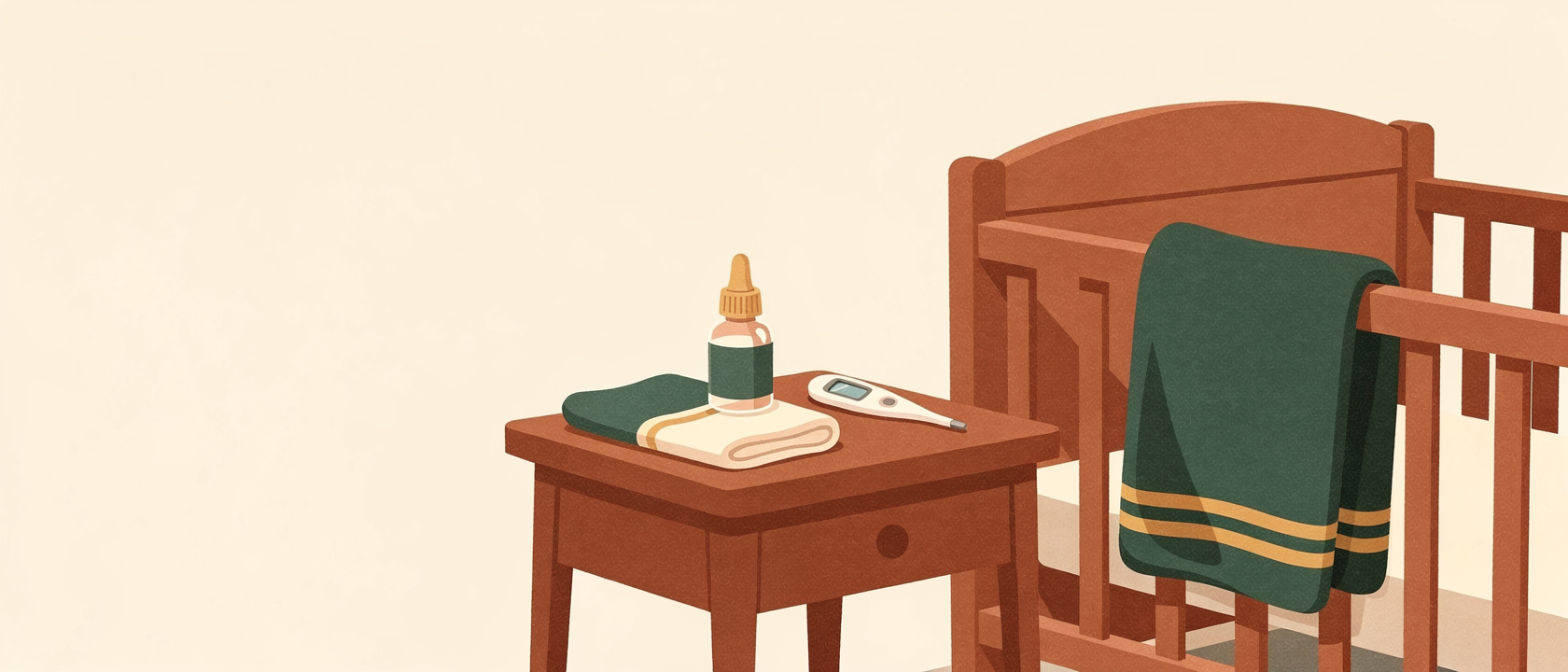
A baby cold is usually mild and clears up on its own: the NHS says most colds in younger children get better within 2 weeks. The parts that worry parents are the blocked nose, the broken sleep and knowing when a cold has turned into something that needs a call. This guide sets out what the NHS advises for a baby cold, what you can do at home, and the signs that mean ringing NHS 111 or 999.
Autumn and winter bring coughs and colds back as nurseries and playgroups restart, so it is worth knowing the basics before the first one arrives. This is general information based on NHS guidance, not a substitute for advice from a GP, pharmacist, health visitor or NHS 111.
What does a cold look like in a baby?
The NHS describes a stuffy nose with dried snot, a cough caused by mucus trickling down the back of the throat, and sometimes a high temperature (NHS). In a baby you may also notice noisier breathing through the nose, and feeding or sleeping being a little harder than usual because they cannot breathe easily through a blocked nose.
How long does a baby cold last?
The NHS says most colds in younger children get better within 2 weeks. A cough can hang around longer: the NHS says a cough usually clears up on its own within 3 to 4 weeks, and advises seeing a GP if it lasts more than 3 weeks (NHS).
How to help a baby with a blocked nose
There is no cure for a cold, so care is about comfort. The NHS home-care advice is simple:
- Offer plenty of fluids. Keep up breastfeeds or formula feeds as normal and offer extra if your baby will take them.
- Try saline nose drops. The NHS says saline drops can help loosen dried snot, and suggests asking a pharmacist, GP or health visitor about them.
- Wash hands. The NHS encourages handwashing across the whole family to limit spread, including to siblings.
Nose drops are cheap and worth having in the cupboard. They sit nicely alongside a thermometer in a baby first aid kit, so you are not hunting for either at midnight.
Medicines: what the NHS says to avoid
- The NHS says children under 6 should not have over-the-counter cough and cold remedies, including decongestants, unless a GP or pharmacist advises it.
- Hot lemon and honey drinks are not suitable for babies under 1 year old, and the NHS also says not to give hot drinks to small children (NHS).
- For a high temperature with distress or discomfort, the NHS says children's paracetamol or ibuprofen can help, following the instructions on the packet. It says not to give paracetamol to a child under 2 months, or ibuprofen to a child under 3 months or weighing under 5kg, and not to give the two together unless a healthcare professional advises it (NHS).
- Antibiotics will not soothe or stop a cough straight away, according to the NHS.
If you are unsure about any medicine for a baby, ask a pharmacist, GP or health visitor first.
Cold or something more serious?
Most colds are harmless, but the same early symptoms can be the start of a chest infection such as bronchiolitis. Our bronchiolitis guide sets out the NHS signs to watch for. In general, a baby who is struggling to breathe, feeding much less than usual or seems unusually drowsy needs to be checked.
Temperature thresholds in young babies
The NHS defines a high temperature as 38°C or more. For babies under 3 months, it says to call 111 if the temperature is 38°C or higher or you think they have a high temperature. For babies aged 3 to 6 months, the threshold is 39°C or higher (NHS). Our baby fever guide goes through this in more detail, including how to take a temperature.
When to call NHS 111 or see a GP
- The NHS says to call 111 for a high temperature where the child feels hot, cold or shivery, which may point to a chest infection.
- See a GP or pharmacist if a cough lasts more than 3 weeks, or if a persistent cough is worse at night or set off by running about, which may suggest asthma.
- See a GP or pharmacist if earache has not improved after 3 days.
When to call 999 or go to A&E
The NHS says to call 999 or go to A&E if a child is finding it hard to breathe, or is unable to swallow fluids or saliva. For a fever, the NHS also lists drowsiness that makes the child hard to wake, changes in skin or lip colour, and a rash that does not fade under a pressed glass among the reasons to call 999 (NHS).
Could it be an ear infection?
Colds often come with ear infections in small children. The NHS lists pulling or rubbing at an ear, a high temperature, irritability and crying, difficulty feeding, restlessness at night and a cough as signs. Most ear infections clear up within about 3 days, and the NHS says not to put oil, ear drops or cotton buds in a child's ear unless a GP advises it.
Keeping the room comfortable
A snuffly baby still needs a safe sleep space. The NHS advises keeping a baby's room at about 16 to 20°C, and our winter room temperature guide explains how to check it without overheating them. If you are pregnant or have an older child at nursery, our children's flu vaccine guide covers one of the ways to cut down on winter illness at home.
Frequently asked questions
How long does a cold last in a baby?+
The NHS says most colds in younger children get better within 2 weeks. A cough can last longer, usually clearing within 3 to 4 weeks.
How can I clear my baby's blocked nose?+
The NHS says saline nose drops can help loosen dried snot, and suggests asking a pharmacist, GP or health visitor about them. Offering plenty of fluids also helps.
Can I give my baby cough and cold medicine?+
The NHS says children under 6 should not have over-the-counter cough and cold remedies, including decongestants, unless a GP or pharmacist advises it.
When should I worry about a baby cold?+
The NHS says to call 999 or go to A&E if your child is finding it hard to breathe or cannot swallow fluids or saliva. For babies under 3 months, call 111 if their temperature is 38°C or higher.
Can babies have honey for a cold?+
No. The NHS says hot lemon and honey is not suitable for babies under 1 year old.
Sources
Related guides
Best Double and Twin Buggies Compared (UK Guide)
Six double and twin buggies compared on price, width and newborn options: Ickle Bubba Venus Prime, Mountain Buggy Duet, Out n About Nipper V6, Baby Jogger City Select 2, iCandy Peach 7 and Bugaboo Donkey 6 Twin, plus RoSPA buggy safety checks.
Plush Toy Safety UK: Caterpillar Report and What to Check
On 13 October 2026 OPSS published a high-risk report on InteDesign plush caterpillar toys sold via Amazon: a torn seam exposing filling, a detaching loop and a too-thin plastic bag. Here is what it found and a 60-second check for any plush toy.
Best Baby Highchairs Compared (UK Guide)
Six UK baby highchairs compared on price, harness, cleaning and lifespan, from the £10 IKEA Antilop to the Stokke Tripp Trapp. Includes the NHS advice on harnesses, upright sitting and supervision at mealtimes.

Written by
Sepehr
Software engineer, soon-to-be dad, uncle to four — the tech-obsessed half of the two of us testing this stuff. Currently building this site with my wife, ahead of our own baby arriving.