Baby Room Temperature in Winter: UK Safe Sleep Guide
The NHS and Lullaby Trust recommend a baby room temperature of about 16 to 20°C, with overheating the bigger risk. Here is how to check the room and your baby, what to dress them in as nights get colder, and what to avoid.
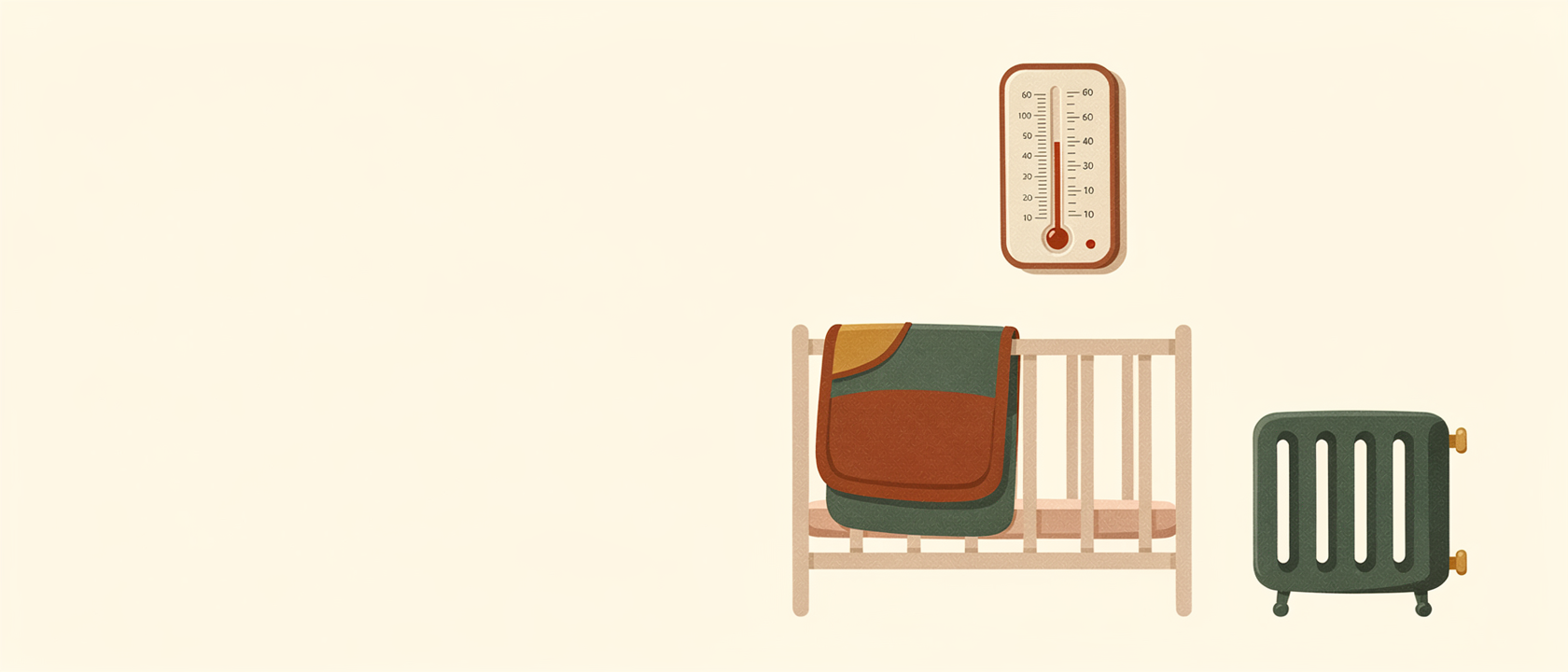
The safest baby room temperature is about 16 to 20°C, according to both the NHS and the Lullaby Trust. As the nights draw in and the heating goes on, the main risk to a sleeping baby is not the cold but overheating. This guide covers how to check the room, how to judge whether your baby is the right temperature, and what to put them in on a chilly night.
What temperature should a baby's room be?
The NHS says to keep the room at a temperature between about 16 and 20°C and to monitor it with a room thermometer (NHS). The Lullaby Trust gives the same range and adds that it is hard to guess a room's temperature by feel, so a thermometer is the more reliable way to check (Lullaby Trust).
A basic room thermometer is all you need. Place it at roughly cot height, away from radiators and direct sun, and glance at it at bedtime and again before you go to bed yourself. Many baby monitors include a temperature readout, which is handy but still worth sense-checking against a separate thermometer; see our baby monitor comparison if you are choosing one.
Why overheating matters more than cold
The NHS states that overheating can increase the risk of sudden infant death syndrome (SIDS), and that babies can overheat because of too much bedding or clothing, or because the room is too hot (NHS). That is why the advice in winter is to add or remove light layers as needed rather than to heat the room generously and then wrap the baby up as well.
How to tell if your baby is too hot or too cold
Feel your baby's chest or the back of their neck. The NHS says not to worry if their hands or feet feel cool, and the Lullaby Trust says the same: hands and feet are naturally cooler. If the skin feels hot or sweaty, remove a layer of clothing or bedding. The Lullaby Trust also points out that every baby is different, so checking regularly matters more than following a fixed formula.
What if your home is colder than 16°C?
The Lullaby Trust advises that if the room drops below 16°C in winter, you can add an extra layer rather than running the heating all night. If you do heat the room overnight, it recommends keeping it at or below 20°C (Lullaby Trust). Practical options for a cool bedroom include a slightly warmer sleepsuit under the sleeping bag, or a thermostat or timer so the room is warm at bedtime without overshooting.
What should a baby wear to sleep in winter?
Both organisations recommend lightweight layers, and the NHS lists lightweight blankets, sheets or a baby sleeping bag rather than heavy coverings. Keep the cot clear of anything that could cover your baby's face and head: the NHS says not to use pillows, duvets, cot bumpers or loose blankets.
Choosing a sleeping bag and tog
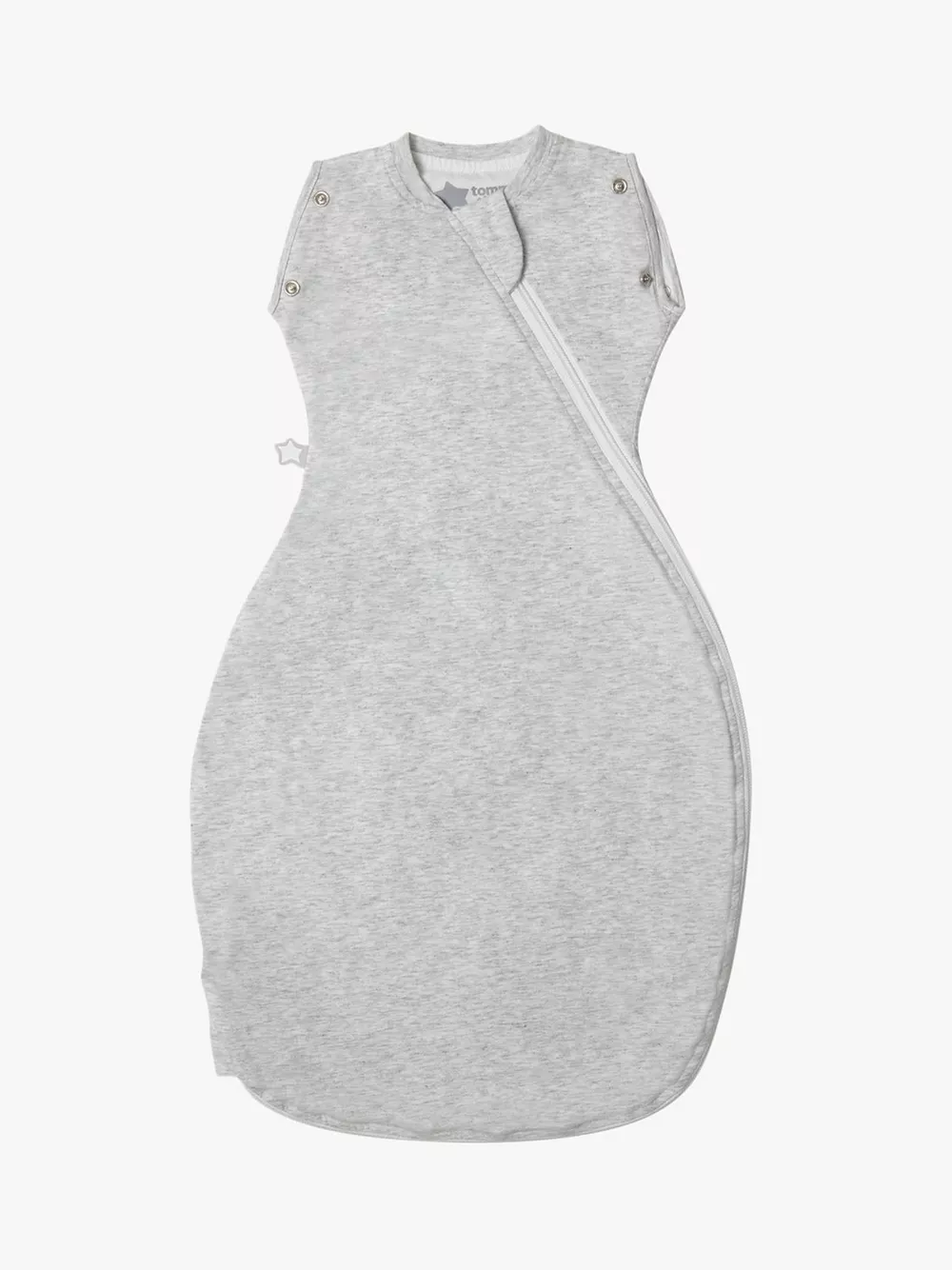
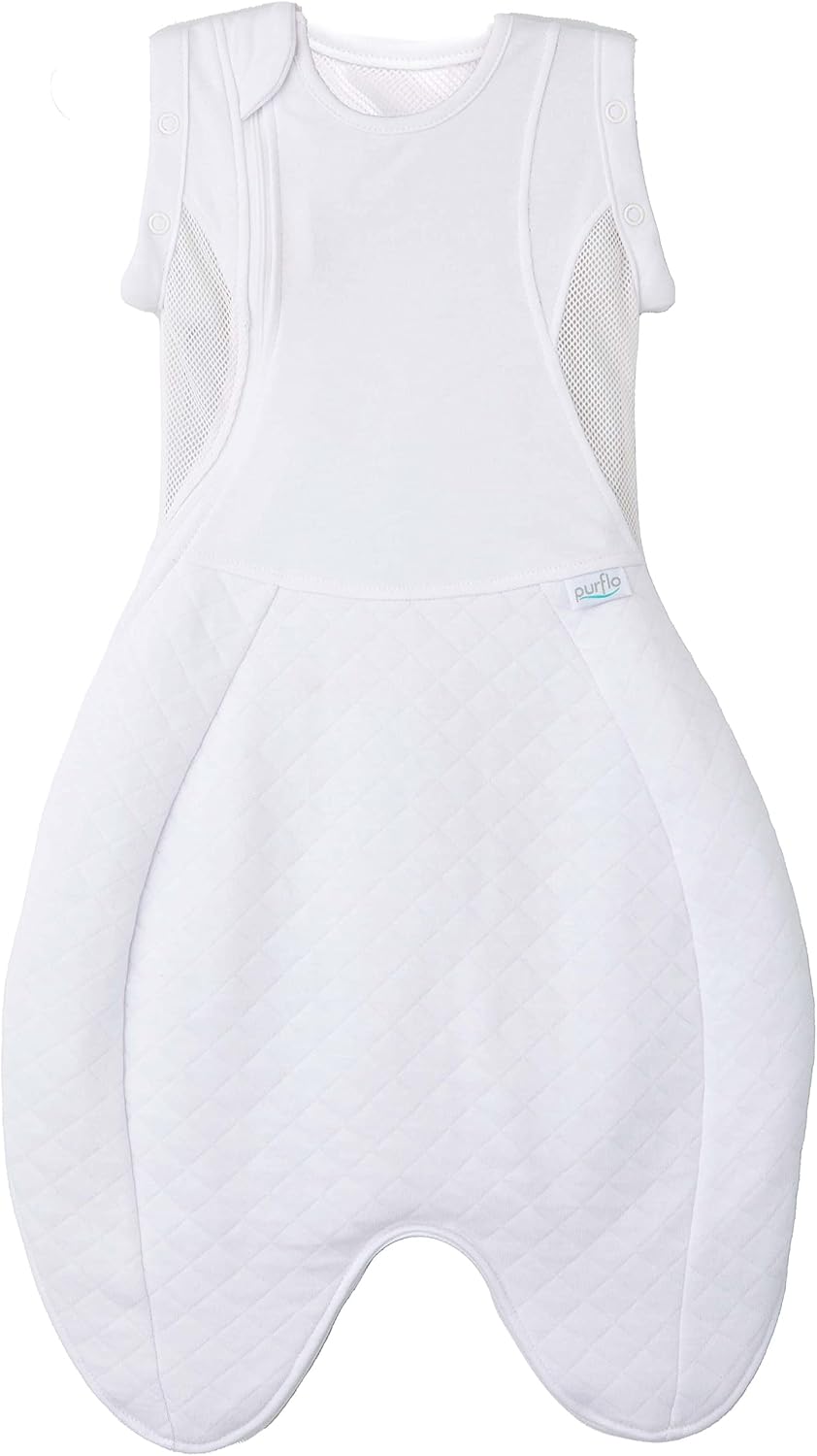
A well-fitting baby sleeping bag is a popular way to keep a baby covered without loose bedding. Tog ratings measure warmth, and brands publish their own charts matching tog to room temperature. The Lullaby Trust notes it cannot give a single tog-to-temperature chart because every product is made of different materials, so follow the guide on the specific bag you buy and then use the chest and neck check above. Our guide to the swaddle versus sleep sack choice explains when to move on from swaddling.
Fit matters as much as warmth. In October 2026 the Office for Product Safety and Standards issued a national alert that people should only buy or use a baby sleeping bag that has arm holes and no hood (gov.uk). We cover it in full in our sleeping bag alert article.
Things to avoid in a cold snap
- Hats and extra head coverings indoors. The Lullaby Trust notes babies lose heat through their heads, so keep hats off once you are inside, and take them off when you move from outdoors into a warm room or car.
- Hot water bottles and electric blankets. The NHS and the Lullaby Trust both say not to use them with a sleeping baby.
- Cots next to radiators, heaters, fires or sunny windows. The NHS says to keep your baby's sleep space away from them.
- Duvets and quilts. The Lullaby Trust says to avoid them for babies.
For the full picture, read our safe sleep guidance for newborns, and if you are fitting out a nursery, our newborn changing station guide covers keeping that corner comfortable too.
Common winter questions from parents
Does a newborn need to be kept warmer than an older baby?
The 16 to 20°C range given by the NHS and the Lullaby Trust is not split by age, so it applies from birth. Newborns are often tempting to over-wrap because they feel small and fragile, which is exactly why the chest and neck check is worth doing every time rather than relying on how many layers you think they need.
What about car journeys and the pram?
Coats and snowsuits are for outdoors. Once you come inside, or get into a heated car, take outer layers off so your baby does not overheat. Our guide to baby winter coats and car seat safety explains why thick coats and car seat harnesses do not mix.
Is a cool room bad for my baby?
A room at the lower end of the range, around 16°C, is within the advice from both organisations. A slightly cool room with sensible layers is generally preferable to a warm one, because the NHS identifies too hot a room as the risk to guard against. If your baby seems unusually cold, floppy or unwell, do not wait: contact NHS 111 or your GP.
Sharing a room: how it changes the temperature
The NHS advises placing your baby in a separate cot or Moses basket in the same room as you for every sleep for at least the first 6 months. Because your own bedroom is usually kept for your comfort, it is worth placing a thermometer by the cot specifically, rather than assuming the room matches how warm you feel under a duvet. If your baby sleeps in a bedside crib, our cot, cot bed and Moses basket comparison covers the options.
A quick winter bedtime checklist
- Check the room thermometer reads about 16 to 20°C.
- Dress your baby in light layers and a sleeping bag with arm holes and no hood.
- Keep the cot clear of loose bedding and away from heat sources.
- Feel their chest or the back of their neck; remove a layer if they feel hot or sweaty.
- Re-check before you go to bed.
If you are worried about your baby's temperature or they seem unwell, the Lullaby Trust runs a helpline on 0808 802 6868, and you can call NHS 111 for health advice.
Mentioned in this guide
Frequently asked questions
What is the best room temperature for a baby to sleep in?+
The NHS and the Lullaby Trust both recommend keeping the room at about 16 to 20°C and using a room thermometer to check.
Should I leave the heating on all night for my baby?+
The Lullaby Trust says that if the room falls below 16°C you can add an extra layer rather than run the heating all night; if you do heat overnight, keep it at or below 20°C.
How can I tell if my baby is too hot?+
Feel their chest or the back of their neck. If the skin feels hot or sweaty, remove a layer. Cool hands and feet are normal, according to the NHS.
Can I use a hot water bottle or electric blanket in my baby's cot?+
No. The NHS and the Lullaby Trust both say not to use hot water bottles or electric blankets with a sleeping baby.
Sources
Related guides
Best Bedside Cribs & Moses Baskets Compared (UK)
Six bedside cribs and Moses baskets compared on price, size and lifespan: Silver Cross Lunar, Shnuggle Air Lite, SnuzPod4, HALO BassiNest, Chicco Next2Me Forever and a Mamas & Papas Moses basket. Includes the British Standards the Lullaby Trust lists and NHS safer sleep rules.
Best Baby Carriers Compared (UK Guide)
Six baby carriers compared on price, age range and carry positions: Ergobaby Omni 360, Tula Free-to-Grow, Izmi, BabyBjörn Carrier Mini, Close Caboo and Momcozy Move2Fit. Includes the Lullaby Trust and RoSPA T.I.C.K.S. safety checklist.
Bronchiolitis in Babies: Symptoms & When to Worry
Bronchiolitis is a common winter chest infection in babies. Here is what the NHS says about the symptoms, the signs that mean call 999 or 111, how to care for your baby at home, and how to lower the risk, including RSV protection.

Written by
Sepehr
Software engineer, soon-to-be dad, uncle to four — the tech-obsessed half of the two of us testing this stuff. Currently building this site with my wife, ahead of our own baby arriving.