Buying Secondhand Baby Gear Safely: What to Avoid
Secondhand baby gear can save you hundreds of pounds, but not everything is worth the risk. Here's what's genuinely fine to buy used, and the two categories — car seats and cot mattresses — that safety bodies say to always buy new.
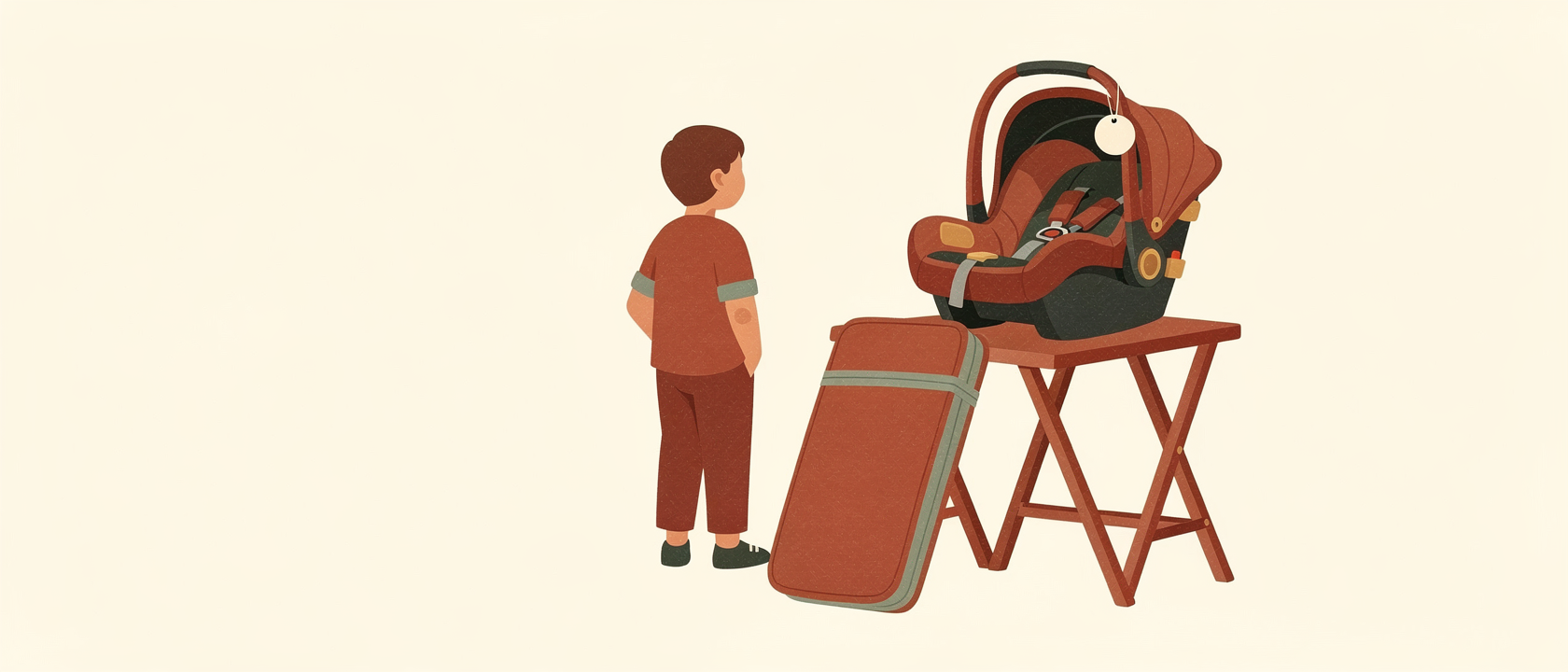
Most baby gear is perfectly safe to buy secondhand — clothes, toys, muslins, a highchair, even a pushchair if you check it over. But two categories are the exception: car seats and cot mattresses. Both are things safety organisations specifically advise against buying used, for reasons that aren't obvious until you know them. This guide covers what's genuinely fine secondhand, what to avoid, and why.
Why secondhand car seats are a no
The Royal Society for the Prevention of Accidents (RoSPA) is blunt about this one: it advises against using a secondhand car seat, full stop. Car seats are what RoSPA calls a "one hit" product — the internal structure can be damaged in a crash, or even by being dropped, without any visible sign on the outside. When you buy from a stranger at a car boot sale or on a marketplace app, you have no way of knowing whether that's happened (RoSPA — second-hand goods safety).
RoSPA's one caveat: a secondhand seat from a relative or close friend whose full history you genuinely know — no accidents, no drops, no sun damage from years on a parcel shelf — is a lower-risk exception. From a stranger, it isn't a risk worth taking.
There's no legal expiry date on a car seat in the UK, but manufacturers typically rate them for six to ten years before plastic and foam components degrade, and GOV.UK's own guidance on buying secondhand is equally cautious: only accept a used seat if you know its full history, it hasn't been in a crash, it has all its original parts, labels and instructions, and it isn't past its manufacturer's recommended age (GOV.UK — child car seats: the rules). If you're weighing up new options instead, our guide to UK car seat law covers what's actually required by size and age, and we've also compared the best infant car seats by budget if buying new feels like a stretch.
Why secondhand cot mattresses are discouraged
This is the one that surprises most parents. The Lullaby Trust's guidance is direct: it generally advises buying a new mattress for each baby, because research has found using a secondhand mattress from outside the family home is associated with an increased risk of sudden infant death syndrome (SIDS) — though the exact mechanism isn't proven, and the Trust is careful to say the link isn't fully understood (The Lullaby Trust — mattresses and bedding).
The Trust acknowledges buying new isn't always possible, and sets out conditions for when a secondhand mattress is the only option: it should have a waterproof, 100% intact cover with no rips or tears, be firm and flat with no dips, show no signs of water damage, fit the cot or Moses basket with no gaps around the edges, and carry a fire-resistant label (The Lullaby Trust — second-hand baby products). If any of those boxes can't be ticked, it's a new mattress or nothing — see our guide on safe sleep for newborns for the wider picture on the NHS and Lullaby Trust's sleep guidance, and cot vs cot bed vs Moses basket if you're still choosing what your baby will actually sleep in.
What's genuinely fine to buy secondhand
Away from those two categories, secondhand is often the sensible choice — babies grow out of things fast, and a lot of gear barely gets used. Generally lower-risk secondhand buys include:
- Clothes, muslins and blankets — wash thoroughly before use; there's no safety mechanism at play here.
- Highchairs, bouncers and playmats — check straps and buckles work and there's no obvious damage or missing parts.
- Pushchairs and travel systems — inspect the frame for cracks, check the brakes and wheels, and confirm the harness is complete and undamaged.
- Toys — check against current safety standards (no small detachable parts, no recalls) rather than assuming a hand-me-down toy is automatically fine.
- Moses baskets and cot frames (not the mattress) — the wicker or wooden frame itself carries none of the mattress risk above; just check for structural damage.
The Lullaby Trust's general rule for anything secondhand is to check it meets relevant British safety standards, still has its instructions, hasn't been subject to a safety recall, and is smoke- and pet-free. If you're weighing up which bits of newborn kit you actually need before you start shopping — new or used — our piece on the baby gear you don't actually need is a useful filter first.
Always check for a recall before you buy
Whatever you are buying secondhand, it is worth a quick check against the Office for Product Safety and Standards recall list before you hand over any money. Recalls happen more often than most parents expect — a component fails a safety test, a batch of buckles turns out to be faulty, a strap can detach — and a recalled item bought secondhand from someone who never heard about the recall is still recalled. GOV.UK publishes current product safety alerts and recalls, searchable by product type or brand (GOV.UK — product safety alerts, reports and recalls). It takes two minutes and it is one of the most useful habits for buying anything used, car seat and mattress included.
A quick checklist for buying anything else secondhand
For the categories that are generally fine to buy used, run through this before agreeing a price:
- Age and stage — is it actually appropriate for your baby's current weight and age, not just what the seller says?
- Completeness — are all parts, straps, instructions and any safety labels present? Missing instructions often means missing safety information too.
- Damage — cracks, frayed straps, broken buckles or clips, rust on metal frames, or a harness that does not lock properly are all reasons to walk away.
- Hygiene — fabric parts should be machine-washable and removable; if they are not, factor in a proper clean before use.
- Recall status — check the GOV.UK list above by brand and model before you buy, not after.
None of this takes long, and it is the difference between a genuinely good secondhand find and a false economy.
The verdict
Buy secondhand freely for clothes, toys and most equipment — it's where the real savings are, and the risk is low. Draw the line at car seats and cot mattresses: both are things NHS-aligned safety bodies specifically say to buy new wherever you can, because the risks (undetectable crash damage, an unproven but real SIDS association) aren't ones you can fully check for yourself after the fact.
Frequently asked questions
Is it ever okay to use a secondhand car seat?+
RoSPA advises against it in general. The only lower-risk exception is a seat from a relative or close friend whose full history you know for certain — no crashes, no drops, no long-term sun exposure — and even then, check it's within the manufacturer's recommended lifespan and hasn't been recalled.
Can I use a secondhand cot mattress if it looks brand new?+
The Lullaby Trust still advises buying new where possible, since the increased SIDS risk they've identified is linked to the mattress's history, not just its visible condition. If you do need to use one secondhand, it should be firm, flat, undamaged, have an intact waterproof cover, fit the cot with no gaps, and carry a fire-resistant label.
What baby items are safest to buy secondhand?+
Clothes, muslins, blankets, toys, highchairs and pushchairs are generally fine secondhand, provided you check straps, buckles and frames for damage and wash fabric items before use. The two exceptions worth spending on new are car seats and cot mattresses.
Sources

Written by
Sepehr
Software engineer, soon-to-be dad, uncle to four — the tech-obsessed half of the two of us testing this stuff. Currently building this site with my wife, ahead of our own baby arriving.