Baby Christmas Pyjamas UK: Flammability, Cords, Overheating
Are baby Christmas pyjamas safe? Plain cotton festive babygrows are fine as a first layer, but novelty hoods, hats, ties and fleece add heat and hazards. We cover UK nightwear flammability rules, cord checks and a what-to-wear table.
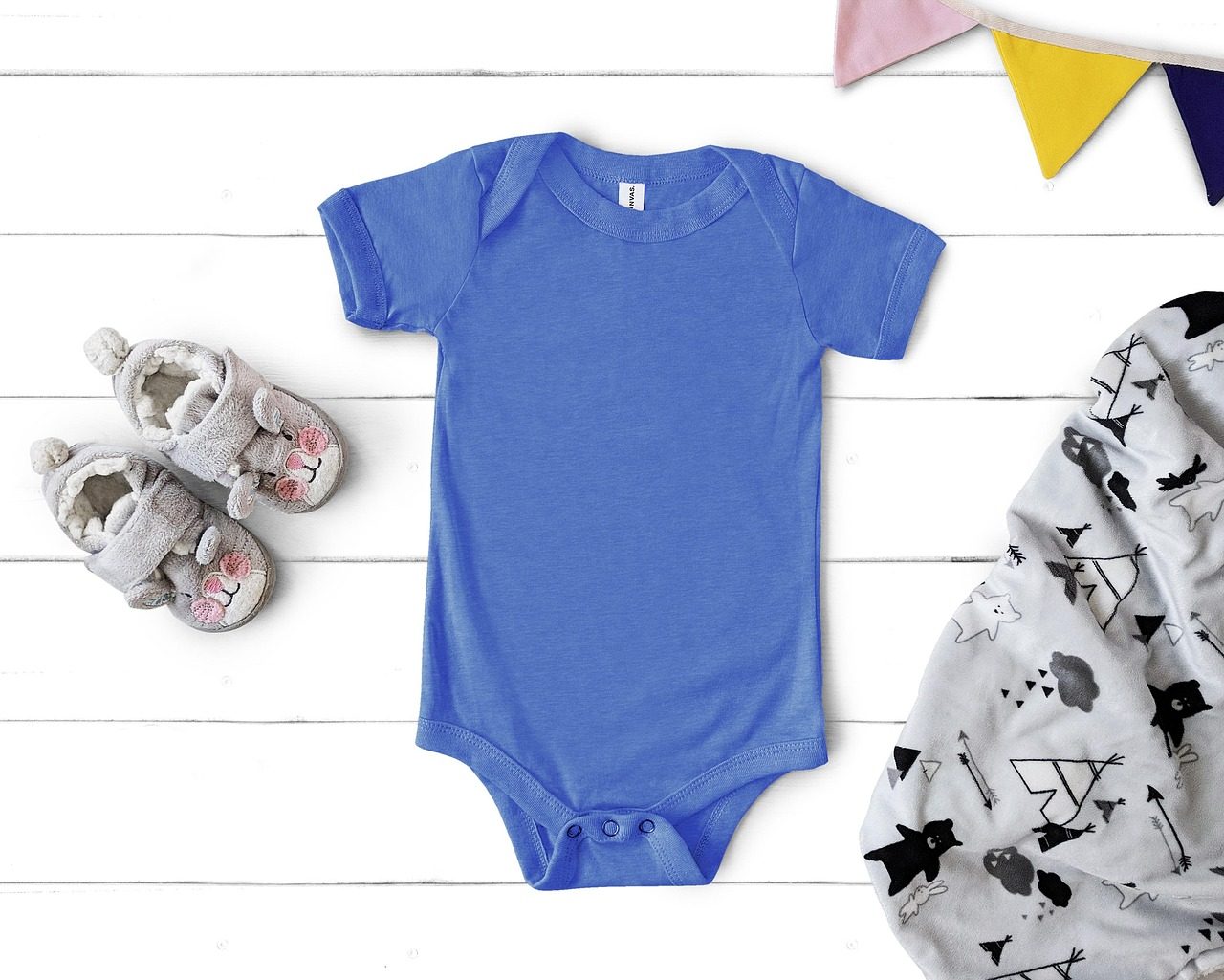
Baby Christmas pyjamas are fine to buy and wear, provided they pass four quick checks: a fire-safety label, no cords or ties, a snug fit, and nothing that adds heat or covers the head in the cot. Keep novelty outfits for daytime photos and sleep in your usual layers.
Every December the same questions come up: is a Santa-print sleepsuit safe overnight, can a newborn wear a hat in the cot, and do those cute hooded onesies count as nightwear? This guide gives you the UK rules on children's nightwear, the Lullaby Trust's overheating advice, a label-reading checklist and a table for deciding what gets worn when. It sits alongside our guides to Christmas hazards for babies and toddlers and sleeping away from home at Christmas.
What do the UK rules say about children's nightwear?
The Nightwear (Safety) Regulations 1985 apply to children's nightwear, defined as garments for anyone under 13. According to trading standards guidance, nightwear for children must meet a flammability standard (BS 5722) and carry a fire-safety label. Nightwear that fails the test must carry a red "KEEP AWAY FROM FIRE" label, while items that pass can show that red wording, "LOW FLAMMABILITY TO BS 5722" in black, or both.
There are exemptions, and they matter for Christmas shopping:
- Babies' garments for infants up to three months with a chest of 53 cm or less are exempt from the BS 5722 flammability test.
- Pyjamas are exempt from BS 5722, as are cotton terry-towelling bath robes. Trading standards guidance recommends the separate BS EN 14878 standard for pyjamas and babies' garments to meet the general product safety duty.
- Second-hand nightwear is not covered by the Regulations, so a hand-me-down festive set has no guarantee of a label.
In plain terms: a labelled set is reassuring, but an exemption does not mean a garment is unsafe, and the absence of a label is a reason to ask questions. If you are buying from a marketplace seller rather than a high-street shop, our guide to buying second-hand baby gear safely explains what to check. The legal position can change, so check the current legislation or your local trading standards service if you are selling nightwear.
Why novelty festive outfits are not the same as sleepwear
The Lullaby Trust advises that babies sleep on their back in a cot or Moses basket on a firm, flat mattress, with no loose items in the sleep space. Many festive outfits are designed for photographs rather than that sleep space, and they tend to bring three problems.
- Extra layers and fleece linings. Plush, fleece or sherpa-lined outfits add warmth the room may not need. The Lullaby Trust recommends a room temperature of 16–20°C and notes that stacking layers traps heat: two 1.0 tog sleep bags do not make a 2.0 tog bag.
- Hats and hoods. Santa hats, elf hats and hoods are the classic festive accessory. The Lullaby Trust says babies lose heat through their heads and that hats should be removed indoors, so a baby with a covered head can overheat. Overheating is a recognised risk factor for sudden infant death syndrome (SIDS), according to the NHS.
- Decorations that detach. Pom-poms, bells, buttons, sequins, felt appliqués and glitter can come loose. Anything a baby can pull off becomes a choking or inhalation risk, and loose items do not belong in the sleep space.
Cords, ties and ribbons: the hazard to check first
RoSPA lists drawstrings on clothing among household items that can be long and flexible enough to be dangerous to small children, alongside ropes, belts and drawstring bags. Festive items often have exactly these features: tie-neck capes, ribbon bows, hood cords and dangling bobbles.
Before any outfit goes on, run through this quick check:
- Cut or unpick any cord, tie or ribbon at the neck or hood. Do not simply shorten it.
- Avoid long ties on mittens, bibs and bonnets for a sleeping baby.
- Tug every button, pom-pom and bell. If it moves, remove it or choose a different outfit.
- Remove bibs, scarves and necklaces before naps and bedtime.
The same thinking applies to the whole room. Our room-by-room baby-proofing guide covers cords, blinds and other strangulation risks.
How to dress your baby for sleep over Christmas
The Lullaby Trust's advice is to use the room temperature, not the calendar, to decide on layers. It suggests a room thermometer, because it is hard to guess the temperature. Its guidance, in short:
- Below 16°C: add a layer or choose a higher-tog sleep bag, but do not put extra blankets over a sleep bag.
- 16–20°C: a baby grow with a sleep bag or a lightweight blanket.
- Above 20°C: a lighter layer is enough, such as a short-sleeve bodysuit.
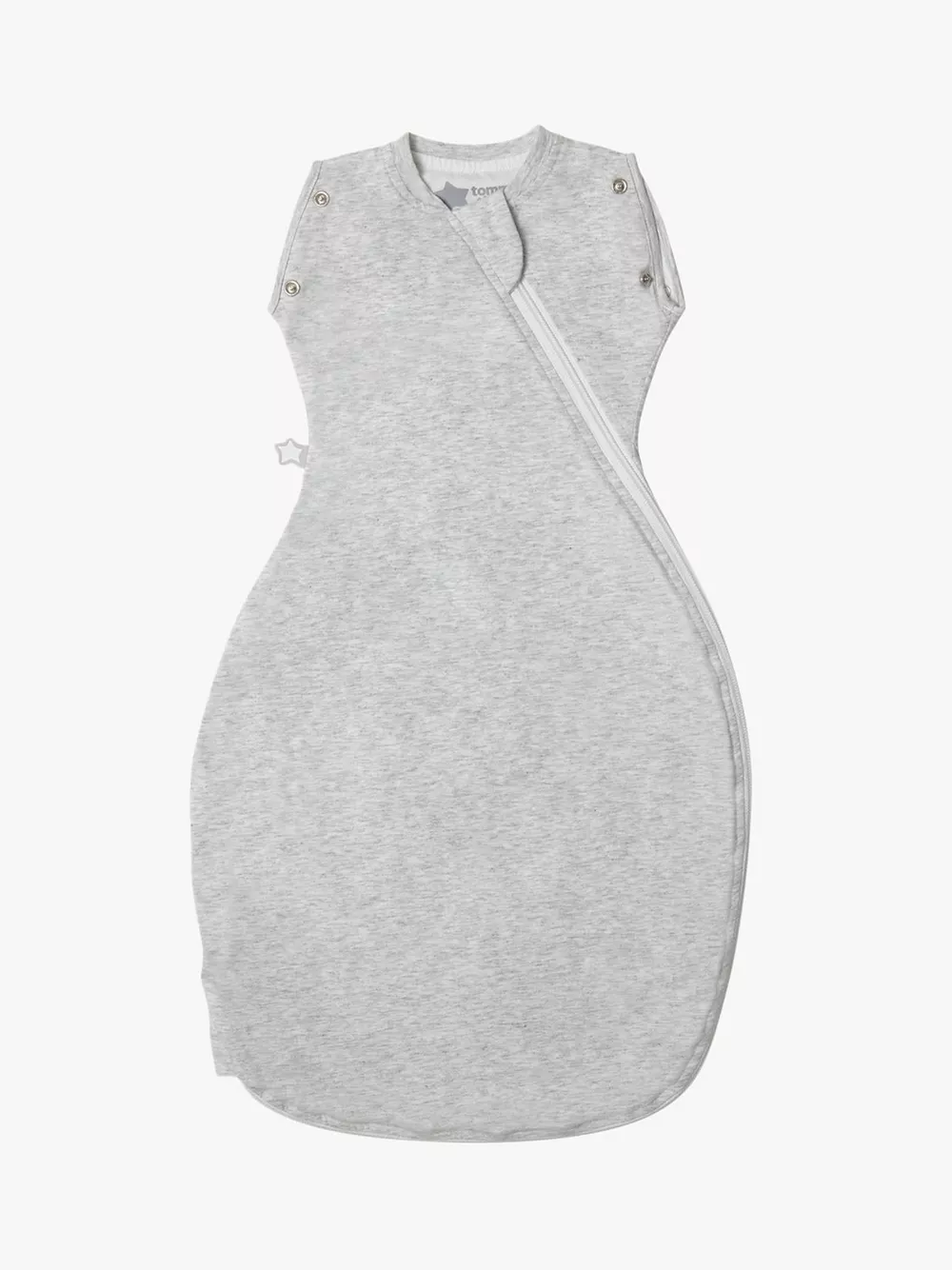
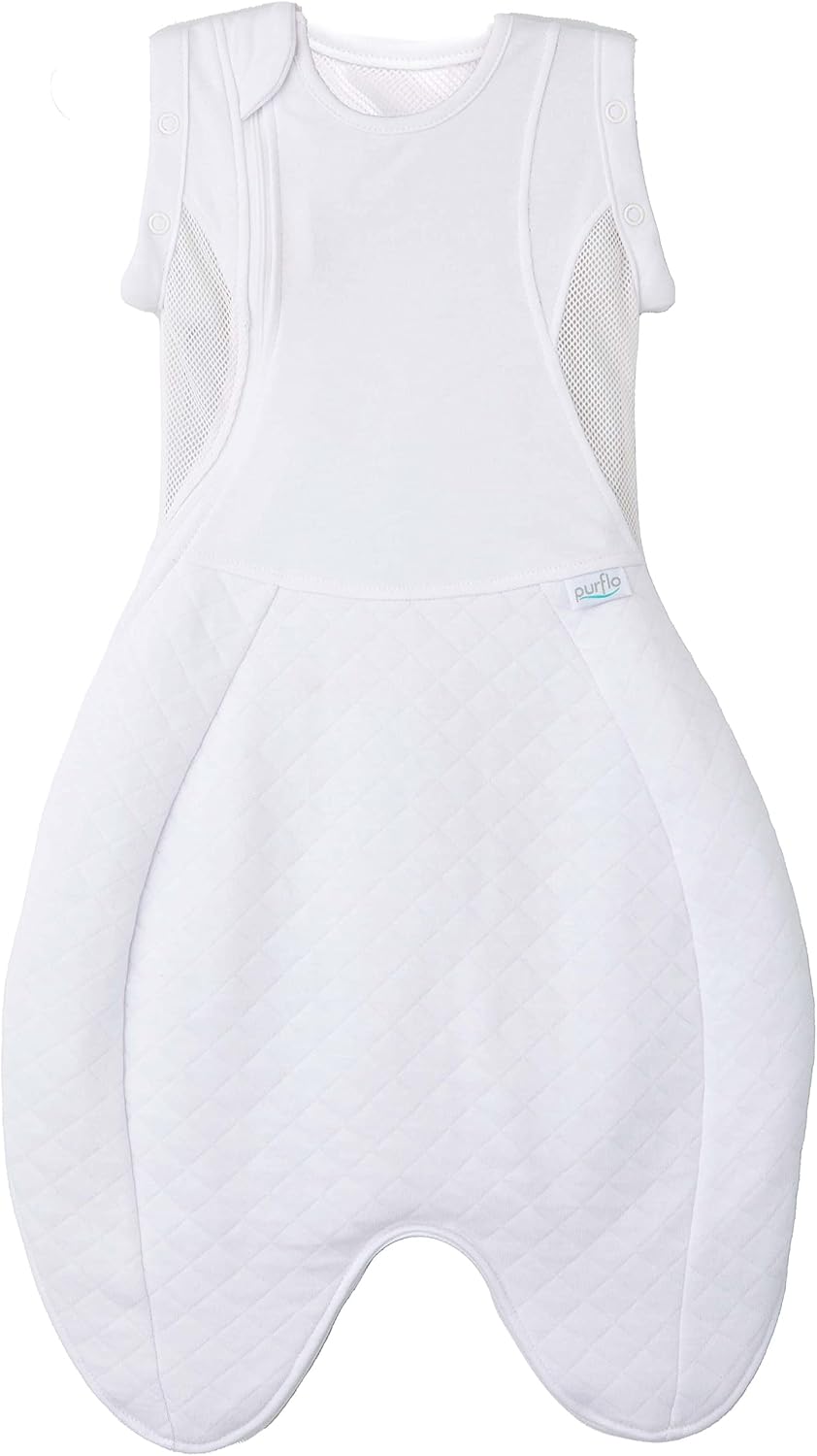
To check your baby is the right temperature, feel the chest or the back of the neck rather than the hands or feet, which will usually feel cooler. If the baby is sweaty or clammy, remove a layer. Our baby sleeping bag tog guide for UK winter and winter room temperature guide go through this in more detail, and the best swaddles, sleepsuits and sleeping bags roundup compares options. If you want a simple, plain sleeping bag as your night-time base, the Tommee Tippee Grobag and the Purflo baby sleep bag are two we list, specced to standard tog ratings. A festive sleepsuit or babygrow can then be worn underneath as a normal first layer, provided it passes the checks above.
Festive outfit decision table
| Item | Daytime photos | In the cot overnight | What to check |
|---|---|---|---|
| Plain cotton babygrow with a Christmas print | Yes | Yes, as a normal first layer | Snug fit, flat seams, no loose appliqué |
| Fleece or sherpa-lined romper | Yes, indoors briefly | No: adds heat and layers | Check chest for sweat; swap if warm |
| Hooded outfit or Santa hat | Yes, remove straight after | No: head must stay uncovered | Lullaby Trust: no hats indoors |
| Tie-neck cape, bow-tie or ribbon set | Supervised only | No | Remove ties and ribbons before any sleep |
| Outfit with bells, pom-poms or sequins | Supervised only | No | Tug-test every decoration |
| Hand-me-down festive pyjamas | Yes | Only if labelled and in good condition | No legal fire label guarantee second-hand |
Photo outfits and the car seat
Photos are where most festive outfit problems start. Take the picture, then change your baby into their usual sleepwear. Never leave a baby asleep in a costume, a hat or a prop-style set-up such as a basket or bean bag. Keep photo shoots short, awake and supervised, with the baby on a firm surface at floor level.
If you are travelling to relatives, bulky festive jumpers and padded all-in-ones have the same issue as winter coats: they add thickness between the baby and the harness. See our guide to winter coats and car seats for how to check that the harness is snug and what to do instead. The same advice covers prams, where our winter pushchair and overheating guide applies.
What should I buy, and what does it cost?
You do not need a dedicated Christmas wardrobe. As a rough guide (our estimate, so check current prices), a festive-print babygrow from a supermarket or high-street shop usually costs somewhere in the region of £8–£25, and multipacks are often better value than single novelty items. A sensible, low-cost plan:
- One or two festive-print cotton babygrows for the day itself, worn as a first layer.
- One plain sleep bag at the right tog for your home, used all winter.
- A festive hat or headband for photos only, taken off straight after.
- Ask relatives for plain, well-fitting clothes in the next size up rather than costumes. Our gift ideas for babies and toddlers has wording you can share.
Wash new clothes before first wear, follow the care label, and keep the label in view so you can check the fire-safety wording. Nightwear treated with flame retardant must carry washing instructions, so follow them exactly, according to trading standards guidance. You can track what you still need on your baby checklist.
Common mistakes to avoid
- Layering a festive romper under a sleep bag "for extra warmth". Choose the layers for the room temperature instead, per the Lullaby Trust.
- Letting a baby doze in a hat after the photos. Hats come off indoors.
- Assuming "pyjamas" means "flame-tested". Pyjamas are exempt from BS 5722 under the 1985 Regulations, so look for the label and a well-fitting cut.
- Buying loose, baggy sizes. A garment that rides up or hangs over the face is a problem; the Lullaby Trust says a sleep bag should fit snugly at the neck and shoulders so a baby cannot slip down inside.
- Overlooking marketplace listings. Where sleep products are not suitable for babies, OPSS has issued warnings, as in our report on hooded baby sleeping bags.
When to seek help
If your baby feels hot, looks flushed or is unusually sleepy, remove layers and cool the room gently. For a baby with a high temperature or one who seems unwell, follow NHS advice and see our baby fever guide. Call 111 for advice, and 999 if the baby is struggling to breathe, floppy or unresponsive. The Lullaby Trust also notes that you should not wrap an unwell baby up more than usual.
Mentioned in this guide
Frequently asked questions
Can my baby sleep in a Christmas outfit?+
A plain cotton Christmas-print babygrow can be worn as a normal first layer, because it is just another sleepsuit. Novelty outfits are different. Fleece-lined rompers add heat, hoods and hats cover the head, and bows, ties and bells can be strangulation or choking hazards. The Lullaby Trust advises removing hats indoors and choosing layers for the room temperature of 16–20°C rather than the occasion. Save costumes and photo outfits for supervised, awake time, then change your baby into their usual sleepwear and sleep bag before the nap or bedtime.
Do babies' pyjamas have to be flame resistant in the UK?+
Children's nightwear for under-13s must carry fire-safety labelling under the Nightwear (Safety) Regulations 1985, and most must meet a flammability standard, BS 5722. However, trading standards guidance says babies' garments for infants up to three months with a chest of 53 cm or less are exempt from that test, and so are pyjamas and cotton terry-towelling robes. For those items, guidance recommends the BS EN 14878 standard instead. Always look for the label wording, such as a red KEEP AWAY FROM FIRE, and keep babies away from candles, fires and heaters.
Should a newborn wear a Santa hat?+
Only briefly, for a supervised photo. The Lullaby Trust says babies lose heat through their heads, so a covered head can lead to overheating, and hats should be removed indoors. A hat should never stay on a sleeping baby, in a car seat or when you come inside from outdoors. Overheating is a recognised risk factor for sudden infant death syndrome according to the NHS. Choose a hat with no ties or pom-pom that can detach, take the picture, then take it off straight away.
How can I tell if my baby is too hot in festive clothes?+
Feel the chest or the back of the neck, not the hands or feet, which are usually cooler. The Lullaby Trust says that if your baby feels sweaty or clammy, they are too hot, so remove a layer. Signs can include a flushed face and damp hair. Use a room thermometer and aim for 16–20°C overnight. If you are using a sleep bag, do not add extra blankets on top. If your baby seems unwell or has a high temperature, follow NHS advice and call 111.
Sources
Related guides
Christmas Car Journeys With a Baby: UK Safety Guide
A practical plan for a long Christmas car journey with a baby: how often to stop, what the Lullaby Trust says about car seats, how to fit the seat and harness in winter, what to pack, and what to do if your baby slumps, overheats or you break down.
Child Benefit for a New Baby (2026/27): Rates & Claiming
How to claim Child Benefit for a new baby in the UK: current weekly rates, the three-month backdating limit, who should claim, National Insurance credits, and what to do about the High Income Child Benefit Charge if you earn over £60,000.
Next Baby Sleeping Bag Recall: How to Check the Fit
Next has withdrawn its own-brand pink floral 2.5 tog baby sleep bag after a parent measured an oversized neck opening. Here is what to do if you own one, a two-minute fit check for any sleeping bag, and safer UK options.

Written by
Sepehr
Software engineer, soon-to-be dad, uncle to four — the tech-obsessed half of the two of us testing this stuff. Currently building this site with my wife, ahead of our own baby arriving.