Gifts for Baby and Toddler at Christmas: What to Ask For
A practical UK gift list for baby and toddler Christmas presents, split by stage and price band, with group-gift ideas, what to steer relatives away from, safe unwrapping habits and a ready-to-send message.
The best Christmas gifts for babies and toddlers are simple, open-ended and age-appropriate: a play gym, stacking and sorting toys, board books, soft clothes in the next size up, and contributions to bigger items. Here is a UK gift list you can send to relatives, with what to avoid.
Why a gift list for relatives is worth sending
Every December, grandparents, aunts, uncles and family friends ask the same question: what does the baby actually need? If you do not answer, you tend to end up with a pile of noisy, battery-hungry plastic, outfits in the wrong size and a few items you would rather not have in the house at all. A short, specific list saves everybody money and saves you the awkward return trip in January.
It also helps you steer relatives away from products that carry real risks. The government's Christmas toy advice reminds shoppers to follow the age labels on toys, which address risks such as sharp points and choking, and to be careful with small parts and loose or shedding fabric or hair. If you want the full safety checklist, we cover button batteries, magnets and small parts in our Christmas gifts safety guide. This article is the other half: what to actually ask for.
How to build the list: three rules
- Match the gift to the stage, not the age on the box. A six-month-old and an eighteen-month-old need completely different things. Write the baby's current stage (sitting, crawling, cruising, walking) next to each idea.
- Offer three price bands. Relatives vary in budget. A list with something under £10, something around £20 to £40 and a group-gift item lets everyone take part without comparing.
- Name the exact product where it matters. For anything that involves safety, such as car seats, sleep products or gates, a vague request leads to the wrong item. Link the specific product, or ask for a gift card or contribution instead.
If you are already using our baby registry tool, you can share it directly. If not, the guide to building a baby registry walks through how to set one up stage by stage.
Gifts for a baby under 6 months
At this age babies cannot grasp or move around, so the best gifts support looking, listening and early reaching. Prices below are typical UK ranges and vary by retailer, so check before you share a list.
- A play gym or activity mat (roughly £20 to £60). This is the classic first-Christmas gift because it works from the first weeks for tummy-time and looking up. Our play gyms and mats guide compares the main types, and the play mat and gym roundup lists the products we cover.
- High-contrast board books and cloth books (roughly £4 to £10). Cheap, safe and useful for years.
- Soft, rattle-free fabric toys (roughly £8 to £15). Look for toys with embroidered rather than hard plastic features, and check the label.
- Muslins and a good sleepsuit set (roughly £10 to £25). You will use them every day. Ask for the next size up, as newborn sizes are outgrown quickly. Our guide to how many muslins you need helps you answer the "how many?" question.
Gifts for a baby aged 6 to 12 months
Now they sit, grab, pass things between hands and put everything in their mouth. Chunky, washable and easy-to-hold items are the winners.
- Stacking cups, ring stackers and nesting toys (roughly £6 to £15). They stay in rotation for well over a year.
- Chunky wooden or soft blocks (roughly £10 to £25). Check there are no small pieces or loose parts. Give any part a quick tug, as the government's advice suggests.
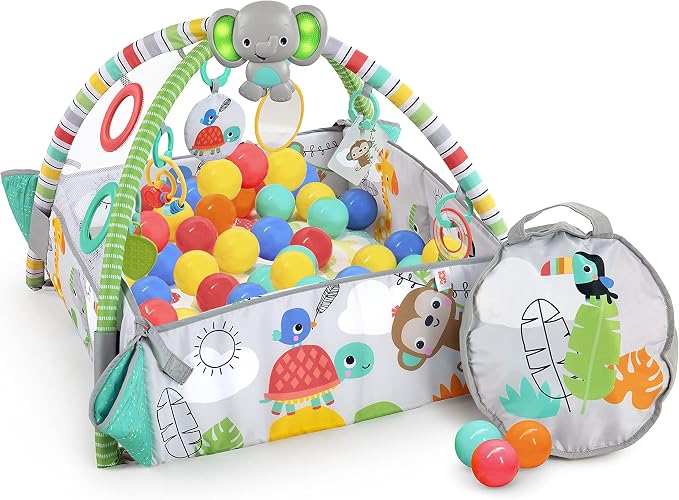
- Ball pit or activity centre (roughly £25 to £60). Something like the Bright Starts 5-in-1 Your Way Ball Play Activity Gym and Ball Pit grows with a baby from gym to ball pit, which makes it a good group gift. Prices vary, so check current listings.
- Bath toys and a sturdy bath cup (roughly £5 to £12). Choose solid toys that cannot fill with water and trap mould.
- First baby-safe cups and weaning bibs (roughly £5 to £15). Practical, and you will be glad of spares.
Gifts for a toddler aged 1 to 3
Toddlers want to copy adults, move, climb, build and make noise. This is where open-ended toys earn their space.
- Chunky puzzles and shape sorters (roughly £8 to £20). Look for big pieces with a clear age label. See our toddler learning toys comparison for researched picks and the toddler toys roundup.
- Role-play sets (roughly £10 to £30). Wooden kitchen sets, tool benches and tea sets give a lot of play for the money.
- Ride-ons and push-along walkers (roughly £20 to £70). Great for confident walkers, so check the age and weight range on the product.
- Picture books and a library-style set (roughly £10 to £25). Story time is a lasting habit.
- Art supplies such as chunky crayons and washable paint (roughly £5 to £15). Check they are labelled as suitable for the age group.
- First walking shoes, only if they are measured properly. A gift card is safer than guessing a size.
Group gifts and contributions
If relatives want to spend more, pooling money works better than several mid-priced items. Ideas include a contribution towards a pushchair, a toddler bed, a high chair or a highchair-to-table set, a savings or Junior ISA top-up, or a gift card for a retailer you already use. For bigger items you plan to buy anyway, link the exact product on your registry so nobody buys the wrong model. If you are weighing up which large items are worth it, the baby gear you do not actually need will stop you asking for the wrong thing.
What to politely steer relatives away from
| Gift | Why we suggest skipping it | What to ask for instead |
|---|---|---|
| Anything marketed to help a baby sleep, such as pillows, positioners, nests and wedges | The Lullaby Trust advises that a baby should sleep on a firm, flat surface with nothing soft in the sleep space | A well-fitting sleeping bag or a fitted sheet for the cot |
| Loose soft toys, blankets and bumpers for the cot | Safer sleep guidance is to keep the cot clear of extras in the first year | Soft toys for play time only, not for the cot |
| Cheap, unbranded toys from unfamiliar marketplace sellers | These are where OPSS product safety reports and recalls often appear; check the recall list before gifting | Toys from a retailer with a clear returns policy and a visible UK address |
| Toys with button batteries or small magnets | If swallowed they can cause serious internal injury; RoSPA advises checking for a lockable battery compartment | Battery-free, mechanical toys for the youngest children |
| Water beads and similar sensory kits | Very small when dry and easy to lose; OPSS has issued warnings | Water play with cups and floating toys, always supervised |
| Clothes in the exact age on the label | They are outgrown within weeks | One or two sizes up, or a gift card |
How to wrap and unwrap safely on the day
Christmas morning is chaotic, and a lot of accidents happen then, not at the shop. A few habits help:
- Clear wrapping paper, ribbon, plastic ties and packaging straight away. The government's Christmas toy advice flags packaging, plastic bags and wire as hazards, and loose ribbons as risky for an unsupervised child.
- Open one present at a time with the baby, rather than everything at once, so you can check each toy's label and parts.
- Put toys for older siblings out of reach. Lego-style bricks and small parts that suit a five-year-old are a choking risk for a baby or toddler.
- Keep batteries, spare button cells and remote controls out of reach.
- Check any gift against the OPSS recall list before it goes under the tree, in case it has been recalled.
What if you are given something you would rather not use?
Keep the receipt or gift receipt if you can, and ask relatives to include one. If a gift turns out to be on a recall notice or fails the checks above, do not feel awkward about quietly returning it or putting it away. A tactful line such as "we are trying to keep to the safer sleep guidance, so this is one for later" usually goes down fine. For second-hand gifts or hand-me-downs from friends, our guide to buying second-hand baby gear safely explains what to avoid.
A message you can copy and send
"Thank you for asking what Baby would like for Christmas! For their stage, the most useful things are: board books, stacking toys or a play gym (budget about £10 to £30), clothes one size up, or a contribution towards a pushchair/high chair. We would rather avoid anything battery-powered, sleep-related (pillows, nests, bumpers) or very small. If in doubt, a gift receipt is lovely. Thank you!"
You can adapt this for toddlers by swapping in puzzles, role-play sets and ride-ons. Keep a copy in your phone notes so it takes seconds to send each year, and update it as the baby's stage changes.
Quick checklist before you buy or accept a gift
- Is it labelled for the baby's age?
- Does it carry a safety marking such as UKCA or CE, and the maker's or importer's name and address?
- Does any part come off with a quick tug?
- Is any button battery behind a screwed-down compartment?
- Has it been recalled? Search the OPSS list.
- Is it a sleep product? If so, it is probably best skipped.
Your baby checklist can hold the bigger purchases you actually need, so the gift list and the shopping list stay consistent.
Mentioned in this guide
Frequently asked questions
What is a good first Christmas gift for a baby?+
A play gym or activity mat is the most popular first Christmas gift because it works from the early weeks for tummy time and looking up, and it lasts for months. Cheaper options include high-contrast board books, a soft rattle-free fabric toy and a good set of sleepsuits and muslins. Typical UK prices range from about £5 for a book to around £60 for a larger gym, though they vary by retailer. Whatever you choose, follow the age label on the packaging and give any part a quick tug to check nothing comes off.
How much should relatives spend on a baby at Christmas?+
There is no right amount, and babies do not know the difference. Many families suggest a range, for example £10 to £30 per person, and offer a group gift option for anything bigger such as a pushchair or high chair. Sharing a list with three price bands helps relatives take part comfortably and avoids duplicates. Practical gifts such as clothes in the next size up, books and bath toys are good value, and a gift receipt makes returns easy if something does not suit.
Should I ask relatives not to buy certain things?+
Yes, and most people appreciate being told. Gently steer them away from sleep products such as pillows, nests, wedges and bumpers, because the Lullaby Trust advises a firm, flat sleep surface with nothing soft in the sleep space. Also ask them to avoid button-battery toys, small magnets and water beads for the youngest children, and unbranded marketplace toys with no clear UK seller. RoSPA recommends checking for a lockable battery compartment. Offer an alternative so the conversation stays positive.
How do I check a toy is safe for my baby or toddler?+
Follow the age label, look for a UKCA or CE marking and a maker or importer name and address, give parts a quick tug to check nothing detaches, and check that any button batteries are behind a screwed-down flap. The government also advises buying from reputable suppliers and checking toys you already own for wear. Finally, search the OPSS product recall list before you wrap or hand over a gift, particularly for items bought through online marketplaces.
What if I receive a gift that is unsafe or has been recalled?+
Stop using it and keep it away from your child. Check the OPSS product recall notice for the exact instructions, as these vary by product and may involve a refund or a replacement. If it came from a relative, a gentle explanation is usually enough, and you can ask them for the receipt or retailer so you can return it. If you are unsure whether something is safe, the retailer or your local Trading Standards office can advise.
Sources
Related guides
Tax-Free Childcare & 30 Hours Free Childcare 2026/27
How Tax-Free Childcare and 30 hours free childcare work in England: the £2-for-£8 top-up, who qualifies, the minimum earnings and £100,000 limit, apply-by deadlines, and the mistakes that cost parents funding.

Hobbycraft LED Curtain Lights Recall: Plug Risk, What to Do
On 27 November 2026 OPSS published a recall of Hobbycraft Create & Celebrate Warm White LED Curtain Lights because the plug does not meet UK standards and has no fuse. Here is how to check yours, get a refund, and put up fairy lights safely around a baby or toddler.
Rattle Box Safe Teethers: OPSS Choking Warning (UK)
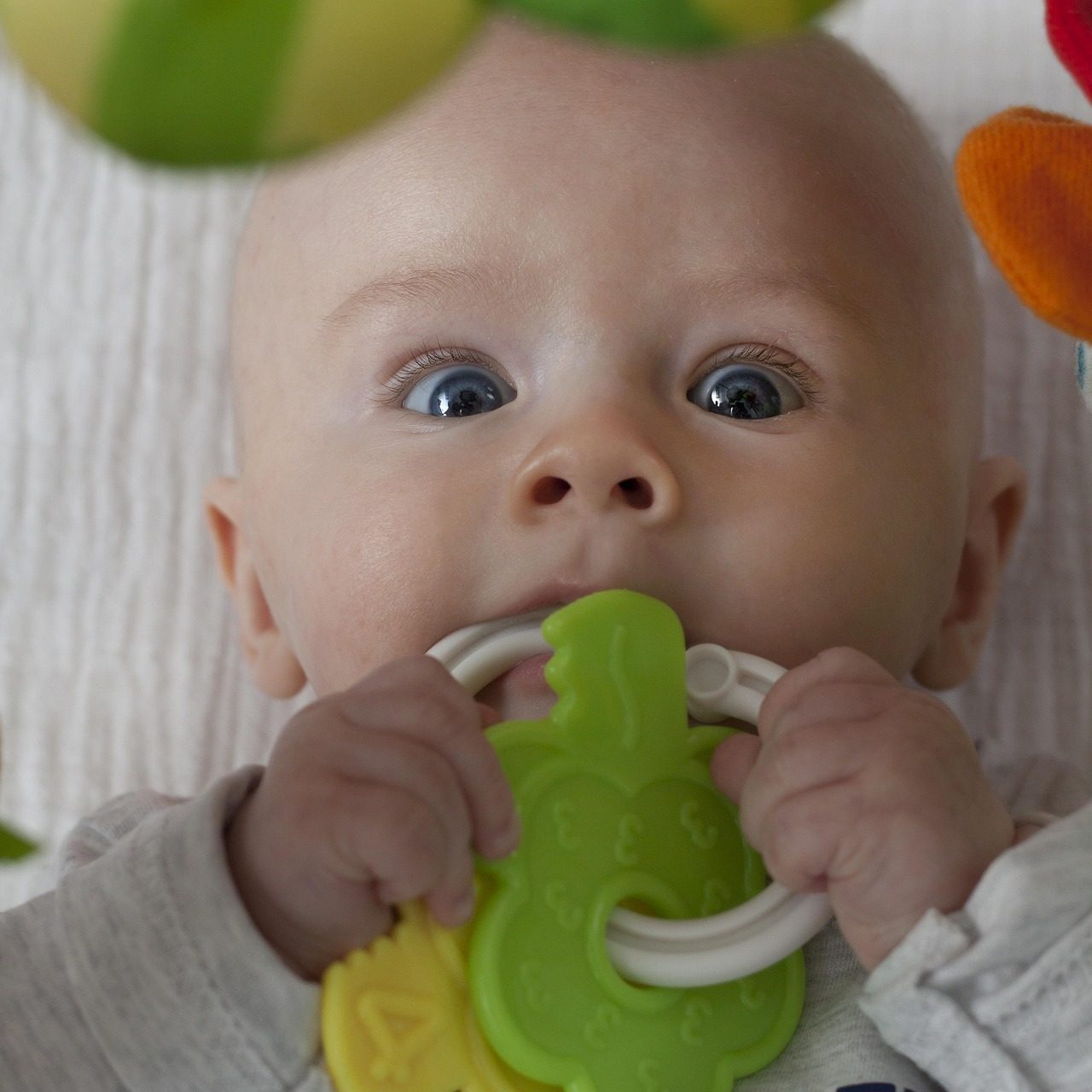
The Office for Product Safety and Standards published a safety report on 27 November 2026 for Rattle Box Safe Teethers sold via Amazon. The teethers can break into small parts, a serious choking risk for under-threes. Here is what the report says, how to check your set, what to do, and how to choose safer teethers.

Written by
Sepehr
Software engineer, soon-to-be dad, uncle to four — the tech-obsessed half of the two of us testing this stuff. Currently building this site with my wife, ahead of our own baby arriving.