Christmas Car Journeys With a Baby: UK Safety Guide
A practical plan for a long Christmas car journey with a baby: how often to stop, what the Lullaby Trust says about car seats, how to fit the seat and harness in winter, what to pack, and what to do if your baby slumps, overheats or you break down.
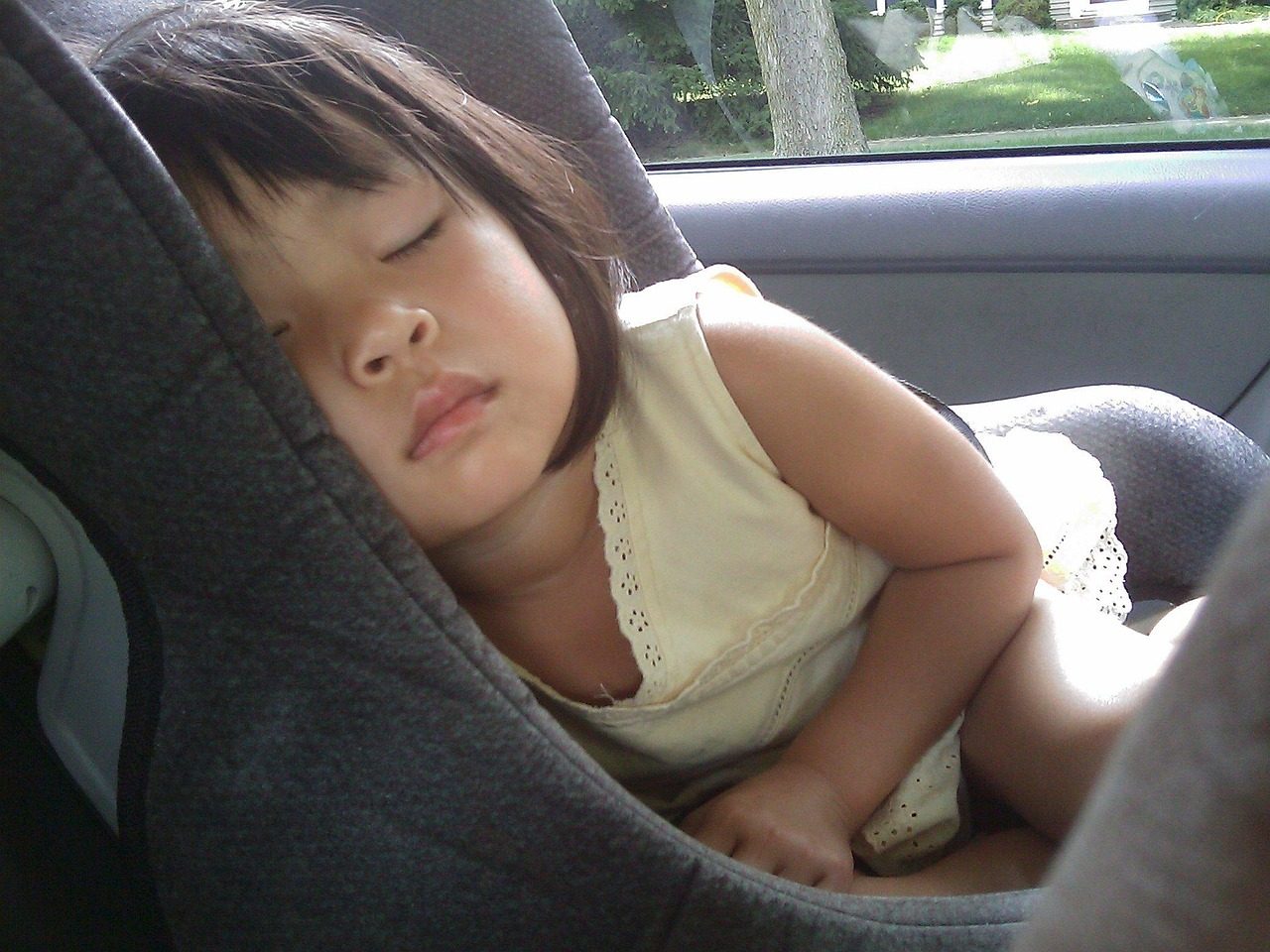
A car journey with a baby is safest when you plan stops, keep the baby in a correctly fitted seat, and take them out for a break rather than letting them sleep in it for long stretches. The Lullaby Trust says to take regular breaks on long drives and to stop at once if your baby slumps forward.
Christmas is the busiest family driving week of the year: grandparents two hundred miles away, a boot packed to the roof, and a newborn who feeds every three hours. This guide gives you a practical plan for the drive itself, with a break schedule, a packing list, a seat-fitting check and a table of what to do if things go wrong. It sits alongside our guides to sleeping away from home at Christmas and Christmas hazards for babies and toddlers.
What the official guidance says about babies in car seats
There is no single magic number, and it is worth knowing why. The Lullaby Trust's car seat page says babies should not sleep in car seats for long periods, that car seats are for travel rather than sleep, and that on a long drive you should stop and take regular breaks, lifting your baby out so they can stretch and move. It does not set a fixed number of minutes on that page.
You will still see "no more than two hours at a time" repeated in hospital leaflets and retailer guides. Treat it as a sensible ceiling, not a target. It also happens to line up with the Highway Code, which recommends drivers take a break of at least 15 minutes after every two hours of driving (Rule 91). For a small baby, a shorter gap is kinder, and the Lullaby Trust advises avoiding long-distance driving altogether with pre-term and young babies, because they may have breathing difficulties if they sit upright in a car seat for too long.
Two more points from the Lullaby Trust apply to every Christmas trip:
- If your baby slumps forward, stop straight away. Pull over somewhere safe, take them out and sit them upright before you carry on.
- When you arrive, take them out of the seat. The Lullaby Trust advises placing them on a firm, flat surface to sleep. A baby who has dozed off in the car should be moved to their cot or travel cot, even if that means waking them.
A realistic break plan for a long Christmas drive
Plan the route around your baby's feeds rather than around the satnav. A drive that looks like four hours on the map is usually six hours door to door once you add feeding, changing and a stretch. The table below is our suggested structure, built on the Lullaby Trust's "regular breaks" advice and the Highway Code's driver-break recommendation.
| Baby's age | Suggested approach | Why |
|---|---|---|
| Newborn (first weeks) | Avoid long drives if you can. If you must go, build in a stop at every feed and keep each stretch short. | The Lullaby Trust advises avoiding long distances with pre-term and young babies. |
| 1 to 6 months | Stop at least every feed. Aim for a full out-of-seat break well inside two hours. | Regular breaks, with the baby lifted out to stretch, per the Lullaby Trust. |
| 6 to 12 months | Stop about every one to two hours. Let them kick and move on a mat. | Same advice; a mobile baby needs the movement and a driver needs the rest. |
| Toddler | Stop at least every two hours. Plan a snack and a run-around. | Matches the Highway Code driver-break recommendation. |
Choose services or a safe car park for stops, not a hard shoulder or an emergency area. The Highway Code says not to stop on a motorway hard shoulder or in an emergency area when you are sleepy, and the same sensible rule applies to feeding or changing a baby.
Timing the drive
Many parents drive during nap time so the baby sleeps through the first stretch. That is fine for the drive, but it means the baby is asleep in a semi-upright seat, so keep the interval short and be ready to stop. The Highway Code also recommends avoiding long journeys between midnight and 6am, when natural alertness is at a minimum, so a "drive through the night so the baby sleeps" plan is one to skip if you are the only driver.
Get the seat right before you load the boot
Most car seat problems come from fitting, not from the seat. Child Car Seats, the RoSPA-backed advice site, lists a quick check to run before every journey: the child is in a suitable seat or belt, the seat is securely fitted (it says to check every journey), and the child locks on the doors are on.
The gov.uk rules add some points that matter for newborns and Christmas luggage:
- Height-based (R129, or i-Size) seats must be rear-facing until your child is over 15 months old.
- If you fit a rear-facing baby seat in the front passenger seat, you must deactivate the front airbag first.
- Children must normally use a car seat until they are 12 years old or 135cm tall, whichever comes first.
Our UK car seat law explainer covers the full set of rules. If you are borrowing a seat from a relative for the trip, read our guide to buying secondhand baby gear safely first, because a seat with an unknown history is the one thing you should not improvise. If you own a Britax Römer Baby-Safe Pro, check our write-up of the Baby-Safe Pro recall before you travel, since the recall notice covers certain batches used reclined on the Vario Base 5Z.
Coats, jumpers and festive onesies
A thick padded coat or a bulky festive all-in-one can leave slack in the harness. Take the coat off, strap your baby in, then put the coat or a blanket over the top of the harness. We explain how to check the fit in our winter coat and car seat safety guide. The same applies to carrying a baby straight from a warm house to a cold car: dress them in thin layers, and keep the car warm rather than overdressing them, because overheating is also a worry. Our winter room temperature guide has the temperature advice.
Who sits where, and what goes in the boot
If you can, travel with a second adult in the back or the passenger seat who can watch the baby and help with stops. A baby cannot be watched safely by the driver, and a quiet baby is one you should be checking on at every break. Check the seat position and the baby's head and chin at each stop.
Loose items are a hazard in any crash, and Christmas luggage makes the problem worse. Keep heavy items low in the boot, use the boot cover if you have one, and do not stack bags or presents on the parcel shelf. Keep a small bag within reach that holds only what you need on the road, so you are not rummaging in the boot at a services at 7pm in the rain.
What to pack for the drive
- Nappies, wipes and nappy bags, plus a spare outfit for the baby and a top for you. A well-organised changing bag makes this easier.
- Pre-measured formula in a dispenser and a flask of boiled water if formula feeding, or a feeding cover and a drink for you if breastfeeding. Do not rely on a hot tap at a services.
- A play mat or blanket for floor time at stops.
- Muslins, a spare dummy if you use one, and a sick bowl or towel for older babies and toddlers who get car sick.
- A car seat mirror or a window shade, if you use them, attached securely.
- Any medicines you already use, kept at hand rather than in the boot.
You can tick the travel items off in your baby checklist so nothing gets left on the kitchen counter.
Keeping the baby comfortable without breaking safety rules
Do not attach toys, mobiles or cushions to the seat or harness unless they are supplied or approved by the car seat maker. Anything that comes with the seat is tested with it; accessories bought separately are not part of that test. Avoid sitting anything heavy on the seat next to the baby, and do not fit extra padding behind or under your baby. A rolled muslin or blanket tucked around a small baby inside the seat is a common habit, but check your seat's manual for what the manufacturer allows.
For feeding, the safest approach is to stop. Do not feed a baby in the car while the vehicle is moving, and do not prop a bottle. Our report on baby self-feeding pillows explains why propped feeding is dangerous.
If the car breaks down or you get stuck in traffic
A standstill on a motorway in December is a risk for a baby who needs a feed or a change. Our plan:
| Situation | What to do |
|---|---|
| Stuck in traffic for a long stretch | Stay in the seat while the vehicle is moving. If you are stationary and it is safe, the second adult can take the baby out and sit them upright for a few minutes. Keep to the break plan rather than waiting for a services. |
| Baby slumps forward in the seat | Stop in a safe place, lift them out and sit them upright before carrying on (Lullaby Trust advice). |
| Baby is hot, flushed or clammy | Pull over, take a layer off and cool the car. For a high temperature, follow our baby fever guide and call 111 for advice. |
| Baby is struggling to breathe, floppy or blue | Call 999. |
| Breakdown | Follow the Highway Code guidance for your road type and call your breakdown provider. Keep the baby with you and wrap up warmly if you have to wait outside the car. |
Is it time for a new seat before the trip?
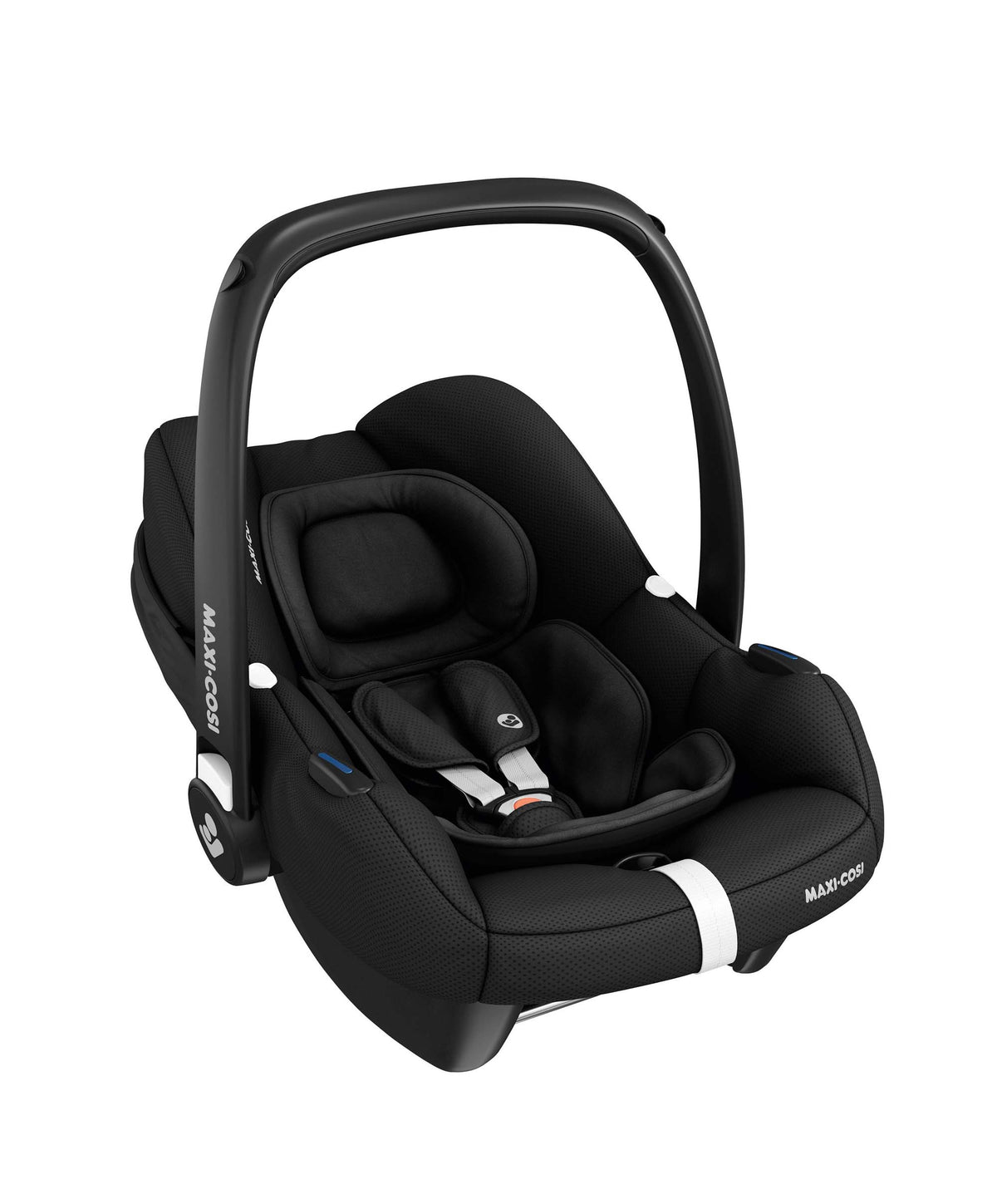
If your baby has outgrown their infant carrier, a long drive is not the time to find out. Signs include the top of the head sitting near the top of the shell, or the shoulder straps no longer coming through at or just below shoulder height. Check your manual for the exact height rule for your seat; it varies by model. Seats such as the Maxi-Cosi CabrioFix i-Size (listed at £175 on our site) are specced for a stated height range, so read the label rather than going by age. Our infant car seat comparison by budget and the infant car seat picks compare the main options. We have not tested these hands-on, so treat details as manufacturer specs.
Be wary of deals on seats at this time of year. Our guide to checking Black Friday car seat discounts are safe explains how to confirm that the seat is genuine, current and approved.
Common mistakes to avoid
- Treating the seat as a bed. The Lullaby Trust says car seats are for travel, not sleep, so move your baby to a flat surface at the other end.
- Not stopping because the baby is asleep. A sleeping baby still needs a break, and the Highway Code recommends the driver rests too.
- Bulky coats under the harness. Put the coat on top, not underneath.
- Skipping the pre-journey check. Child Car Seats says to check the seat is secure every journey.
- Driving tired. Rule 91 of the Highway Code says not to begin a journey if you are tired. After a night with a newborn, take that seriously and consider splitting the trip over two days.
- Leaving the baby alone in the car. Even a quick stop to pay for fuel is one where a second adult or the baby comes with you.
Quick checklist before you set off
- Seat is the right size, rear-facing and fitted securely, with the harness snug and coat off.
- Front airbag is off if the seat is in the front passenger seat.
- Route has stops planned around feeds, with a stop at least every two hours at the outside.
- Driver is rested, and a second adult is available if possible.
- Boot is packed with heavy items low and nothing loose on the parcel shelf.
- A flat, safe sleep space is ready at the destination, as set out in our sleeping away from home guide.
The short version: plan your stops, check the seat, keep the coat off the harness, and take the baby out when you arrive. A few extra stops add time but remove most of the avoidable risk.
Mentioned in this guide
Frequently asked questions
How long can a baby safely stay in a car seat?+
The Lullaby Trust's car seat page does not give a fixed number of minutes. It says babies should not sleep in car seats for long periods, that car seats are for travel rather than sleep, and that on a long drive you should stop for regular breaks and lift your baby out so they can stretch and move. You may see a two-hour limit quoted elsewhere. Treat it as an outer ceiling, and stop sooner for a newborn or whenever your baby needs a feed, a change or a cuddle. The Lullaby Trust also advises avoiding long-distance driving with pre-term and young babies.
Can my baby sleep in the car seat during a long drive?+
Babies often doze on the move, and that is hard to avoid. The Lullaby Trust's concern is long periods in the seat, so keep stretches short and keep your regular breaks even when the baby is asleep. If your baby slumps forward, stop straight away, take them out and sit them upright before you carry on. When you arrive, take them out of the seat and put them on a firm, flat surface to sleep, such as a cot or travel cot, even if that means waking them. Do not leave a sleeping baby in the seat indoors.
Should I take my baby's coat off in the car seat?+
Yes. A thick coat or bulky festive all-in-one can leave slack between your baby and the harness, so the straps are looser than they look. Take the coat off, fasten the harness snugly, then lay the coat or a blanket over the top of the straps. Dress your baby in thin layers and warm the car before you set off rather than over-wrapping them. Our winter coat and car seat guide shows how to check the harness fit and what to do for the journey from a warm house to a cold car.
Can I put a rear-facing baby seat in the front passenger seat?+
The gov.uk rules say you must deactivate the front airbag before fitting a rear-facing baby seat in the front seat. Height-based (R129, or i-Size) seats must stay rear-facing until your child is over 15 months old. Many parents prefer the back seat so a second adult can sit beside the baby and watch them. Whichever position you choose, check the seat is securely fitted before every journey, which is the advice from Child Car Seats, and read your car and seat manuals for the approved fitting positions.
Is it safe to travel a long way with a newborn at Christmas?+
The Lullaby Trust advises avoiding driving long distances with pre-term and young babies, because they may have breathing difficulties if they sit upright in a car seat for too long. If a long trip is unavoidable, break it into short stretches, stop at every feed, take your baby out at each stop, bring a second adult to sit with them, and consider splitting the journey over two days. If your baby was born early or has a health condition, ask your midwife, health visitor or GP before you travel.
Sources
Related guides

Child Benefit for a New Baby (2026/27): Rates & Claiming
How to claim Child Benefit for a new baby in the UK: current weekly rates, the three-month backdating limit, who should claim, National Insurance credits, and what to do about the High Income Child Benefit Charge if you earn over £60,000.

Baby Christmas Pyjamas UK: Flammability, Cords, Overheating
Are baby Christmas pyjamas safe? Plain cotton festive babygrows are fine as a first layer, but novelty hoods, hats, ties and fleece add heat and hazards. We cover UK nightwear flammability rules, cord checks and a what-to-wear table.

Next Baby Sleeping Bag Recall: How to Check the Fit
Next has withdrawn its own-brand pink floral 2.5 tog baby sleep bag after a parent measured an oversized neck opening. Here is what to do if you own one, a two-minute fit check for any sleeping bag, and safer UK options.

Written by
Sepehr
Software engineer, soon-to-be dad, uncle to four — the tech-obsessed half of the two of us testing this stuff. Currently building this site with my wife, ahead of our own baby arriving.