Best Baby Swaddles Compared: UK Guide to 6 Options
We compare six swaddles and sleep bags we list, from about £25 to £40, with tog ratings, who each suits, a six-month cost plan and the Lullaby Trust rules on hips, overheating and when to stop swaddling.
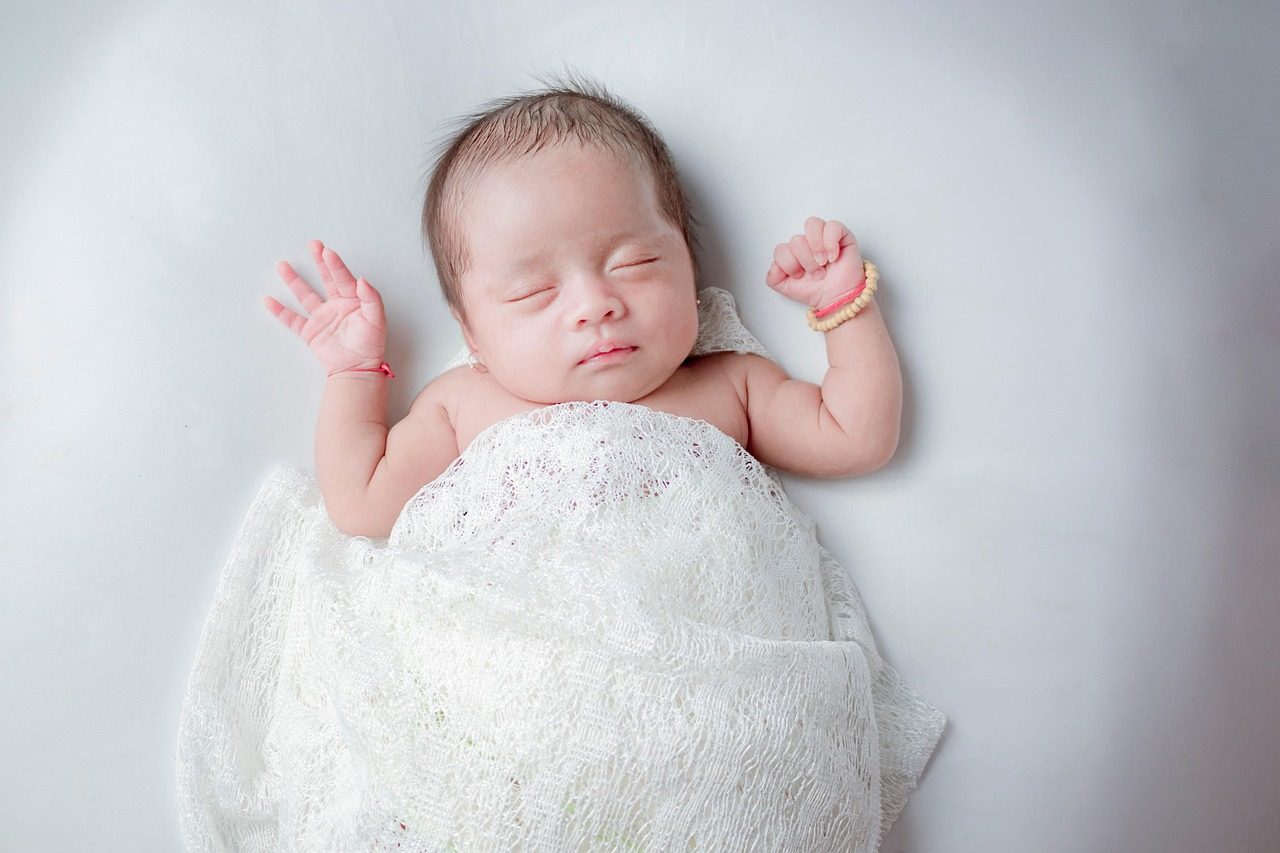
The best baby swaddles in the UK are the ones that keep hips loose, come with a tog rating and stop being used the moment your baby shows signs of rolling. We compared six swaddles and sleep bags we list, from about £25 to £40, and explain which suits which baby.
Quick verdict: which swaddle for which baby
There is no single winner, because a swaddle is a short-lived product and the right one depends on how your baby settles. As a rule: choose an arms-up zip swaddle if your baby likes hands near their face, a wing-wrap swaddle bag if the startle reflex keeps waking them, a budget wrap if you only want a few weeks of use, and a sleep bag as the long-term buy. We have not used these products ourselves; the comparison is built from manufacturer specs, listed UK prices and the safety guidance of the Lullaby Trust and NHS.
If you are still deciding whether to swaddle at all, read our guide to swaddles versus sleep sacks first, and our step-by-step on how to swaddle a newborn safely. You can also browse every option on our swaddles and sleepsuits roundup.
The safety rules that matter more than the brand
Before comparing products, it helps to know what the Lullaby Trust actually asks of any swaddle, because these rules apply whichever one you buy:
- Always on the back. The Lullaby Trust says to place a baby on their back to sleep, swaddled or not, never on their front or side.
- Looser at the hips. It advises keeping the swaddle looser around the hips so the legs can move naturally, because tight swaddling can contribute to hip problems.
- Nothing above the shoulders. Wrap securely so the fabric cannot come undone, but do not swaddle above the shoulders, and keep the head uncovered.
- Stop at the first signs of rolling. The Lullaby Trust says to stop swaddling with the arms inside once a baby shows signs of rolling, because they could get stuck on their tummy.
- Do not overdress underneath. Check the chest or back of the neck; if the skin is hot or sweaty, remove a layer. The Lullaby Trust links overheating to a higher risk of SIDS and says to keep the room at 16 to 20°C.
- Never swaddle when bed-sharing, or when your baby has an infection or fever, according to the Lullaby Trust.
The practical consequence is that a good swaddle is judged by how easy it makes these rules, not by how snug it looks in the photo. A bag with a clear tog rating, a zip that opens from the bottom for night changes, and a roomy lower half does most of the work for you. Our safe sleep guide for newborns sets out the wider picture.
Swaddles and sleep bags compared
Prices below are the listed prices on our product pages and can change, so check the retailer before buying. Sizes and tog ratings are as specced by each manufacturer.
| Product | Type | Tog | Listed price | Best for |
|---|---|---|---|---|
| Love To Dream Swaddle UP Original | Arms-up zip swaddle | 1.0 | £27.99 | Babies who self-soothe with hands by the face |
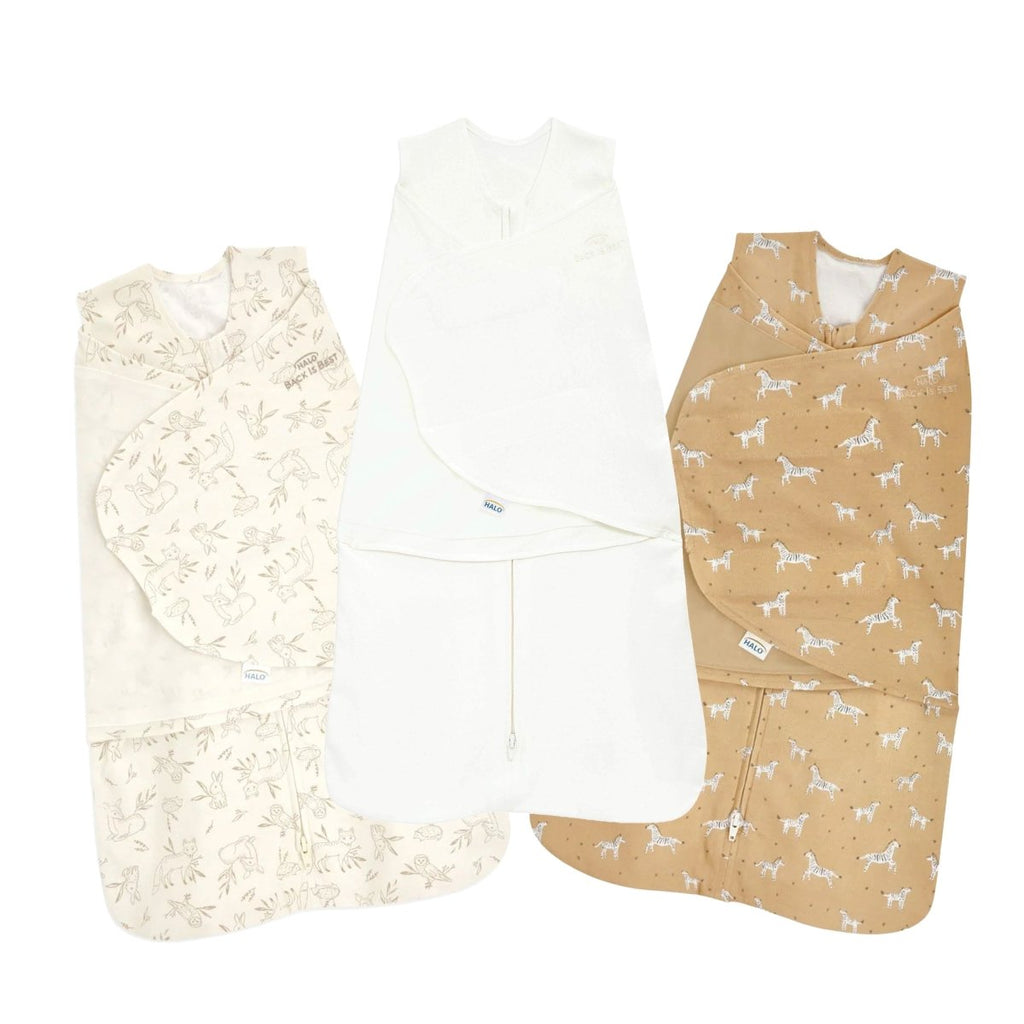
| HALO SleepSack Swaddle | Zip sack, adjustable wings | 1.5 | £24.99 | Parents who want arms-in, arms-out flexibility |
| ergoPouch Cocoon Swaddle Bag | Wing-wrap swaddle bag | 1.0 | £35 | Strong startle reflex, hip-friendly fit |
| SwaddleMe Original (pack of 2) | Hook-and-loop wrap | Not rated | £24.99 for two | Lowest cost, a short newborn window |
| Tommee Tippee Original Grobag | Sleep bag | 2.5 | £26 | The long-term bag after swaddling |
| Purflo Baby Sleep Bag | Sleep bag, tapered base | 2.5 | £40 | Keeping a baby from sliding down in the bag |
Our picks in more detail
Best arms-up swaddle: Love To Dream Swaddle UP
The arms-up design is the whole point: instead of pinning arms down, it holds a baby snugly while leaving hands free near the face. The manufacturer positions it for newborn to around six months by weight, in a cotton-rich jersey at 1.0 tog, with a two-way zip and zip-off arm wings. The trade-off, according to the listed cons, is a short usable window before rolling starts and a fiddly first few attempts on a wriggling newborn. It also means buying a sleep bag afterwards.
Best for flexibility: HALO SleepSack Swaddle
At £24.99 and 1.5 tog, the HALO uses two hook-and-loop wings that let you swaddle arms in, out, or hands-to-face without re-wrapping. That is useful as the stop-swaddling point approaches: you can free the arms without changing product. It is specced as 100% cotton for newborn to roughly six months by weight.
Best for a strong startle reflex: ergoPouch Cocoon
The Cocoon, at £35 and 1.0 tog, wraps the arms with a wing design but leaves a roomy, hip-friendly bottom half in a bamboo-cotton blend. It is the dearest swaddle here and, as the cons note, needs replacing more often as baby grows because sizes are narrower than an adjustable wrap. Many parents will see it as a good choice if the startle reflex is the main reason for broken sleep.
Best budget swaddle: SwaddleMe Original
A pack of two for about £25 makes this the cheapest way to try swaddling and cope with the wash rotation. It is not tog-rated, so you must manage the layers underneath yourself, and the hook-and-loop wings can work loose more easily than a zipped bag overnight. Wrap carefully so legs and hips keep room to move.
Best sleep bag to move on to: Tommee Tippee Grobag
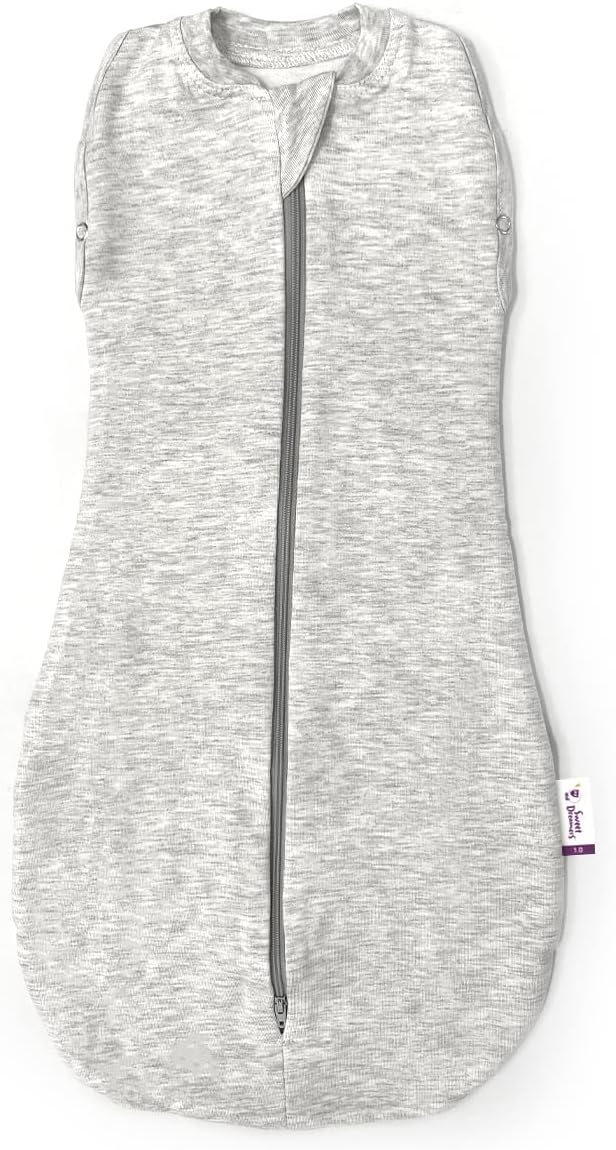
The Original Grobag is the default sleep bag for many UK families: a roomy, hip-healthy cut, two-way zip with shoulder poppers and a range of tog weights. At £26 it is a sensible purchase to make in advance, because the day you stop swaddling is rarely planned. Our baby sleeping bag tog guide for UK winter explains how to match the tog to your room.
Best for a baby who slides down: Purflo Sleep Bag
Purflo's tapered base is designed to help keep a baby in a back-sleeping position. At £40 it is the priciest product in the table, and the shaped base is a refinement rather than a dramatic change, so it is worth it mainly if you have had trouble with babies wriggling down inside a standard bag.
How to choose: a simple decision path
- Is your baby under about eight weeks and startling awake? A swaddle (arms-up, wing-wrap or adjustable) is worth trying.
- Does your baby fight having arms held in? Skip arm-in swaddling and go straight to a sleep bag.
- Is the room 16 to 20°C? Match tog to the room and the manufacturer's chart, not the season. The Lullaby Trust does not publish a tog chart because every product and every baby differs, so follow the product's own guidance. Our winter room temperature guide covers the heating side.
- Is rolling starting? Stop arm-in swaddling immediately and switch to a sleep bag with arms free.
What swaddling really costs over the first six months
A swaddle is a rental-length purchase. Most babies outgrow swaddling in the first few months, so buying a swaddle in two sizes plus a sleep bag in two tog weights quickly adds up. A realistic budget, using the listed prices above, looks like this:
| Plan | What you buy | Approx. cost |
|---|---|---|
| Lean | One SwaddleMe two-pack, one Grobag | About £51 |
| Middle | Two HALO or Swaddle UP, one Grobag | About £76 to £82 |
| Fuller | One Cocoon, one Swaddle UP, one Purflo | About £103 |
Prices are listed prices and change often. Black Friday often brings discounts on sleep products, so our Black Friday baby deals guide is a good place to check what is worth buying. Add whichever you pick to your baby checklist so you do not double up.
Common mistakes to avoid
- Buying too many swaddles. The window is short; one or two is plenty.
- Layering extra blankets over a swaddle. The Lullaby Trust advises not adding extra bedding over a swaddle.
- Using a hat indoors. The Lullaby Trust says hats are not needed indoors and can lead to overheating.
- Ignoring size. Sizing is by weight; a bag that is too big can ride up, and too small restricts hips.
- Using second-hand products without checking labels. A missing care or size label means you lose the tog and sizing information.
A quick check before every sleep
Whichever product you choose, a thirty-second routine keeps the Lullaby Trust rules practical. First, check the room: a thermometer reading of 16 to 20°C. Second, check what is underneath: a vest or lightweight sleepsuit is usually enough, because the swaddle or bag is itself a layer. Third, check the fit: the fabric should sit below the shoulders, and the legs should be free to move, as the Lullaby Trust advises. Finally, check the sleep space: the NHS and Lullaby Trust advise a firm, flat mattress, baby on their back, and a clear sleep space. If you use a bedside crib, see our bedside cribs and Moses baskets roundup. In the morning, feel the chest or back of the neck rather than the hands, which are normally cooler, and adjust the layers or the tog the following night.
Also keep in mind that two or three swaddles is often enough in practice. Babies wet and spit up through them, so a spare is useful, but a drawer of ten is a waste of money. If you are weighing the whole newborn shopping list, our guide to baby gear you do not actually need puts swaddles in context next to everything else.
When to seek help
If your baby seems very hot, sweaty or unusually sleepy, or has a fever, remove layers, stop swaddling and contact your GP or call NHS 111. NHS guidance says to call 111 or your GP if you are worried about your baby's health, and to call 999 in an emergency. Questions about hips, such as legs that seem stiff or uneven, are worth raising with your health visitor or GP. The Lullaby Trust notes that tight swaddling around the hips can contribute to hip problems, so mention how you swaddle when you ask.
Mentioned in this guide
Frequently asked questions
Are swaddles safe for newborns UK?+
The Lullaby Trust says swaddling can be done safely if a few rules are followed: always place the baby on their back, keep the swaddle looser around the hips, do not swaddle above the shoulders, keep the head uncovered and do not overdress the baby underneath. It also says never to swaddle when bed-sharing or when a baby has an infection or fever, and to stop swaddling with the arms inside once a baby shows signs of rolling. Check the chest or back of the neck for overheating and keep the room at 16 to 20°C.
When should I stop swaddling my baby?+
The Lullaby Trust says to stop swaddling with the arms inside as soon as your baby shows signs of rolling, because they could get stuck on their tummy. That can happen earlier than many parents expect, so do not wait for a first full roll. Moving on to a sleep bag with the arms free is the usual next step, which is why many parents buy one before they think they need it. Our tog guide explains how to match a sleep bag to your room temperature, and your health visitor can advise if you are unsure whether your baby is ready.
What tog swaddle do I need in winter?+
There is no single answer. The Lullaby Trust does not publish a tog chart because every product's insulation differs, layers trap heat and every baby is different, so follow the manufacturer's guidance for the product you buy. The NHS and Lullaby Trust recommend a room temperature of about 16 to 20°C, and say to check your baby's chest or the back of their neck: if it is hot or sweaty, remove a layer. Do not add blankets over a swaddle, and do not use a hat indoors. Adding a clothing layer is often safer than heating the room above 20°C.
Sources
Related guides
Cot Mattress UK: What to Check Before You Buy (2026)
Black Friday is a good moment to buy a cot mattress, but only if it passes the safety basics. The NHS and Lullaby Trust say it should be firm, flat, waterproof-covered and fit the cot with no gaps. Here is the checklist, a comparison of mattress types, second-hand rules and the sale-season traps to avoid.
BlueMello Swaddle Blanket Recall (Amazon): OPSS Warning
OPSS has recalled the BlueMello Baby Swaddle Blanket sold on Amazon because a baby can slip below the covers, risking overheating and airway obstruction. Here is what to do, how to check any swaddle, and safer UK alternatives.
Baby Sleep Away From Home at Christmas: UK Safe Guide
Staying with family over Christmas? Here is how to set up safe sleep for your baby away from home: checking a borrowed cot and mattress, using a travel cot, handling car seats and sofas, and what to pack, with NHS and Lullaby Trust guidance.

Written by
Sepehr
Software engineer, soon-to-be dad, uncle to four — the tech-obsessed half of the two of us testing this stuff. Currently building this site with my wife, ahead of our own baby arriving.