The Baby Gear You Don't Actually Need
Baby registries and "newborn must-have" lists push dozens of products, but most of them are optional at best. Here's what's genuinely worth buying, what you can skip, and the few items safety bodies say to avoid outright.
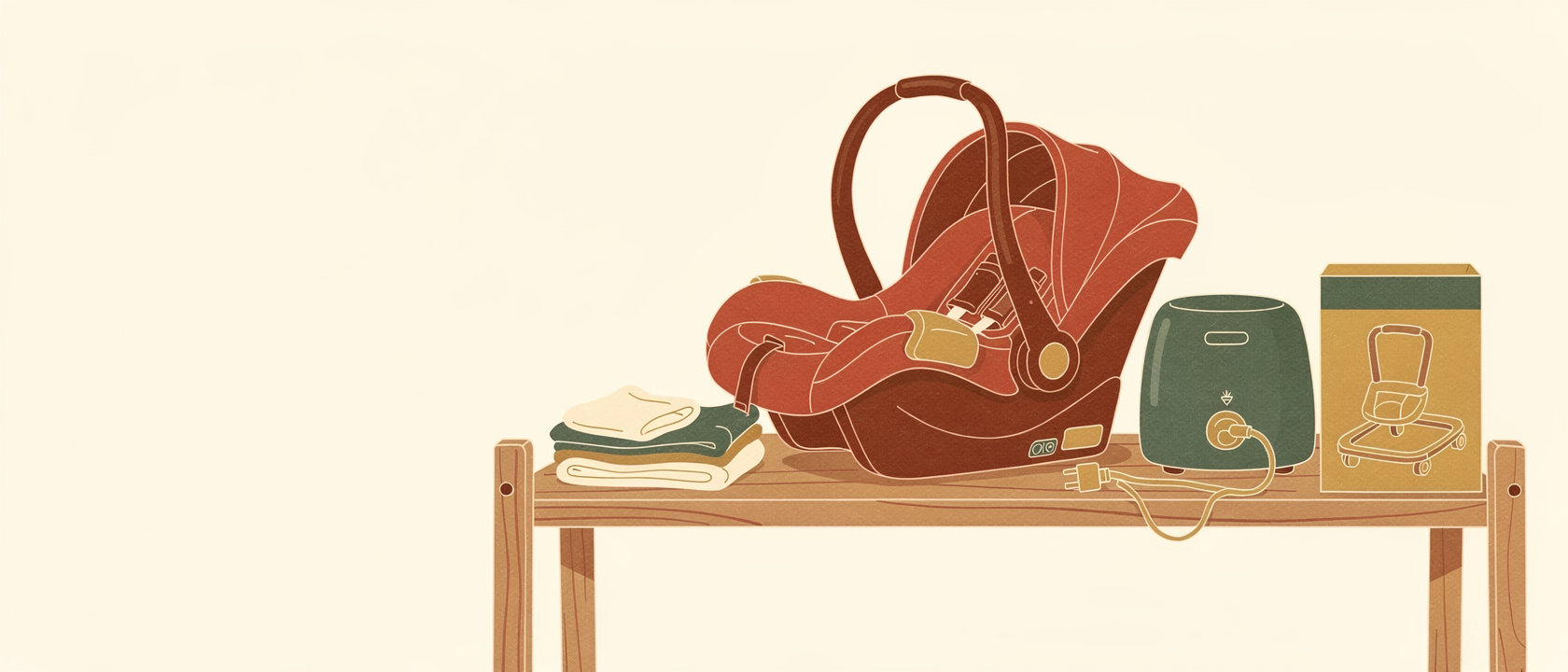
Most newborn "essentials" lists are really product marketing dressed up as advice, and registries have every incentive to make the list longer, not shorter. A small number of things are genuinely non-negotiable — a rear-facing car seat, a safe flat sleep space, nappies, and somewhere warm to change a baby — and everything else sits somewhere between "nice to have" and "actively not recommended". This guide splits the common nursery-shelf items into those three buckets, so you can spend on what matters, skip the rest without guilt, and know exactly why a handful of popular items are worth avoiding rather than just ignoring.
What's actually non-negotiable
Before the skip list, the short list of things that aren't optional: a car seat that's fitted and used correctly for every car journey, a firm flat mattress in a clear cot, Moses basket or crib for sleep, and a room thermometer so you can keep a sleeping baby's room at 16–20°C, which the Lullaby Trust links to lower SIDS risk. Car seat use itself is a legal requirement in the UK, not just a safety recommendation — see our UK car seat law explainer for what's actually required by age and size. Add nappies, wipes, a handful of sleepsuits in the size the baby actually is, and a way to feed them, and that's the real non-negotiable list. Beyond it, nearly everything else on a typical registry is discretionary — some of it genuinely handy, some of it dead weight in a cupboard by month three.
Marketed as essential, genuinely optional
These show up on almost every "newborn must-haves" list, but plenty of parents never buy them and don't miss them:
- Wipe warmers. A cold wipe makes most babies briefly unhappy, not harmed. It's a comfort gadget, not a safety or health item, and one more thing plugged in near a changing table.
- Bottle warmers. A jug of warm water does the same job for no extra cost, warms at a similar rate, and doesn't tie up a socket permanently. See our guide to sterilising feeding equipment for what actually matters at bottle-prep stage.
- Dedicated baby food makers. A stick blender or a small food processor purées and steams just as well, and keeps being useful for years after weaning ends, unlike a single-purpose gadget.
- Special baby laundry detergent. Unless a baby has diagnosed sensitive skin or eczema, there's no official guidance that babies need separate detergent from the rest of the household wash.
- A full 0–3 month wardrobe bought in advance. Newborns grow fast and are frequently gifted clothes; a handful of sleepsuits and vests to start, topped up once you know the baby's actual size, avoids a drawer of unworn items.
- Nappy-specific disposal bins. A regular bin with a lid and a liner does the job; the scented cartridge refills are the ongoing cost that makes these systems expensive, not the bin itself.
- Crib mobiles and matching nursery decor sets. Pleasant to look at, but a baby's early interest in faces and simple contrast doesn't depend on a themed matching set — a plain, safely fitted mobile does the same job as an expensive one.
- Knee pads for crawling. Most babies crawl on carpet or soft flooring without any trouble; this solves a problem few families actually have.
Marketed as essential, actually advised against
A smaller group of "must-haves" aren't just unnecessary — safety bodies specifically recommend against them:
Cot bumpers
The Lullaby Trust advises against using any type of cot bumper, including mesh versions. Once a baby starts to roll or pull themselves up, bumpers create an entanglement and fall risk, and they're one of the specific items the Trust says to keep out of a baby's sleep space entirely — see its full safe sleep guidance for newborns for what a genuinely clear cot looks like. They're still sold as part of matching cot bedding sets, which is exactly why they keep landing on registries despite the advice against them.
Baby walkers
RoSPA's falls-prevention guidance flags baby walkers as a stairs-and-falls hazard, since a walker gives a baby speed and reach well ahead of their own coordination, including the ability to reach a flight of stairs faster than a stair gate can stop them. They're widely sold as a development aid; the safety case against them is well established, and a stationary activity centre or play saucer gives similar entertainment without the mobility risk.
Breathing and movement monitors sold as SIDS prevention
Under-mattress movement sensor pads and "breathing" monitors are often marketed on the promise of preventing sudden infant death syndrome. The Lullaby Trust is explicit that there's no evidence baby monitors prevent SIDS, and that following safer sleep practice, not a gadget, is what actually reduces risk. A standard audio or video monitor bought for convenience and reassurance is a different, reasonable purchase; a monitor bought specifically to prevent SIDS is not supported by the evidence. See our guide to choosing and using a baby monitor safely for what a monitor can and can't do.
Shoes before a baby is walking outdoors
Shoes are commonly bought as soon as a baby can stand, but the guidance runs the other way. Bradford District Care NHS Foundation Trust's advice on babies' and children's feet is that babies don't need shoes indoors or before they're walking, and that going barefoot lets a baby feel the floor and develop balance and coordination naturally. Shoes only earn their place once a baby is walking confidently outdoors, where they're needed for protection from rough or cold ground, not as a walking aid — so the "first shoes" moment can wait longer than most shoe shop marketing suggests.
The genuinely useful cheap stuff
To balance the skip list: a few low-cost items are worth buying and get used daily. A pack of muslins for mess and comfort, a room thermometer, a decent supply of vests and sleepsuits in the size the baby actually is, and a simple first aid kit all earn their keep — see our guide to building a baby first aid kit for what's worth having in the house from day one. None of these are exciting purchases, which is probably why they get left off the glossy "must-have" lists in favour of the gadgets that photograph better.
The pattern worth remembering
Almost everything in the skip-it and avoid-it lists above shares a trait: it's sold on convenience or aesthetics rather than a genuine safety or developmental need. When a product claims a health or safety benefit specifically, that's the moment to check it against NHS, RoSPA or Lullaby Trust guidance rather than the marketing copy on the box, because that's exactly where a few popular items — cot bumpers, walkers, and SIDS-prevention monitors among them — turn out to be actively discouraged rather than merely optional.
Frequently asked questions
Do I need a baby monitor?+
A monitor is a reasonable convenience purchase, but the Lullaby Trust is clear that no monitor is proven to prevent SIDS — safer sleep practice does that job, not a gadget.
Are baby walkers safe to use?+
RoSPA's falls guidance flags baby walkers as a stairs-and-falls hazard because they give a baby more speed and reach than their coordination can handle, including reaching stairs faster than a stair gate can stop them.
Do I need to buy a wipe warmer or bottle warmer?+
No — both are comfort gadgets rather than safety or health essentials. A jug of warm water works for bottles, and cold wipes are an annoyance, not a risk.
When does my baby actually need shoes?+
Not before they're walking, and not indoors even after that. NHS foot health guidance recommends going barefoot until a baby is walking confidently outdoors, where shoes are then needed for protection.
Sources

Written by
Sepehr
Software engineer, soon-to-be dad, uncle to four — the tech-obsessed half of the two of us testing this stuff. Currently building this site with my wife, ahead of our own baby arriving.