Swaddle vs Sleep Sack: Which Is Safer, and When to Switch
Both a swaddle and a sleep sack can be part of safe sleep — the difference is timing. Here's what each does, why swaddling stops the moment your baby can roll, and how to pick a sleep sack once you switch.

A swaddle and a sleep sack solve different problems, and they're not interchangeable at every stage. A swaddle wraps a newborn's arms to calm the startle (Moro) reflex; a sleep sack is a wearable blanket that keeps any baby at a steady temperature without loose bedding. The safe choice depends almost entirely on one thing: whether your baby can roll. Once they can, arms need to be free — which means it's sleep sack time, not swaddle time.
What a swaddle actually does
Newborns are born with a startle reflex that can wake them repeatedly through the night. Wrapping the arms snugly against the body dampens that reflex, which is why swaddling can help very young babies settle. The Lullaby Trust is clear that a swaddled baby must still go down on their back, in a sleeping bag or under light bedding only, in a room kept at 16–20°C, and never with anything covering the head. Swaddles should sit loosely around the hips — tight wrapping across the hips and legs raises the risk of hip dysplasia — while the wrap around the chest and arms should be snug enough that it doesn't come loose, but never restrict breathing.
Materials matter too: the Lullaby Trust recommends a thin muslin or cot sheet rather than a thick blanket, dressing baby lightly underneath, and never adding extra bedding over the top of a swaddled baby, since overheating is one of the known SIDS risk factors. For the step-by-step technique, see our guide on how to swaddle a newborn safely.
The one rule that ends swaddling: rolling
The Lullaby Trust's guidance is unambiguous on this point — once a baby shows any sign of rolling, stop swaddling with the arms wrapped inside. A baby who rolls onto their front with their arms pinned can't push themselves back over, which puts them in an unsafe sleeping position they can't get out of. This isn't a 'when they're a bit older' judgement call; it's tied to the individual baby's own development rather than a fixed age, so it's worth watching for the first attempt rather than waiting for a milestone date. From that point, arms need to be out and free for every sleep, which in practice means moving to a sleep sack.
What a sleep sack is for
A sleep sack (or baby sleeping bag) is a wearable blanket with armholes and a fitted neck, designed to replace loose blankets and sheets. The NHS lists a baby sleeping bag alongside lightweight blankets and sheets as a safe option from birth, and the Lullaby Trust notes that once you're using a sleeping bag, no extra bedding on top is needed — it can't be kicked off, can't ride up over the baby's face, and holds a steady temperature through the night. Unlike a swaddle, a sleep sack leaves the arms completely free, so it remains safe to use for as long as your baby fits one — through infancy and into the toddler years for many families.
Fit is the main safety check: the neck opening should sit snugly enough that your baby can't slip down inside the bag, and the armholes should be close-fitting without restricting shoulder movement. Sleep sacks are typically sized by warmth rating rather than just age, so choosing the right one is really a room-temperature decision — see our guide on safe sleep for newborns for the full breakdown of the NHS's 16–20°C guidance, how to check the manufacturer's warmth rating against your room, and how to judge whether your baby is too hot or too cold.
Swaddle vs sleep sack, side by side
| Question | Swaddle | Sleep sack |
|---|---|---|
| Arms | Wrapped in (until rolling starts) | Always free |
| Safe from | Birth | Birth |
| Safe until | First sign of rolling | As long as it fits |
| Main job | Settles the startle reflex | Steady temperature, no loose bedding |
| Sleeping position | Back only, every time | Back only, every time |
Can you use both?
Yes — many parents swaddle a very young newborn for the first weeks to help with settling, then transition to a sleep sack either as a deliberate step-down (arms in, then one arm out, then both arms out) or simply because their baby starts showing rolling attempts. There's no requirement to swaddle at all; a sleep sack from birth is equally in line with NHS and Lullaby Trust guidance, and it sidesteps the rolling cut-off entirely since arms are free from day one.
Making the switch without a rough few nights
A sudden switch from a snug swaddle to arms-free sleep can unsettle a baby who is used to the startle reflex being contained, so a gradual step-down often works better than an overnight change. A common approach is one arm out for a few nights, then both arms out while still in the swaddle wrap, before moving into a proper sleep sack. Some sleep sacks are designed specifically for this transition, with zip-off or velcro wings that hold the arms in place initially and can be removed once your baby is ready for full arm freedom — useful if your baby startles easily but is also showing early rolling attempts. Whichever route you take, the same rule holds: the moment your baby can roll, arms come fully out for every sleep, with no exceptions for a bad night.
Choosing a sleep sack: fit over features
Sleep sacks are sold in a range of styles — sleeved, sleeveless, with or without a fold-over top for smaller babies — but fit and warmth rating matter far more than any of that. Check that the neck and armholes fit snugly without your baby's chin or arms slipping through, and size by your baby's height and weight rather than age alone, since a sleep sack that's too big carries the same slip-down risk as a loose blanket. Avoid sleep sacks with hoods, embellishments, or anything your baby could pull loose and get tangled in, and dress underneath according to room temperature rather than adding extra layers on top of the sack.
What to avoid either way
Whichever you use, the same underlying rules apply: always place your baby on their back to sleep, keep the cot clear of pillows, loose blankets, and soft toys, and never let your baby sleep in a swaddle while bed-sharing — the Lullaby Trust specifically advises against swaddling during co-sleeping, and the NHS advises using a baby sleeping bag instead if you're sharing a bed. The Lullaby Trust also advises against swaddling a baby who has a fever or infection.
Frequently asked questions
When should I stop swaddling my baby?+
Stop swaddling with the arms wrapped in as soon as your baby shows any sign of rolling, even a single attempt — the Lullaby Trust advises this because a swaddled baby who rolls onto their front can't use their arms to roll back. This is tied to your baby's own development rather than a fixed age, so watch for the first attempt rather than waiting for a milestone date.
Is a sleep sack safer than a swaddle?+
Both are considered safe when used correctly, but a sleep sack has no rolling cut-off since the arms are always free. The NHS lists a baby sleeping bag as a safe option from birth, alongside lightweight blankets and sheets. A swaddle is safe only up until your baby starts rolling.
How do I choose the right warmth of sleep sack?+
Match the sleep sack's warmth rating to your room temperature rather than to your baby's age, following the NHS's 16–20°C room guidance — check the manufacturer's own warmth rating and room-temperature chart for the specific sack, dress your baby lightly underneath, and check their chest or the back of their neck to judge if they're too warm.
Can I swaddle my baby while co-sleeping?+
No — the Lullaby Trust specifically advises against swaddling a baby during bed-sharing. If you're sharing a bed, the NHS advises using a baby sleeping bag instead, since it doesn't restrict arm movement and can't ride up.
Sources
Related guides
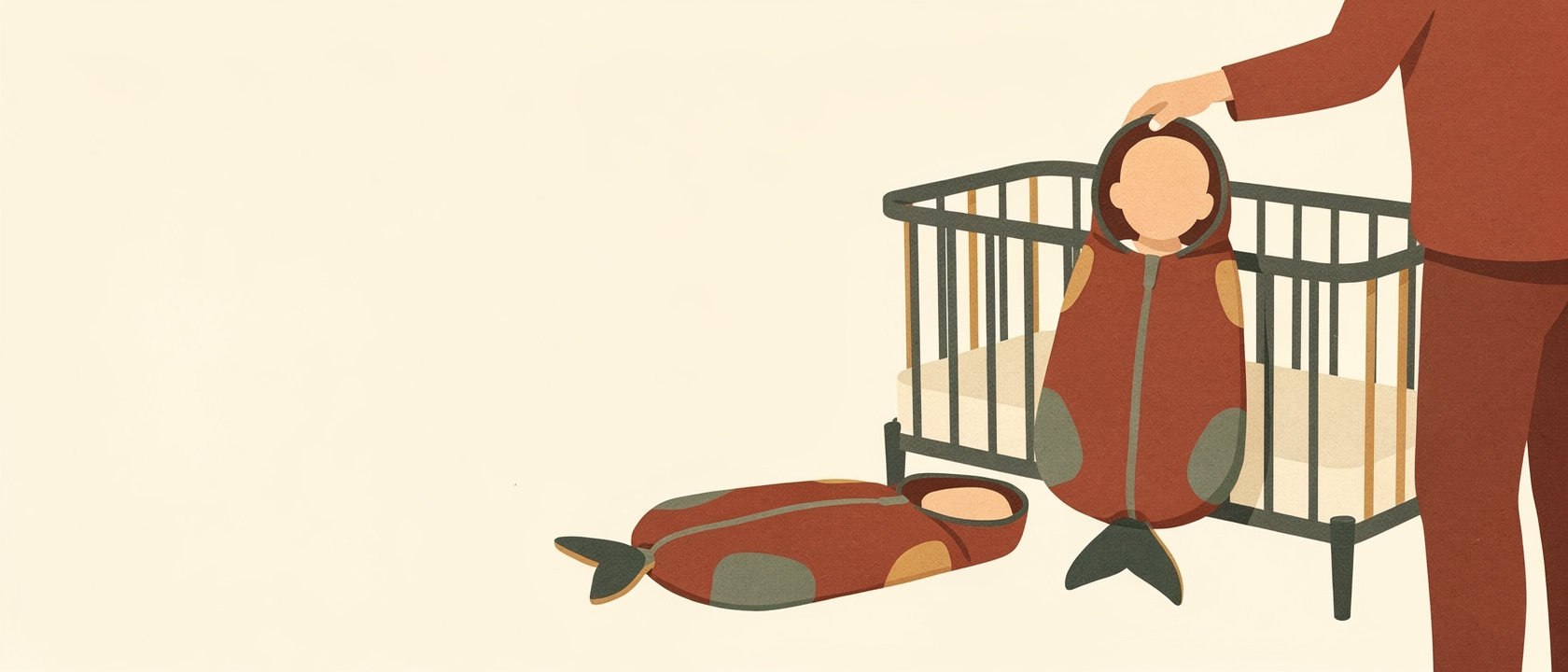
Shark Tail Hooded Baby Sleeping Bag: OPSS Safety Report
On 22 October 2026 the OPSS published a serious-risk safety report on the Shark Tail Baby Sleeping Bag, a hooded baby sleeping bag sold via Wish. Here is what the report says, how to check any baby sleeping bag you own, and what the Lullaby Trust advises.
Visitors Kissing Your Newborn: Lullaby Trust Advice
New Lullaby Trust research says 57% of parents have had a baby kissed without asking. Here is the Trust's THANKS guidance on handwashing, kissing and unwell visitors for newborns, plus practical ways to set boundaries with family without causing offence.
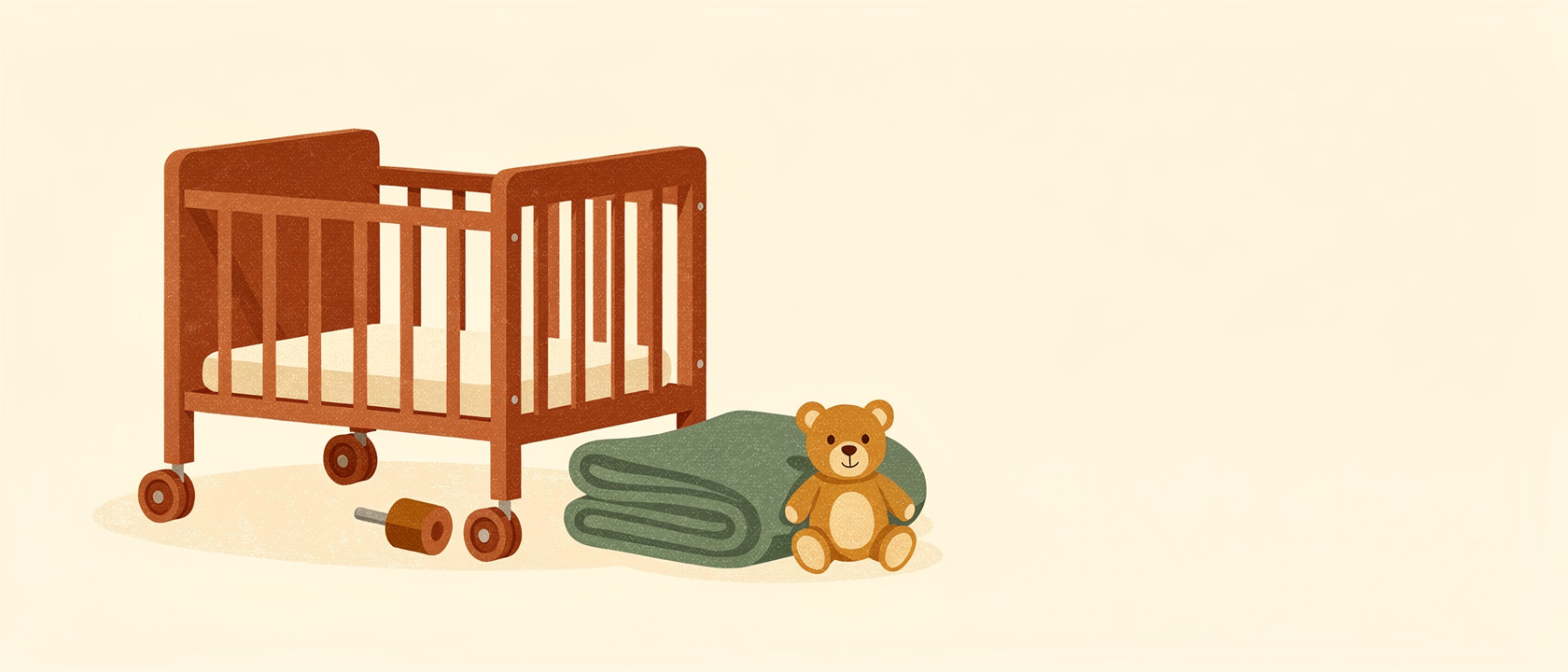
Babymore Space Saver Cot Castors: OPSS Overturn Risk
On 23 October 2026 OPSS published a safety report on the grey Babymore Space Saver Cot (model 2620003): it may overturn when pushed sideways with castors fitted, and a sample had a sharp splinter. Babymore has removed the castors; here is what to check.

Written by
Sepehr
Software engineer, soon-to-be dad, uncle to four — the tech-obsessed half of the two of us testing this stuff. Currently building this site with my wife, ahead of our own baby arriving.