Best Baby Dummies UK: Six Compared (MAM, Avent, NUK)
Six UK baby dummies compared on shape, material, age size, sterilising and price (£5.49 to £9.95 for two): MAM, Philips Avent, Tommee Tippee, NUK and BIBS, with the Lullaby Trust and NHS safe-use rules, how to check and replace a dummy, and when to wean off.
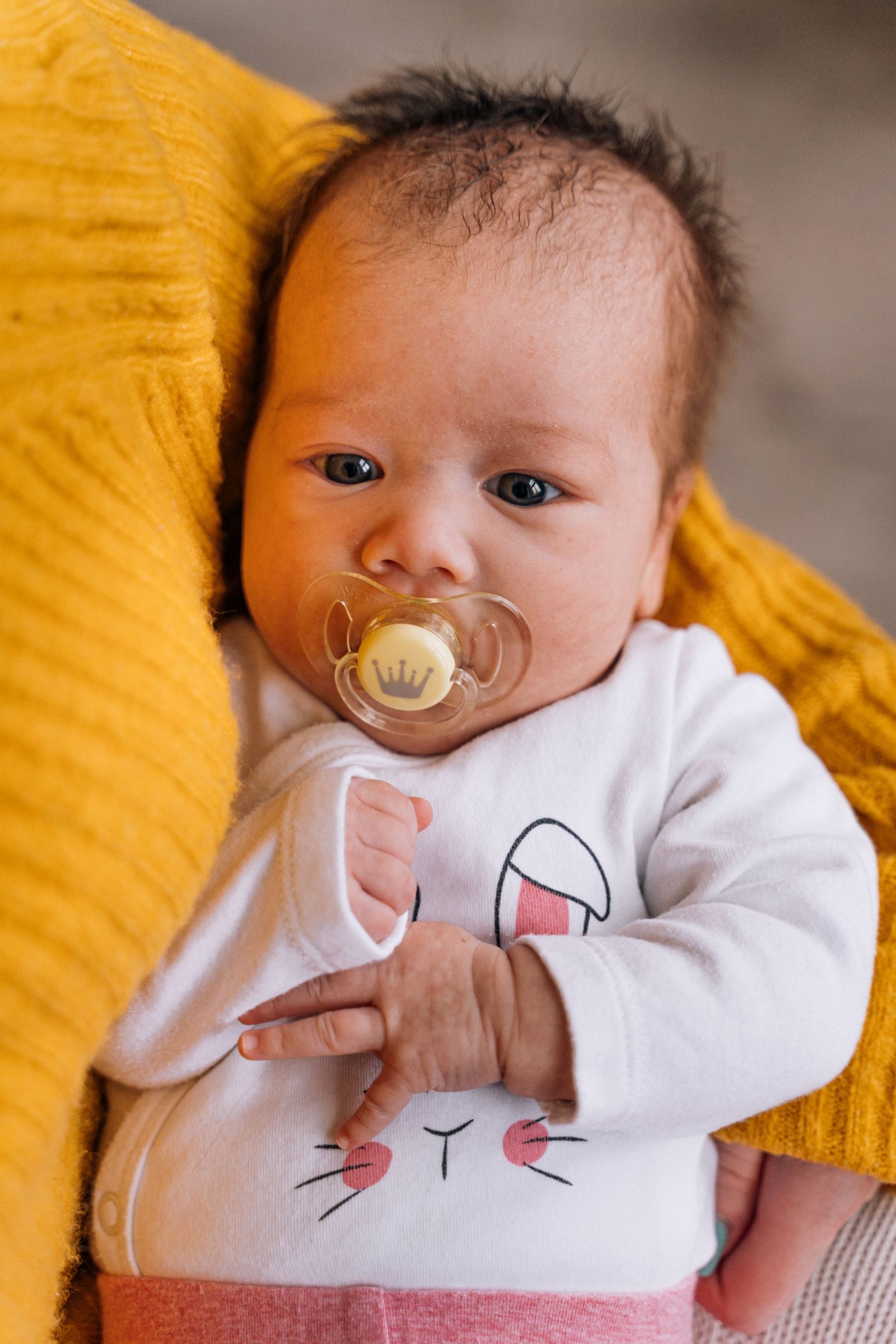
The best baby dummies for most UK families are one-piece, orthodontic silicone designs in the right age size, and the six we cover run from about £5.49 to £9.95 for a pack of two. Pick on your baby's acceptance and night-time needs, not price, and keep the Lullaby Trust safe-use rules in view.
A dummy is optional. Plenty of babies never take one. If you do want to use one, the choice between brands is smaller than the packaging suggests, and what matters is shape, size, sterilising and replacing it on time. This guide compares six dummies we list, explains how to match one to your baby, and covers the safety rules that apply whichever you buy. For the NHS and Lullaby Trust position on whether to use a dummy and when, start with our dummies and soothers guidance article; this page is about choosing between the products.
The six dummies compared at a glance
Prices are the typical UK price for a pack of two at the time of writing and will move. Details come from the manufacturers' specifications and our product notes. We have not used these dummies ourselves, so we describe them as specced, not as we found them.
| Dummy | Typical price (2-pack) | Material and shape | Age sizes | Best for |
|---|---|---|---|---|
| MAM Original | £5.99 | Silicone, orthodontic | 0–6m, 6–16m, 16m+ | A first dummy with a high acceptance rate |
| MAM Start Night | £9.50 | Silicone, newborn-scaled | 0–2m | The first weeks, with a night-glow design |
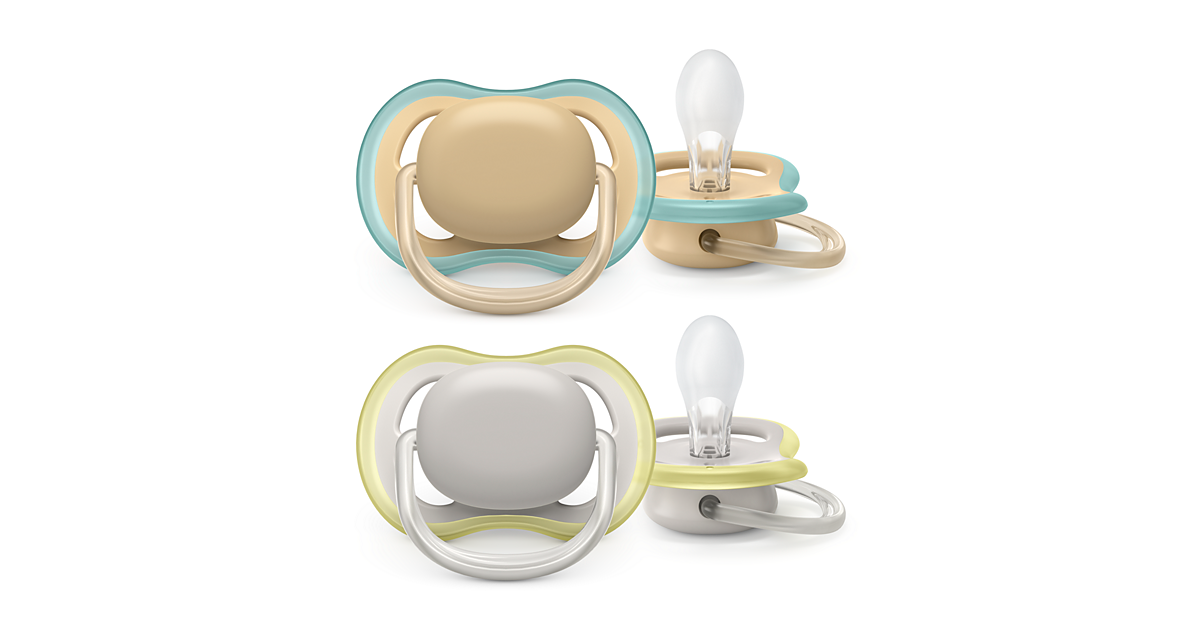
| Philips Avent Ultra Air | £8.00 | Silicone, orthodontic, ventilated shield | 0–6m, 6–18m, 18m+ | Babies with red or sweaty skin around the mouth |
| Tommee Tippee Night Time | £6.49 | Silicone, orthodontic, symmetrical | 0–6m, 6–18m, 18–36m | Finding the dummy in the dark at night feeds |
| NUK Signature | £5.49 | Silicone, anatomical heart-shaped teat | 0–6m, 6–18m, 18–36m | Lowest price, and a breast-shaped style to try |
| BIBS Colour | £9.95 | Natural rubber latex, round teat | Size 1 (0–6m), 2 (6–18m), 3 (18m+) | Babies who refuse silicone; not for latex allergy |
Browse the full set on our dummies and soothers roundup.
What the Lullaby Trust and NHS say first
The NHS safer sleep advice says to think about using a dummy to settle your baby to sleep, because some research suggests it can help lower the risk of SIDS. The Lullaby Trust adds the practical points that shape what you buy: wait until breastfeeding is well established, usually around four weeks, if you are breastfeeding; offer the dummy for every sleep, not just occasionally; and use an orthodontic dummy, which adapts to the shape of your baby's mouth. If it falls out once your baby is asleep, there is no need to put it back in. It also says not to use a neck cord or dummy attachments, as these can be dangerous.
That gives you a short checklist for any dummy on a shelf: orthodontic shape, the right age band, a one-piece or securely moulded build, and no cord. Everything else is personal preference. Dummies sit alongside, not instead of, the other safer sleep basics in our newborn safe sleep guide.
How to choose: shape, material and size
Orthodontic versus round teats
The Lullaby Trust recommends orthodontic dummies, and most silicone dummies on sale in the UK are marketed that way. Four of our six (MAM, Avent, Tommee Tippee, NUK) are specced as orthodontic. The BIBS is a round latex teat and is not specced as orthodontic, so if you are following the Lullaby Trust advice to the letter it is the one to treat as a second option. In practice, babies are fussy: if a baby will only accept a round teat, the dummy you can safely offer at every sleep is the one they will actually take, but it is worth raising with your midwife or health visitor.
Silicone versus latex
Silicone is firmer, clear and does not hold odours; latex is softer and more like a breast to some babies, but our product notes say it perishes and discolours faster and needs replacing more often. Latex is also a poor choice if there is a latex allergy in your family. If you are unsure, start with silicone.
Symmetrical versus anatomical
A symmetrical teat, like the Tommee Tippee and Avent designs, works whichever way up it goes in, which helps at 3am. An anatomical teat, like the NUK's, has a top and a bottom and has to go in the right way round. Neither is safer; it is a convenience point.
Age bands matter
Dummies are sold in age bands because the teat and shield are scaled to your baby's mouth. Always buy the band printed for your baby's age and move up when the packaging says so. The MAM Start Night, for example, is specced for 0–2 months only, so it is a short-lived purchase. Our notes also flag that it needs replacing with a standard size within weeks.
The six dummies in more detail
MAM Original: the default first dummy
At around £5.99 for two, the MAM Original is cheap, stocked almost everywhere and comes with a self-sterilising travel case that works in the microwave or steam. Our notes record a high acceptance rate among babies and the usual caveat that the SkinSoft silicone softens with use and needs replacing every four to six weeks. The shield is a standard shape and there is no glow-in-the-dark version.
MAM Start Night: for the first weeks
The MAM Start Night is sized for newborns (0–2 months) at around £9.50 for two. The newborn scaling is the point, but the age window is the shortest in this group and it uses the same brand and material as the Original, so it will not help if your baby has already rejected MAM's teat shape.
Philips Avent Ultra Air: for skin around the mouth
The Ultra Air (about £8) has a perforated, ventilated shield that our notes say reduces redness and sweat around the mouth, a lightweight symmetrical teat and a travel case that doubles as a steriliser. It costs more than the MAM Original for a similar silicone teat, and there is no night-glow option.
Tommee Tippee Night Time: glow for night feeds
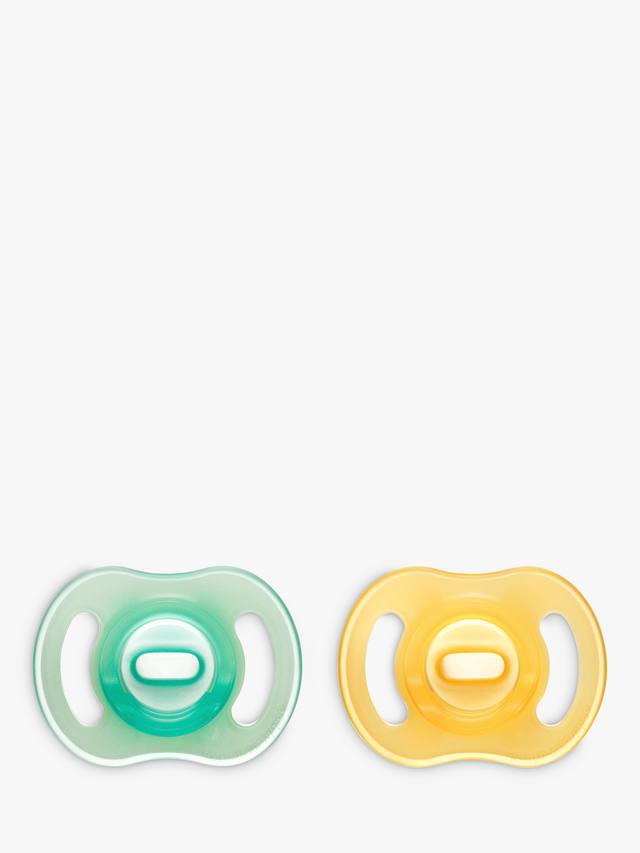
At about £6.49, the Night Time Soother has a glow-in-the-dark teat and shield and a symmetrical shape, which genuinely help in a dark room. The glow lasts only a few hours before it needs light again, and the reusable steriliser pod is bulkier to carry than MAM's flat case. If you only use a dummy in daylight hours, you are paying for a feature you will not use.
NUK Signature: the lowest price
The NUK Signature is the cheapest of the six, often near £5 in UK supermarkets, with an anatomical heart-shaped teat and a microwave-safe carry case. It is not symmetrical, and some babies who prefer a fully round teat still will not settle with it.
BIBS Colour: the latex alternative
The BIBS Colour (about £9.95 for two) is a one-piece natural rubber latex dummy with a round teat closer to the breast shape, and a wide colour range that makes siblings' dummies easy to tell apart. It should be sterilised with cold water or steam only, not boiled, perishes faster than silicone and is not suitable where there is a latex allergy.
Which one should you buy? A quick decision guide
- Newborn, no preference yet: a 0–6 month orthodontic silicone dummy such as the MAM Original or NUK, in a two-pack so you always have a spare.
- Lots of night feeds: the Tommee Tippee Night Time, because a dummy you can find in the dark means fewer wake-ups for you.
- Red or sweaty skin around the mouth: the Philips Avent Ultra Air's ventilated shield.
- Rejects silicone: try the BIBS latex, checking first that there is no latex allergy.
- Tight budget: the NUK Signature or MAM Original. A baby who takes any orthodontic dummy does not need a premium one.
Buy a two-pack of one style first, not several brands. A baby who rejects one teat shape may take another, and our baby checklist lets you note which you have already tried.
Cleaning, checking and replacing
NHS guidance on sterilising focuses on feeding equipment, and dummies go in your baby's mouth, so a sensible routine for a young baby is to sterilise a new dummy before first use following the manufacturer's instructions, then wash in hot soapy water and rinse. Never clean a dummy by putting it in your own mouth, as NHS oral health guidance warns it spreads germs. If you already run a steriliser for bottles, see our sterilising guide and steriliser comparison; the travel cases that come with MAM, Avent, Tommee Tippee and NUK dummies are designed to sterilise them in a microwave, so check each pack for timings.
Check the teat before every use. Throw it away if it is split, sticky, torn or discoloured, and replace dummies regularly. Several brands suggest every four to six weeks for silicone, so check the packaging for the brand's own advice. Keep two or three spares so a dropped dummy never has to go straight back into a mouth.
Common mistakes to avoid
- Using a cord or clip in the cot. The Lullaby Trust says not to use neck cords or dummy attachments. Remove any clip before sleep.
- Dipping it in something sweet. The Lullaby Trust says not to put anything sweet, such as honey, on a dummy, and NHS oral health guidance says the same about sugar or jam.
- Buying the wrong age band. A mouth-scaled teat that is too small or too big is not a good fit. Use the printed band.
- Forcing it. If your baby spits it out, do not keep pushing it back in; use another settling method.
- Buying unbranded dummies from marketplace sellers. Look for UK or CE marking and buy from an established retailer where you can.
- Leaving it too late to wean. The Lullaby Trust says to gently stop using a dummy between six and 12 months to avoid problems with longer-term use such as misaligned teeth and ear infections, and NHS oral health guidance says to avoid using them after 12 months.
When to stop, and what to do if it is hard
Because the Lullaby Trust points to six to 12 months as the window for stopping, it helps to plan ahead rather than leave it until a toddler is attached. The SIDS evidence relates to the first year, so the safer sleep reason for using one fades as your baby grows. Gradual steps tend to work better than going cold turkey: restrict the dummy to cot or sleep time only, then offer a comforter or a stroke on the back instead. If your child is over 12 months and still reliant on a dummy, or you notice the front teeth moving, mention it to your health visitor or dentist. NHS dental treatment is free for children.
Where dummies fit in your newborn shopping list
Dummies are a cheap, low-commitment purchase, so there is little reason to buy early or in bulk. Most families are better off buying one two-pack in a 0–6 month size before the birth and seeing whether the baby takes to it after the first month. Our list of baby gear you do not actually need is a good reminder to wait and see before building a collection of soothers.
Mentioned in this guide
Frequently asked questions
Which dummy is best for a newborn?+
For a newborn, choose an orthodontic silicone dummy in the 0–6 month band, or a 0–2 month newborn size such as the MAM Start Night. The Lullaby Trust recommends orthodontic dummies, which adapt to your baby's mouth shape. If you are breastfeeding, it advises waiting until feeding is well established, usually around four weeks, before offering one. Buy a two-pack of a single style first, because babies often accept one teat shape and reject another. Check the packaging for the age range and move up a size when it says so.
Are dummies safe for babies at night?+
The NHS says some research suggests using a dummy to settle your baby to sleep can help lower the risk of SIDS. The Lullaby Trust says to offer it for every sleep, not just occasionally, and that you do not need to put it back if it falls out once your baby is asleep. It also warns against neck cords and dummy attachments, which can be dangerous. Always follow the other safer sleep rules: baby on their back, in a clear cot, in the same room as you.
How often should I replace my baby's dummy?+
Check the teat before every use and throw the dummy away if it is split, sticky, torn or discoloured. Many silicone dummies are advised to be replaced every four to six weeks, but follow the brand's own instructions on the pack, and replace sooner if there is any damage. Latex dummies such as BIBS perish faster and generally need replacing more often. Keep a few spares so a dropped dummy can be swapped for a clean one instead of going straight back in.
When should my baby stop using a dummy?+
The Lullaby Trust says to gently stop using a dummy between six and 12 months to avoid problems from longer-term use, such as misaligned teeth and ear infections. NHS oral health guidance says to avoid using dummies after 12 months and notes that long-term use can move the front teeth and may affect speech development. A gradual approach, such as limiting it to sleep, tends to be easier than stopping suddenly. Talk to your health visitor or dentist if you are struggling.
Sources
Related guides
Cot Mattress UK: What to Check Before You Buy (2026)
Black Friday is a good moment to buy a cot mattress, but only if it passes the safety basics. The NHS and Lullaby Trust say it should be firm, flat, waterproof-covered and fit the cot with no gaps. Here is the checklist, a comparison of mattress types, second-hand rules and the sale-season traps to avoid.

BlueMello Swaddle Blanket Recall (Amazon): OPSS Warning
OPSS has recalled the BlueMello Baby Swaddle Blanket sold on Amazon because a baby can slip below the covers, risking overheating and airway obstruction. Here is what to do, how to check any swaddle, and safer UK alternatives.
Baby Sleep Away From Home at Christmas: UK Safe Guide
Staying with family over Christmas? Here is how to set up safe sleep for your baby away from home: checking a borrowed cot and mattress, using a travel cot, handling car seats and sofas, and what to pack, with NHS and Lullaby Trust guidance.

Written by
Sepehr
Software engineer, soon-to-be dad, uncle to four — the tech-obsessed half of the two of us testing this stuff. Currently building this site with my wife, ahead of our own baby arriving.