Best Baby Bottle Sterilisers Compared
The NHS says sterilise feeding equipment until your baby turns one, but it doesn't tell you which steriliser to buy. Here's how six real options — electric steam, cold water, microwave tub, UV and travel bags — actually compare on speed, capacity and cost.
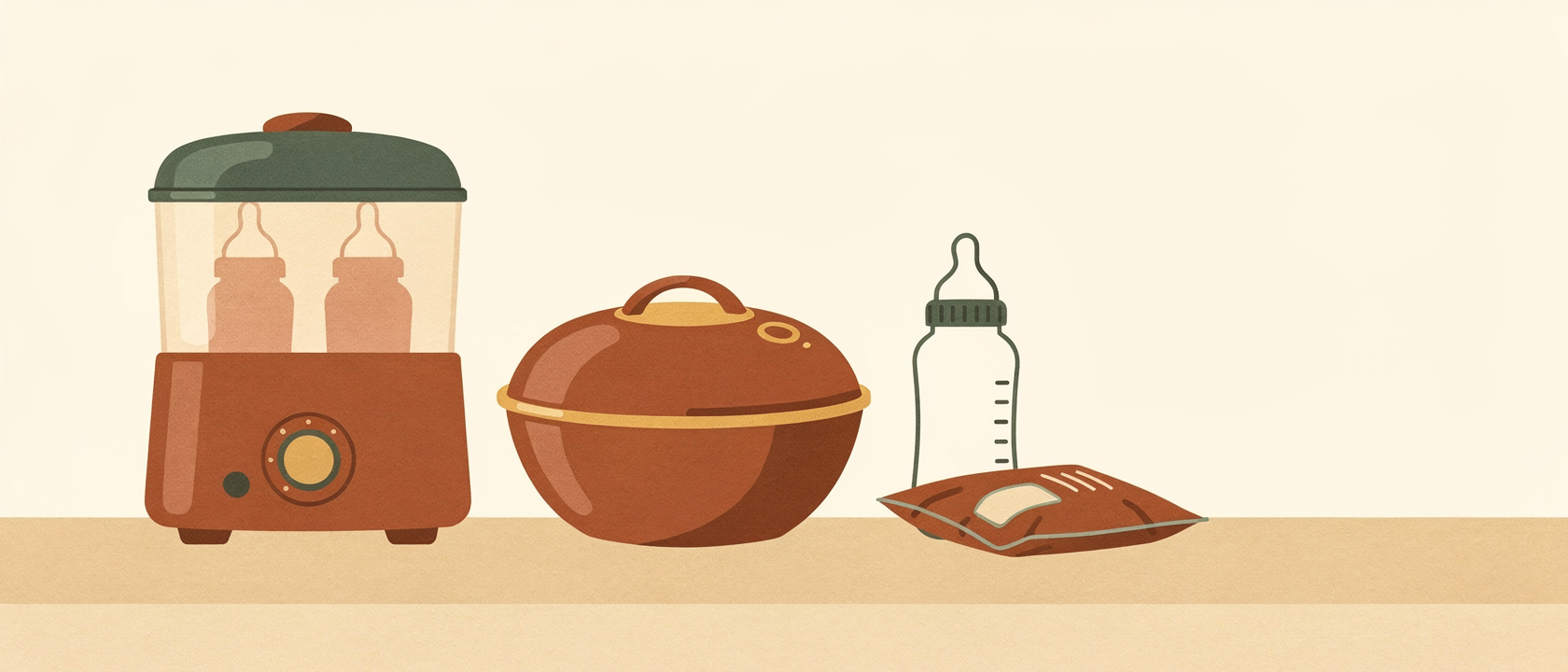
If you're formula feeding or expressing regularly, you'll be sterilising at least once a day for the next 12 months, so the right steriliser is one you'll actually keep using rather than the one with the longest feature list. For most families doing multiple cycles a day, an electric steam steriliser (Tommee Tippee Steri-Express or Philips Avent 3-in-1, £45–£50) is the best balance of speed, capacity and cost. If you're sterilising only occasionally, or want a lightweight backup for travel, a cold water tub or microwave bags cost far less and take up little to no permanent space.
The NHS recommends sterilising all feeding equipment — bottles, teats, dummies and breast pump parts — until your baby's first birthday, regardless of whether you're breast or formula feeding. For the underlying method comparison (steam vs cold water vs boiling vs UV, and why each one works), see our full sterilising methods guide. This article compares the actual products in each category.
Quick comparison
| Steriliser | Type | Capacity | Cycle time | Price |
|---|---|---|---|---|
| Tommee Tippee Steri-Express | Electric steam | Up to 5 bottles + accessories | ~5 min | About £45 |
| Philips Avent 3-in-1 | Electric steam (also microwave-compatible) | Up to 6 bottles | ~6 min electric | About £50 |
| Milton Cold Water Steriliser | Cold water, tablets or fluid | Up to 6 bottles | 15 min | About £22 |
| NUK Micro Express Plus | Microwave tub | Up to 3 bottles | ~3 min (microwave-dependent) | About £15 |
| Medela Quick Clean bags | Microwave steam bags | 2–4 small items per bag | ~90 sec | About £6 for 5 bags |
| Vital Baby NURTURE Pro UV | UV-LED, no water | Claimed 6, comfortable 3–4 | 5–7 min (+15–20 min to dry) | About £117 |
Electric steam sterilisers: best for daily use
The Tommee Tippee Steri-Express and Philips Avent 3-in-1 are close competitors on paper — both electric steam, both a 5–6 minute cycle, both staying sterile for 24 hours if the lid stays shut. The real difference is bottle-shape fit: the Avent is sized specifically around Avent's own wide-neck bottles and slots them in without rearranging, while the Tommee Tippee's rack is more size-agnostic and copes better with mixed brands or odd shapes. If you've already committed to one bottle brand, buying that brand's own steriliser (or the more general-purpose Tommee Tippee if you haven't) is the practical tie-breaker. The Avent's party trick is that the same unit works as a microwave steriliser without its base, which the Tommee Tippee doesn't offer — worth factoring in if you travel with a bottle-fed baby.
Both need occasional descaling in hard water areas and take up permanent counter space, which is the main trade-off against the cold water or microwave options below.
Cold water: best for low ongoing hassle, no electricity
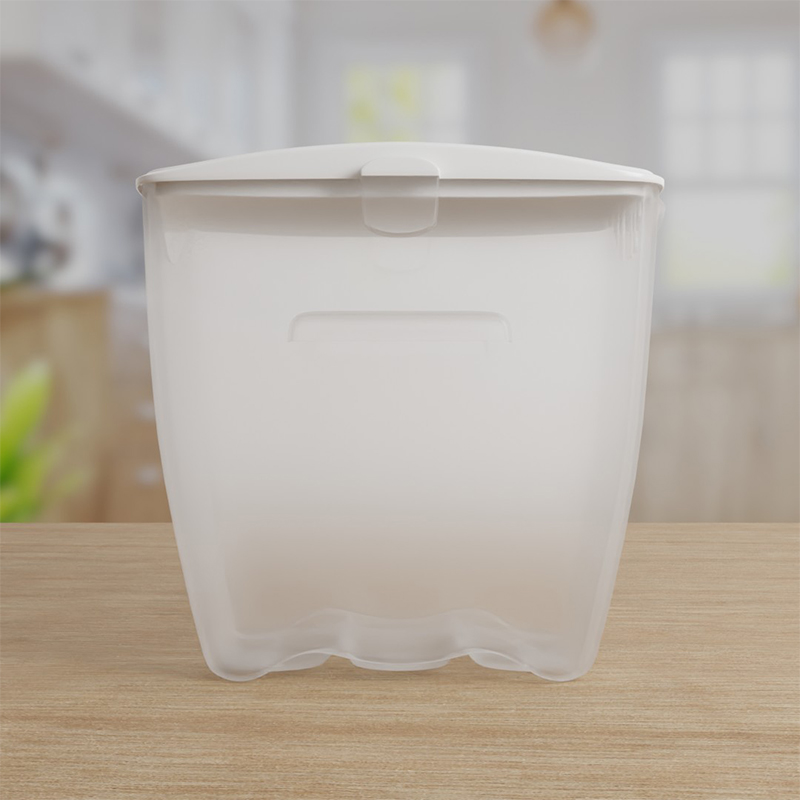
The Milton Cold Water Steriliser is the odd one out: dissolve a tablet or fluid in 5 litres of tap-cold water, submerge everything for 15 minutes, and the solution keeps sterilising for a full 24 hours, so repeat loads through the day don't need a fresh cycle each time. It holds a genuinely large 6 bottles, needs no electricity or heating element to eventually wear out, and works anywhere there's a tap — useful for a holiday cottage or campsite with no microwave or spare socket. The trade-offs are speed (15 minutes versus 5 for steam) and a wet result that needs an air-dry step, plus an ongoing tablet cost of a few pence per use. It's also the method most parents will recognise from hospital maternity wards.
Microwave options: best for smaller kitchens, travel and occasional use
The NUK Micro Express Plus is a compact tub that uses your own microwave, sterilising up to 3 bottles in about 3 minutes for roughly £15 — the cheapest dedicated steriliser here, and small enough to pack for a weekend away. Its downside is a smaller load and results that depend on your microwave's wattage rather than a consistent built-in heating element.
Medela's Quick Clean Micro-Steam Bags go a step further on portability: flat plastic bags, reusable for up to 20 cycles each, that fold into a nappy bag or suitcase pocket and sterilise 2–4 small items in about 90 seconds. Most families use these as a travel backup or an emergency option rather than a sole method at home, given the small capacity and the ongoing cost of replacing bags.
UV: the premium, water-free option
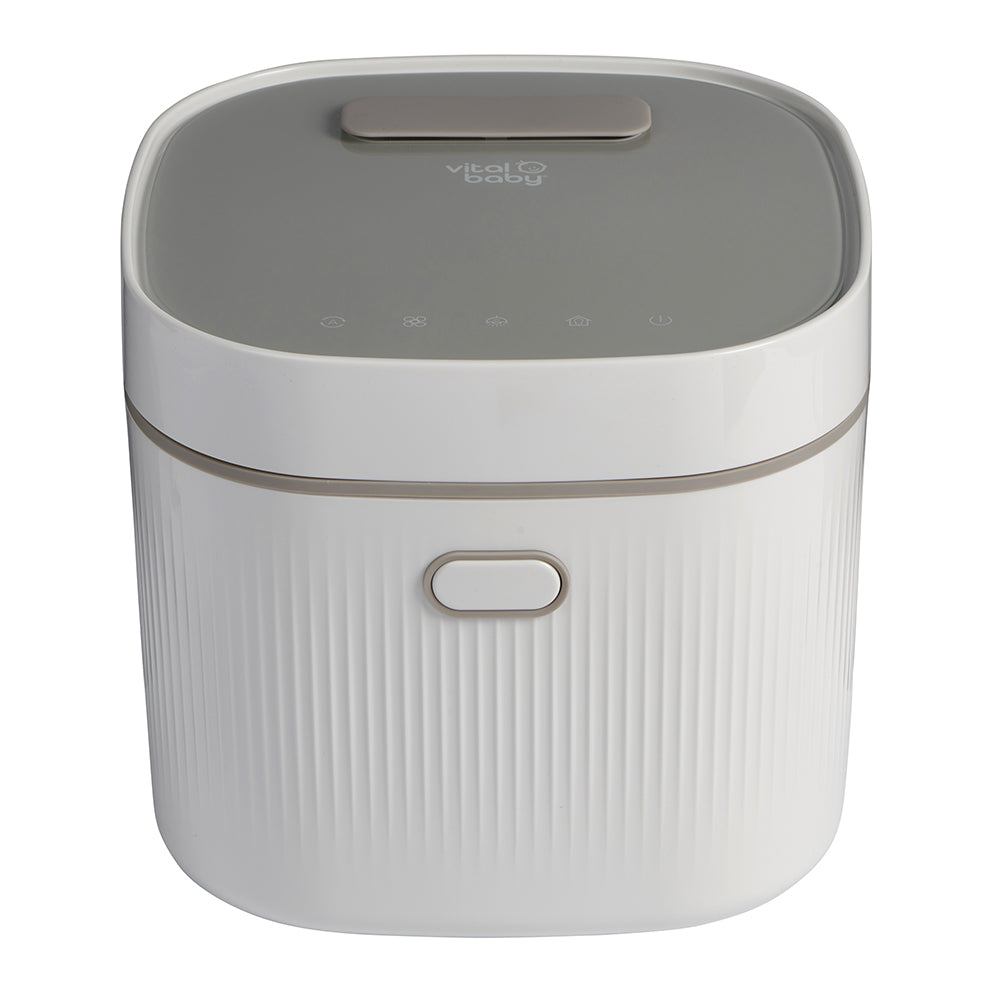
The Vital Baby NURTURE Pro UV Steriliser is the most expensive product in this comparison at around £117, and the most different in method — no water, steam or chemicals, just a 5–7 minute UV-LED cycle with an optional drying stage that can double as sealed dry storage for made-up bottles between uses. That's a genuine convenience if you dislike descaling a steam unit or want somewhere hygienic to store bottles. Two things to know before paying the premium: independent reviews consistently find real usable capacity is smaller than the advertised 6 bottles, closer to 3–4 once teats and lids need clear sightlines to the UV source, and it's considerably bulkier on a countertop than any other option here — closer to a small appliance than a compact tub.
What actually matters when you're choosing
How many cycles a day. Formula-feeding families sterilising 3–4 times daily get the most value from a fast, high-capacity electric steam unit — the time saved over weeks and months outweighs the higher upfront cost. Occasional users (topping up breastfeeding, or sterilising pump parts a couple of times a week) rarely recoup that cost, so a cheaper cold water tub or microwave bags make more sense.
Kitchen space. Electric steam sterilisers and the UV unit are permanent countertop appliances. If space is tight, a microwave tub or bags pack away completely between uses and cost a fraction of the price.
Travel. Only the Philips Avent 3-in-1 (microwave mode without its base), the NUK microwave tub, and Medela's bags travel realistically — the Tommee Tippee, Milton tub and UV unit are all home-only by size or need for mains power.
Ongoing cost. Electric steam and UV units have the lowest running cost (just electricity) once bought. Cold water solution and microwave bags both have a small but real ongoing cost — tablets/fluid for Milton, replacement bags every 20 cycles for Medela — worth factoring into a like-for-like price comparison over a year, not just the sticker price.
Which one should you actually buy
If you're formula feeding and sterilising several times a day, an electric steam steriliser (Tommee Tippee or Avent, matched to your bottle brand) earns back its cost in time saved within weeks. If you're mostly breastfeeding and only sterilising occasionally — an odd bottle, pump parts — cold water solution or microwave bags cost less for infrequent use and don't tie up counter space. A microwave tub is a sensible first steriliser on a tight budget or a second, packable one for travel. The UV option only makes sense if you specifically want to avoid water-based methods or need built-in storage, and are happy paying several times more for a smaller real-world capacity than the electric steam units offer.
Whichever method you choose, remember it's a supplement to washing, not a replacement — see our sterilising methods guide for the full wash-first routine and how long each method actually takes, and our guide to making up formula safely if you're setting up your feeding routine from scratch.
Mentioned in this guide
Frequently asked questions
Do I need an electric steriliser, or is cold water sterilising just as good?+
Both kill the same bacteria and viruses when used correctly — the NHS doesn't rank one method as safer than another. Electric steam is faster (around 5 minutes versus 15 for cold water) and better suited to multiple daily cycles; cold water needs no electricity, holds a large 6-bottle load, and keeps working for 24 hours once made up, which suits occasional or lower-cost use.
How long do baby bottle sterilisers need to run for, and how long does sterility last afterwards?+
Electric steam and microwave sterilisers typically run a 3–7 minute cycle; cold water solution needs at least 15 minutes of full submersion. Most methods keep equipment sterile for up to 24 hours afterwards, provided the steriliser or container lid stays closed and unopened.
Can I use any bottle brand in any steriliser?+
Yes, but fit varies — sterilisers shaped around a specific bottle range (like the Philips Avent 3-in-1 around Avent's own wide-neck bottles) fit that brand most neatly, while more size-agnostic racks (like the Tommee Tippee Steri-Express) cope better with mixed brands or unusual shapes.
Until what age do I need to keep sterilising bottles?+
The NHS recommends sterilising all feeding equipment — bottles, teats, dummies and breast pump parts — until your baby's first birthday, whether you're breastfeeding or formula feeding.
Sources
Related guides
Best Bedside Cribs & Moses Baskets Compared (UK)
Six bedside cribs and Moses baskets compared on price, size and lifespan: Silver Cross Lunar, Shnuggle Air Lite, SnuzPod4, HALO BassiNest, Chicco Next2Me Forever and a Mamas & Papas Moses basket. Includes the British Standards the Lullaby Trust lists and NHS safer sleep rules.

Best Baby Carriers Compared (UK Guide)
Six baby carriers compared on price, age range and carry positions: Ergobaby Omni 360, Tula Free-to-Grow, Izmi, BabyBjörn Carrier Mini, Close Caboo and Momcozy Move2Fit. Includes the Lullaby Trust and RoSPA T.I.C.K.S. safety checklist.
Bronchiolitis in Babies: Symptoms & When to Worry
Bronchiolitis is a common winter chest infection in babies. Here is what the NHS says about the symptoms, the signs that mean call 999 or 111, how to care for your baby at home, and how to lower the risk, including RSV protection.

Written by
Sepehr
Software engineer, soon-to-be dad, uncle to four — the tech-obsessed half of the two of us testing this stuff. Currently building this site with my wife, ahead of our own baby arriving.