Dummies and Soothers: When to Start and Use Them Safely
Dummies aren't essential, but used the right way they're linked to a lower SIDS risk. Here's when to start, which type to buy, what to avoid, and when to stop.

A dummy is entirely optional — plenty of babies never have one and are none the worse for it. But if you're weighing it up, the NHS and Lullaby Trust both point to research linking dummy use at sleep times with a lower risk of sudden infant death syndrome (SIDS), which is the main reason it's worth understanding the timing and the safety rules rather than just picking one off a shelf.
When to start
If you're breastfeeding, the Lullaby Trust advises waiting until breastfeeding is well established — usually around four weeks — before introducing a dummy, so it doesn't interfere with feeding. If you're formula feeding, there's no need to wait, though there's no requirement to start one at all either — it's entirely down to whether you and your baby find it useful for settling.
The SIDS-risk research, and what it actually means
The NHS lists using a dummy to settle a baby to sleep among its safer sleep recommendations, noting that some research suggests it can help lower the risk of SIDS. The Lullaby Trust adds detail: for the association to hold, the dummy should be offered for every sleep, day and night, not used occasionally. Neither organisation claims dummies prevent SIDS outright, and researchers don't fully understand the mechanism — it sits alongside the other safer sleep basics (back sleeping, a clear cot, room-sharing for the first six months), not instead of them.
If the dummy falls out once your baby is asleep, the Lullaby Trust says there's no need to put it back in.
Choosing a dummy
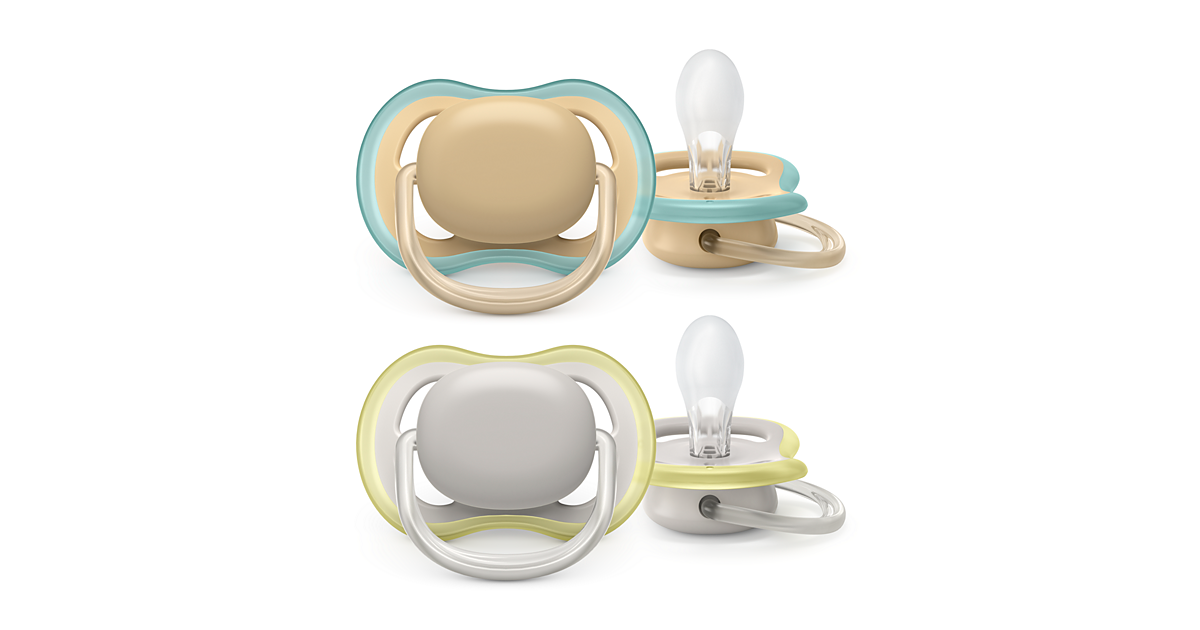
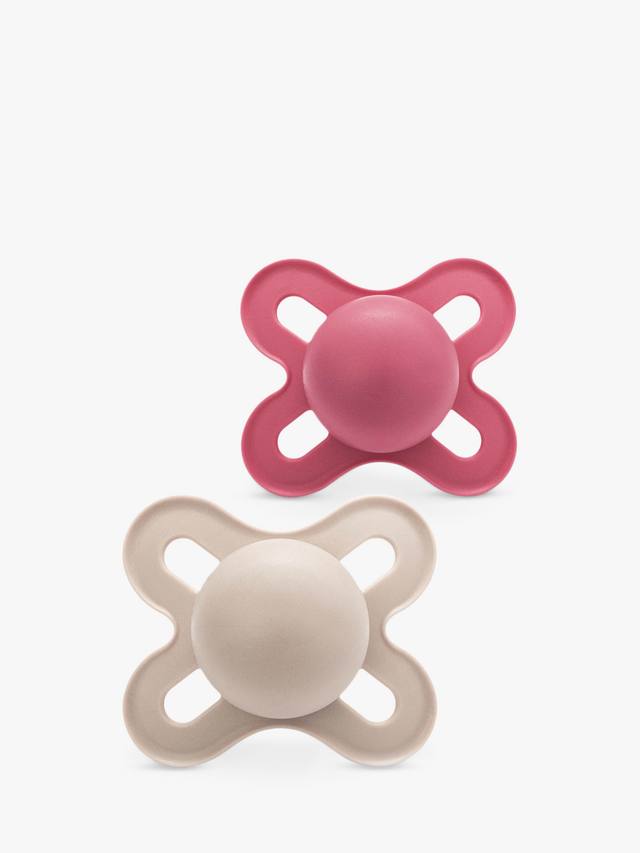
The Lullaby Trust recommends an orthodontic dummy, shaped to adapt to a baby's mouth. In practice this covers most dummies sold in the UK today, including one-piece silicone designs like the MAM Original Soother and the Philips Avent Ultra Air Soother, and newborn-specific sizes such as the MAM Start Night Soother. Look for the UKCA or CE mark on the packaging — see our guide to UK children's product safety marks for what these actually confirm — since this is the marking that shows a dummy has been tested against the relevant British/European safety standard, and it's most worth checking on dummies bought from third-party marketplace sellers rather than established UK retailers.
Dummies are also sold in age-banded sizes rather than one-size-fits-all, since the teat and shield need to grow with your baby's mouth. The MAM Start Night Soother, for example, is specced for 0–2 months, with larger sizes following on for older babies. Check the packaging for the specced age range on whichever dummy you buy, and move up a size as your baby grows — a teat that's too small can be more easily compressed or bitten through, and one that's too large won't form a proper seal.
Don't force it. If your baby spits the dummy out or refuses it, the Lullaby Trust's advice is not to keep trying to reinsert it.
Cleaning and hygiene
A new dummy should be sterilised before its first use, the same as any other feeding equipment that goes in a young baby's mouth — see our steriliser buying guide if you don't already have one set up. After that, wash in hot soapy water and rinse well; you don't need to sterilise before every single use once your baby is a few months old and mouthing other things, but it's worth doing regularly, especially in the newborn weeks. Check the teat before every use — a split, sticky, or discoloured teat should be thrown away and replaced, since a perished dummy can tear and leave a small piece in your baby's mouth.
Using one safely
- Never attach a dummy to a cord, ribbon, or clip during sleep — the Lullaby Trust is explicit that neck cords and dummy attachments are dangerous, because of the strangulation risk. A clip is fine for supervised daytime use, where you can see your baby and the clip can't wrap around their neck, but it should come off before any sleep.
- Don't dip a dummy in anything sweet — honey is a dental risk at any age, and the NHS advises against giving honey in any form, including on a dummy, to babies under 12 months, because of the risk of infant botulism.
- Replace dummies regularly and check them for splits, tears, or stickiness before every use — a damaged teat can perish and come away as a small part, which is a choking hazard.
- Keep it to sleep and settling rather than constant daytime use, partly for speech development and partly to make weaning easier later.
Dummy or thumb — does it matter which?
Some babies self-soothe with a thumb or fingers instead of, or as well as, a dummy. There's no safety difference between the two in terms of SIDS research, since that evidence is specifically about dummy use — but a dummy has one practical advantage a thumb doesn't: you can take it away and manage the weaning process on your own timeline, whereas a thumb-sucking habit is harder to phase out because it's always available. Neither is inherently better; it's mostly about which is easier for your family to manage long-term.
Out and about
A few practical habits make dummies easier to live with day to day: keep a spare in the changing bag rather than relying on one dummy alone, since a dropped dummy on a public floor needs washing before it goes back in, and a travel case keeps a spare clean in a bag rather than loose against keys or nappies. If you're out with no way to wash a dropped dummy, it's better to go without it until you can clean it properly than to give it back unwashed.
When to stop
The NHS and Lullaby Trust both point to gently phasing out dummy use between six and 12 months, to avoid the problems linked with longer-term use — mainly misaligned teeth and a higher rate of ear infections. There's no single right age to stop — some babies self-wean, others need a more deliberate approach — but starting the process by their first birthday is the guidance both organisations converge on.
Mentioned in this guide
Frequently asked questions
Do dummies really reduce the risk of SIDS?+
Some research links using a dummy at sleep times with a lower risk of SIDS, and both the NHS and the Lullaby Trust list it as a safer sleep measure worth considering. The evidence isn't fully understood and it works alongside other safer sleep basics — back sleeping, a clear cot, room-sharing — not instead of them.
Will a dummy interfere with breastfeeding?+
The Lullaby Trust advises waiting until breastfeeding is well established, usually around four weeks, before introducing a dummy, so it doesn't affect feeding. If you're formula feeding there's no need to wait.
Is it safe to attach a dummy to a clip or ribbon at night?+
No. The Lullaby Trust says neck cords and dummy attachments are dangerous during sleep because of the strangulation risk. A clip is only for supervised daytime use and should come off before any sleep.
When should I stop using a dummy?+
The NHS and Lullaby Trust both recommend gently phasing out dummy use between six and 12 months, to avoid problems such as misaligned teeth and ear infections linked with longer-term use.
Sources

Written by
Sepehr
Software engineer, soon-to-be dad, uncle to four — the tech-obsessed half of the two of us testing this stuff. Currently building this site with my wife, ahead of our own baby arriving.