Baby Sickness Bug: NHS Guide to Diarrhoea & Vomiting
Baby with a sickness bug? Here is what the NHS says about diarrhoea and vomiting in babies: keep feeding, spot dehydration early, know when to call NHS 111 or 999, and stop norovirus spreading through the house this winter.
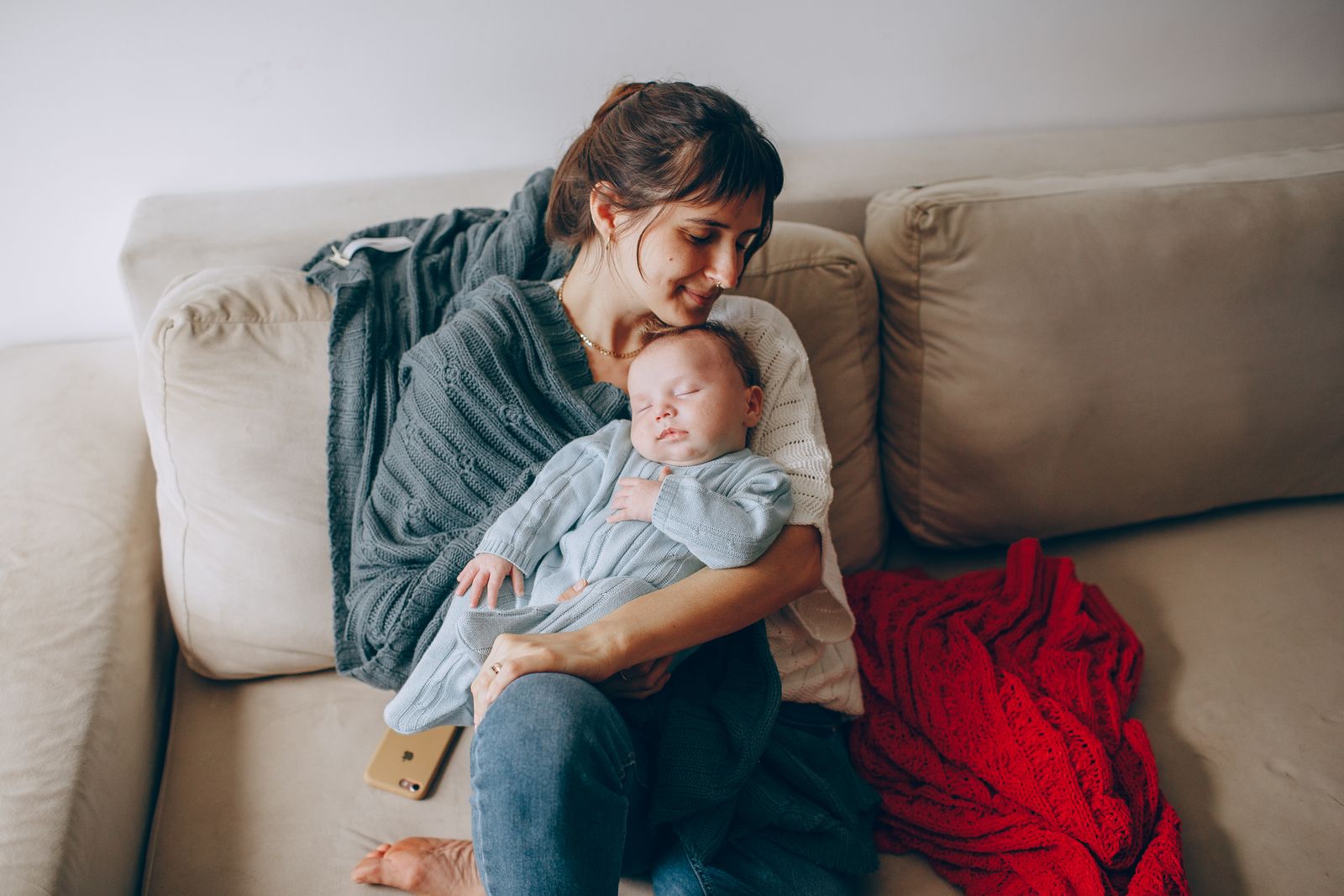
If your baby has a sickness bug, the NHS says to keep breastfeeding or bottle feeding, offer smaller feeds more often if they are being sick, and call NHS 111 if you are worried about a baby under 12 months.
Winter is peak season for norovirus, the "winter vomiting bug", so this guide covers what the NHS advises on feeding, spotting dehydration, when to get help and how to stop it spreading round the house.
What to do at home when your baby has diarrhoea and vomiting
The NHS says diarrhoea and vomiting in babies and children can usually be looked after at home (NHS). The main aim is to keep fluids going in:
- Keep feeding. Carry on with breast or bottle feeds. If your baby is being sick, the NHS says to offer small feeds more often.
- Water between feeds. For babies on formula or solids, the NHS suggests small sips of water between feeds.
- Do not water down formula. The NHS says not to make formula weaker; make it at its usual strength. Our formula-making guide covers the correct method.
- Ask a pharmacist about oral rehydration. The NHS says a pharmacist can recommend oral rehydration powder to mix with water.
The NHS also says not to give children under 12 medicine to stop diarrhoea, such as loperamide, and not to give aspirin to children under 16. Check the leaflet before giving paracetamol; our newborn Calpol guide explains the age rules.
Signs of dehydration in a baby
Babies can lose fluid quickly, so dehydration is the main thing to watch for. The NHS dehydration page lists these signs in a baby (NHS):
- a soft spot on top of the head (the fontanelle) that looks sunken
- sunken eyes
- few or no tears when crying
- fewer wet nappies than usual
- being drowsy or irritable
The NHS says to ask for an urgent GP appointment or contact NHS 111 if a baby or child seems unusually tired or drowsy, breathes quickly or has a fast heart rate, has few or no tears, has a soft spot that sinks inwards, or has fewer wet nappies. For a child under 5, call 111. Watching the nappy count is the simplest check you can do at home, which is one reason it helps to know what your baby's usual output looks like; see our nappy frequency guide. Call 999 or go to A&E if signs of dehydration come with blue, grey, pale or blotchy skin, lips or tongue, cold skin, difficulty breathing, confusion, or being sleepier than normal or hard to wake, as these may indicate shock.
When to call NHS 111
The NHS says to call 111 if:
- your baby is under 12 months and you are worried
- your child stops breast or bottle feeding while ill
- a child under 5 has signs of dehydration
- your child keeps being sick and cannot keep fluids down
- there is bloody diarrhoea or bleeding from the bottom
- signs of dehydration continue after using oral rehydration sachets
- diarrhoea lasts more than 7 days or vomiting lasts more than 2 days
If your baby also has a temperature, see our baby fever guide.
When to call 999 or go to A&E
The NHS says to call 999 or go to A&E if there is:
- vomit with blood in it, or vomit that looks like ground coffee
- yellow-green or green vomit in a child
- a sudden, severe tummy ache
- blue, grey, pale or blotchy skin, lips or tongue
- severe difficulty breathing, or confusion or not responding as usual
A sensible routine for the first 24 hours
This is a practical way of applying the NHS advice, not an official protocol. Always follow what a pharmacist, GP or 111 adviser tells you for your own baby.
- Don't stop feeds. Offer the breast or bottle as normal. If your baby is vomiting, shorten each feed and offer more often.
- Offer sips between feeds if your baby is on formula or solids, using water.
- Keep a simple log. Write down the time of each feed, each vomit, each wet nappy and each runny nappy. If you need to call 111, they will ask for this, and it is hard to remember at 3am.
- Check dehydration signs at each nappy change: fontanelle, eyes, tears, drowsiness, nappy count.
- Ring a pharmacist early if you want to ask about oral rehydration powder. Pharmacists can help without an appointment.
What not to do
- Don't dilute formula, even if you think a weaker feed will be gentler.
- Don't give medicine to stop diarrhoea to children under 12; the NHS says loperamide is unsuitable.
- Don't give aspirin to anyone under 16.
- Don't give fruit juice or fizzy drinks, which can make diarrhoea worse, according to the NHS.
- Don't wait until the next day if you are worried about a baby under 12 months. The NHS says to call 111 if you are worried.
Sickness bug, reflux or something else?
Most vomiting and diarrhoea in babies is a stomach bug or food poisoning, but the NHS notes that vomiting can have other causes in babies, including reflux and infections such as urinary tract infections. That is one reason to call 111 if you are unsure. If your baby has a temperature as well, or seems unusually floppy or sleepy, don't assume it is a tummy bug; see our baby fever guide.
Rotavirus and the baby vaccine
Rotavirus is a very common infection that causes diarrhoea and vomiting, mostly in babies and young children. The NHS says most children recover within a few days, but some become dehydrated and need hospital treatment, and rarely it can be life-threatening. The rotavirus vaccine is given as a liquid squirted into the baby's mouth, in two doses at 8 weeks and 12 weeks old. There are age limits for catching up: the first dose by 15 weeks and the second by 24 weeks. The NHS says the vaccine prevents rotavirus infection in about 8 in 10 babies, but it does not protect against sickness bugs caused by other illnesses such as norovirus. If a dose is missed, contact your GP surgery. See our first-year vaccination schedule.
How long does a sickness bug last?
According to the NHS, diarrhoea usually stops within 5 to 7 days and vomiting usually stops within 1 to 2 days (NHS).
What is norovirus, and why is winter the risky season?
The NHS says norovirus usually starts suddenly with feeling sick, being sick and diarrhoea, and may come with a high temperature, headache, tummy pain or aching limbs. It spreads through poo: from close contact with an infected person, touching contaminated surfaces and then your mouth, or contaminated food and water (NHS).
When can my baby go back to nursery or childcare?
The NHS says to stay off nursery, school or work until 2 days after the last episode of vomiting or diarrhoea, and to avoid swimming pools until at least 48 hours after symptoms stop. Nurseries may have their own policy, which is often the same, so check with yours. If your baby also has a high temperature or is unwell, keep them at home until they are better.
Stopping a sickness bug spreading at home
- Soap and water, not gel. The NHS says to wash hands with soap and water after the toilet or changing nappies and before preparing or eating food, and that alcohol hand gels do not kill norovirus.
- Hot wash. Wash soiled clothes and bedding separately; the NHS says to wash at 60°C for norovirus.
- Clean the touchpoints. The NHS advises daily cleaning of toilet seats, flush handles, taps and surfaces.
- Do not share towels, flannels or cutlery.
- Stay home. The NHS says to stay off school, nursery or work until you have had no sickness or diarrhoea for at least 2 days, and to avoid swimming pools until at least 48 hours after symptoms stop.
Bottles and feeding kit also need care while a bug is going round; our sterilising guide explains the steps. For a quick medicine-cabinet restock, see the baby first aid kit checklist.
This article is general information based on NHS guidance and is not a substitute for medical advice. If you are worried about your baby, call NHS 111, or 999 in an emergency.
Related guides
Frequently asked questions
How long does a baby sickness bug last?+
According to the NHS, diarrhoea usually lasts 5 to 7 days and vomiting usually stops within 1 to 2 days. Your baby may be tired and fussy while it lasts, and keeping fluids going is the main priority. Carry on with breast or bottle feeds, offering smaller feeds more often if they are being sick. Call NHS 111 if you are worried about a baby under 12 months, if your baby stops feeding while ill, if there are signs of dehydration, if there is blood in the poo, or if diarrhoea lasts more than 7 days or vomiting more than 2 days.
What are the signs of dehydration in a baby?+
The NHS lists a sunken soft spot (fontanelle) on top of the head, sunken eyes, few or no tears when crying, fewer wet nappies than usual, and being drowsy or irritable. Fewer wet nappies is often the first thing parents notice. If your baby shows any of these signs, call NHS 111 for advice, as a child under 5 with signs of dehydration needs to be assessed. Call 999 or go to A&E if signs come with blue, grey, pale or blotchy skin, cold skin, difficulty breathing, confusion or being very hard to wake.
Can I give my baby oral rehydration solution?+
The NHS says a pharmacist can recommend oral rehydration powder to mix with water, and that you should call 111 if signs of dehydration continue after using oral rehydration sachets. Ask a pharmacist or call 111 before giving it to a baby, because amounts and mixing instructions matter. Alongside that, keep breastfeeding or bottle feeding as normal, offering smaller feeds more often if your baby is being sick, and give small sips of water between feeds if on formula or solids. Never dilute formula, and don't give fruit juice or fizzy drinks.
Can I give my baby medicine to stop the diarrhoea?+
No. The NHS says not to give children under 12 medicine to stop diarrhoea, and that loperamide is unsuitable under 12. Diarrhoea is the body's way of getting rid of the infection, and the focus should be replacing lost fluids. You can give paracetamol for discomfort if your baby is old enough, but check the leaflet and our newborn Calpol guide for age rules, and never give aspirin to anyone under 16. If you are unsure what is safe to give, ask a pharmacist, call NHS 111 or speak to your GP.
Does the rotavirus vaccine stop all sickness bugs?+
No. The NHS says the rotavirus vaccine prevents rotavirus infection in about 8 in 10 babies who receive it, but it does not protect against diarrhoea and vomiting caused by other illnesses such as norovirus. The vaccine is given as a liquid into the baby's mouth at 8 and 12 weeks old. If your baby misses a dose, contact your GP surgery, as there are age limits for catching up: the first dose by 15 weeks and the second by 24 weeks. Hand washing with soap and water remains important for every sickness bug.
Sources
Related guides
Baby Humidifier UK: Do You Need One? NHS Safety Guide
Do you need a baby humidifier this winter? NHS cold advice doesn't recommend one. We explain scald, mould and overheating risks, compare types, and give a safer checklist if you still want one.
Britax Römer SMILE Pushchair Recall: Check Front Wheels
OPSS and Britax Römer have recalled the SMILE III, SMILE 4 and some SMILE 5Z pushchairs because the front wheel locking mechanism can wear and the wheel may detach. Here is which models are affected, the two-minute wheel check, and what to do next.
Christmas Dinner for Babies and Toddlers: What's Safe (UK)
A plate-by-plate guide to Christmas dinner for babies and toddlers in the UK, built on NHS advice: which foods are fine, what to leave off (honey, salty gravy, whole nuts), how to cut food safely and what to do if baby chokes.

Written by
Sepehr
Software engineer, soon-to-be dad, uncle to four — the tech-obsessed half of the two of us testing this stuff. Currently building this site with my wife, ahead of our own baby arriving.