Can You Give a Newborn Calpol? Age Limits and Dosing
Calpol infant suspension isn't licensed for babies under 2 months old, and even 2-3 month olds need extra conditions met before it's safe. Here's what the NHS actually says about age limits, dosing, and when a high temperature means you should call 111 instead of reaching for the medicine cabinet.
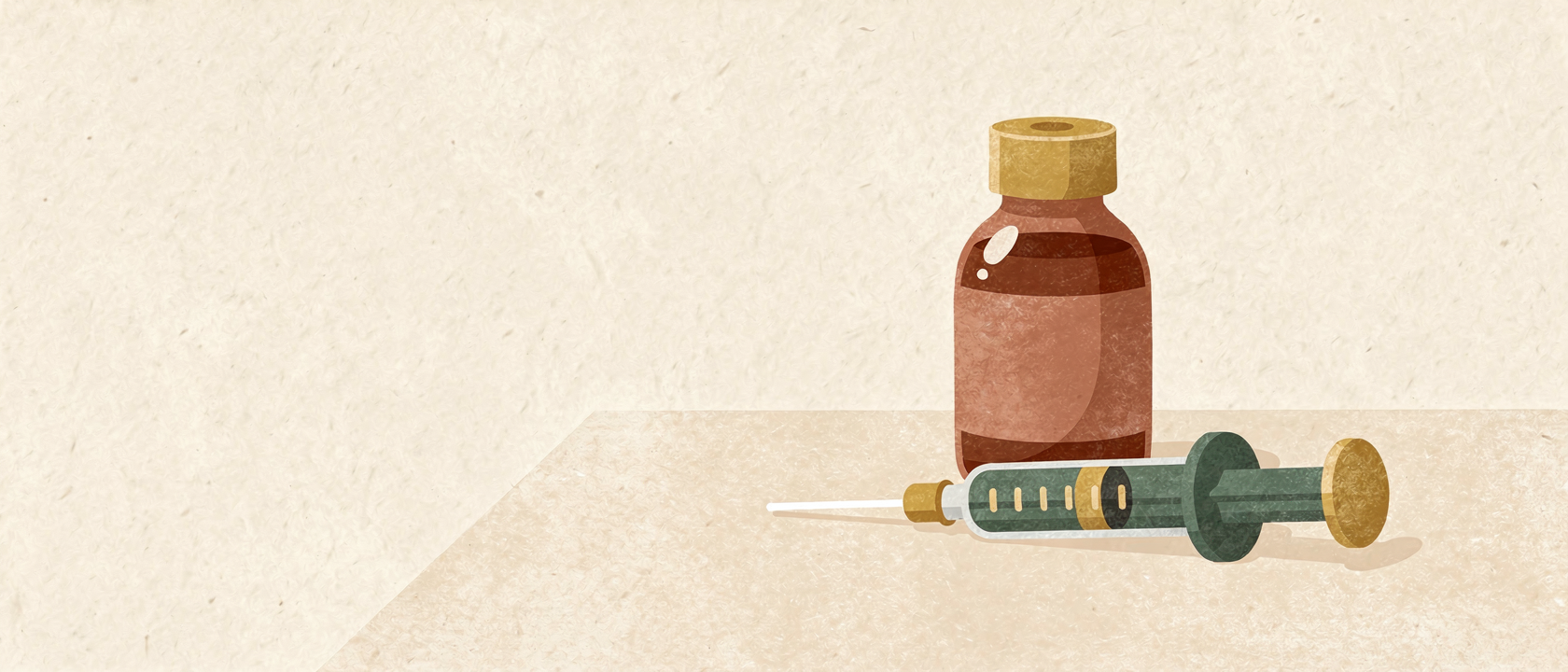
No — Calpol (infant paracetamol) is not for newborns. Calpol Infant Suspension is licensed from 2 months old, and the NHS is clear that if your baby is under 2 months, you should speak to a doctor or health visitor before giving any paracetamol at all — don't measure out a dose yourself. Even once your baby turns 2 months, there are extra conditions that have to be met first.
Why there's no dose for under 2 months
Newborns process medicines differently to older babies, and a fever in a baby under 3 months old is treated as something to get checked rather than something to treat at home first. The NHS says a baby under 3 months old with a temperature of 38°C or higher should be seen urgently — call NHS 111 or your GP rather than reaching for paracetamol as a first response.
This is why there's simply no published under-2-months dose: it's not that a smaller amount is safe, it's that self-dosing at this age isn't recommended at all without a clinician involved first.
2 to 3 months: only under specific conditions
According to NHS guidance, babies aged 2 to 3 months can be given paracetamol, but only if all of the following apply:
- Your baby weighs more than 4kg
- Your baby was born after 37 weeks (full term)
If either of those doesn't apply — your baby is smaller, or was born early — check with your doctor, pharmacist, or health visitor before giving any dose, since the standard dosing wasn't tested on that group.
Where both conditions are met, the NHS dose for infant liquid paracetamol (120mg/5ml) at 2-3 months is 2.5ml, given up to twice a day, leaving at least 4 hours between doses. The one exception is after a MenB vaccination, where up to 3 doses in 24 hours are permitted (still at least 4 hours apart) — this is specifically to manage the fever the MenB vaccine is known to cause, and is usually advised at the vaccination appointment itself.
Dosing from 3 months onward
From 3 months, the standard infant liquid paracetamol (120mg/5ml) dosing widens out:
| Age | Dose | Maximum frequency |
|---|---|---|
| 3–5 months | 2.5ml | Up to 4 times a day |
| 6–23 months | 5ml | Up to 4 times a day |
| 2–3 years | 7.5ml | Up to 4 times a day |
Always leave at least 4 hours between doses, and always use the syringe or measuring device that comes with the medicine rather than a kitchen spoon — a regular teaspoon isn't a reliable measure. Check the label of whatever product you've bought, since not every children's paracetamol is the same strength.
What about ibuprofen (Nurofen) instead?
Ibuprofen isn't an earlier alternative to paracetamol — if anything it's more restricted. The NHS says ibuprofen can be given from 3 months old, and only if your baby weighs more than 5kg. For babies aged 3–6 months, that's one 2.5ml dose of infant liquid ibuprofen (100mg/5ml), up to 3 times a day, and it shouldn't be given for more than 24 hours without checking in with a doctor if the fever or pain hasn't settled. Ibuprofen also isn't suitable if your baby has asthma (check with a GP or pharmacist first), has chickenpox, or is dehydrated — so for anything under 3 months, paracetamol (where it applies) and medical advice are the only routes, not ibuprofen as a workaround.
A note on premature or small babies
The 2–3 month dosing above assumes your baby was born at full term (37 weeks or later) and weighs over 4kg. If your baby was born prematurely, is still catching up on weight, or was under 4kg at the relevant age, don't extrapolate the standard dose downward yourself — a health visitor, GP, or pharmacist needs to confirm what's appropriate, since dosing for premature babies isn't simply a smaller version of the full-term chart.
Storing and giving the dose safely
A few practical points that prevent the most common dosing mistakes: always use the oral syringe supplied with the medicine, not a kitchen teaspoon, since a "spoonful" varies wildly in actual volume. Keep a written note of the time and amount of the last dose, particularly if more than one adult is caring for the baby that day — it's easy to lose track and accidentally double up. Store the bottle out of reach and out of sight between doses, and check the expiry date before use, since infant suspensions have a shorter shelf life once opened than the box implies.
When not to give paracetamol at all
Don't give paracetamol if your baby has had an allergic reaction to it before, or has a known kidney or liver condition — check with a pharmacist or GP first. Also don't combine infant paracetamol with any other paracetamol-containing product, including some cold and flu remedies, without checking with a pharmacist — it's easy to accidentally double up.
When to call 111 instead of giving Calpol
The NHS advises calling 111 if:
- Your baby is under 3 months old and has a temperature of 38°C or higher
- Your baby is 3–6 months old and has a temperature of 39°C or higher
- You've given more paracetamol than the packet or leaflet says
- Your baby seems unusually drowsy, isn't feeding normally, or you're otherwise worried
Call 999 or go to A&E if your baby has a stiff neck, a rash that doesn't fade when you press a glass against it, unusual sensitivity to light, or difficulty breathing.
If you're building out a wider baby first aid kit, it's worth keeping the NHS 111 number saved rather than relying on memory in the moment. And if the fever follows a routine jab, it's worth reading up on the UK vaccination schedule first — some vaccines, particularly MenB, are known to cause a temperature, which is why the extra MenB dosing allowance exists.
The bottom line
If your baby is under 2 months old, don't give Calpol or any paracetamol without speaking to a doctor or health visitor first — there's no home dose for that age. From 2 months, dosing depends on weight and gestational age as much as age in months, so it's worth checking the chart above (or the leaflet in the box) each time rather than working from memory. And if the temperature itself is the worry rather than the medicine, the NHS threshold guidance above tells you when it's a 111 call rather than a Calpol dose.
Frequently asked questions
Can you give a newborn Calpol?+
No. Calpol Infant Suspension is licensed from 2 months old. If your baby is under 2 months and has a fever, the NHS advises contacting a doctor or health visitor rather than giving paracetamol yourself.
What's the Calpol dose for a 2-month-old baby?+
The NHS dose for infant liquid paracetamol at 2-3 months is 2.5ml, up to twice a day with at least 4 hours between doses — but only if your baby weighs over 4kg and was born after 37 weeks. Check with a doctor or pharmacist if either doesn't apply.
Can I give my baby Calpol after their vaccinations?+
After a MenB vaccination specifically, the NHS permits up to 3 doses of infant paracetamol in 24 hours (2-3 month dosing), still leaving at least 4 hours between doses, to manage the fever the vaccine commonly causes. This is usually explained at the vaccination appointment.
When should I call 111 instead of giving paracetamol?+
Call 111 if your baby is under 3 months old with a temperature of 38°C or higher, or 3-6 months old with a temperature of 39°C or higher, or if you've given more paracetamol than the packet says.
Sources
Related guides
Hooded Baby Sleeping Bags Removed From 7 UK Marketplaces
On 26 October 2026 the OPSS published seven reports on baby sleeping bags sold via Amazon, AliExpress, OnBuy, Wish, Vinted, Etsy and Joom, warning of asphyxiation and overheating risk. Here is what they say, why festive and crochet designs are affected, and how to check a listing before you buy.
Shark Tail Hooded Baby Sleeping Bag: OPSS Safety Report
On 22 October 2026 the OPSS published a serious-risk safety report on the Shark Tail Baby Sleeping Bag, a hooded baby sleeping bag sold via Wish. Here is what the report says, how to check any baby sleeping bag you own, and what the Lullaby Trust advises.
Visitors Kissing Your Newborn: Lullaby Trust Advice
New Lullaby Trust research says 57% of parents have had a baby kissed without asking. Here is the Trust's THANKS guidance on handwashing, kissing and unwell visitors for newborns, plus practical ways to set boundaries with family without causing offence.

Written by
Sepehr
Software engineer, soon-to-be dad, uncle to four — the tech-obsessed half of the two of us testing this stuff. Currently building this site with my wife, ahead of our own baby arriving.