Setting Up a Newborn Changing Station: What You Need
Nursery displays make a changing station look like it needs a dedicated unit, a wipe warmer and a nappy disposal system. The NHS's own safest-practice guidance points somewhere much simpler and cheaper. Here's what a changing setup actually needs, what's optional, and the one safety rule that matters more than any product on the list.
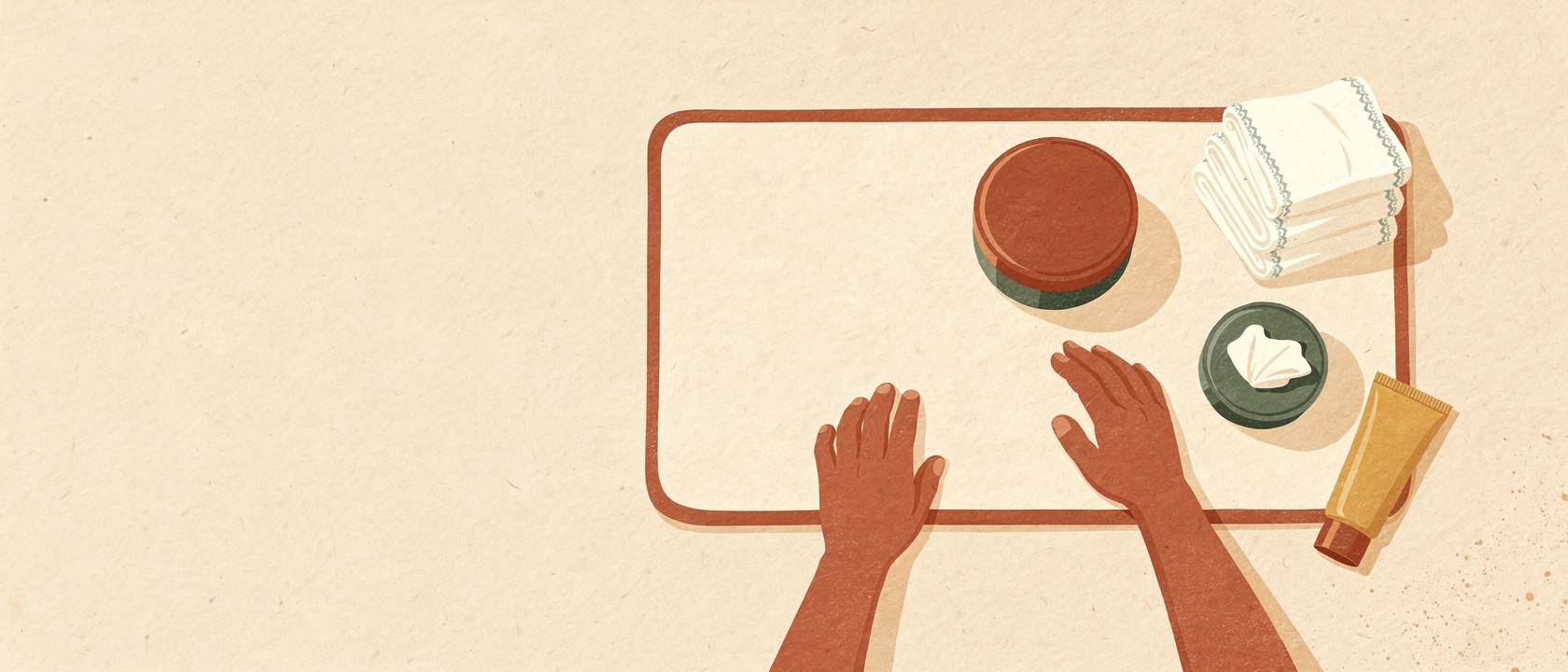
A newborn changing station needs four things: somewhere flat and clean to lay your baby, nappies, wipes or cotton wool and water, and barrier cream within arm's reach. Everything else on a typical nursery "changing station" display — a dedicated changing table, a wipe warmer, a scented nappy disposal bin — is optional, and on the NHS's own guidance, a raised changing table isn't even the safest option to build your setup around. You'll spend less and reduce risk by starting from what's actually recommended, then adding convenience items only where they earn their place.
What the NHS actually recommends for the changing surface
According to the NHS, the safest place to change a nappy is on a changing mat or towel on the floor, particularly if you have more than one child to keep an eye on — it removes the fall risk entirely, since there's nowhere to fall from. If you do use a raised changing table or unit, the NHS is direct about the rule that matters most: never walk away or turn your back, and don't rely on a safety strap alone to keep your baby secure. A strap reduces risk; it doesn't remove the need for a hand on your baby at all times.
This matters for how you actually set the station up, not just where you put it. If everything you need — nappy, wipes, cream, spare clothes — isn't already within arm's reach before you start, you're creating exactly the moment the NHS warns against: reaching away or turning to grab something with your baby still on a raised surface. The fix is entirely about layout, not spending: gather every item in one place before you lift your baby onto the mat, whether that mat is on the floor or on a table.
Falls from furniture are also one of the more common causes of injury to young children at home, which is part of why nappy changing is worth setting up deliberately rather than improvising each time — a consistent, prepared spot means fewer moments where you're tempted to leave a baby unattended, even briefly, to fetch something you forgot.
The actual essentials list
- A changing mat. Wipeable, with a slight lip or raised edge on at least two sides. This is genuinely the one item worth spending a bit more on, since you'll use it multiple times a day for well over a year.
- Nappies. Sized correctly for your baby's current weight — see our nappy size and brand guide if you're not sure which size to start with.
- Wipes or cotton wool and warm water. Fragrance-free wipes are the NHS-recommended alternative to cotton wool and water once you're past the very first weeks.
- Barrier cream. Applied at each change to reduce the risk of nappy rash, especially useful overnight or during looser-stool periods.
- A bag or bin for waste. A simple lidded bin or even a knotted plastic bag works; nothing branded is required.
- A spare set of clothes nearby. Leaks happen often enough in the newborn weeks that having a spare outfit within reach saves a repeat trip mid-change.
That's the complete functional list. Everything below this is a convenience upgrade, not a requirement.
What's genuinely worth adding — and what to skip
A few extras do earn their keep once the basics are covered:
- A caddy or basket to keep nappies, wipes and cream together and portable between rooms — useful if you're changing in more than one location (nursery, living room) rather than committing to a single fixed station.
- A hanging toy or mobile above the changing area, for older babies who start wriggling and need a distraction to stay still for a change.
- A dedicated changing table with storage underneath — a genuine convenience if you have the nursery space and want nappies, wipes and clothes all in one fixed spot, but not a safety upgrade over a mat on the floor, and it introduces the fall risk the NHS specifically flags.
A few common nursery-catalogue items are worth skipping unless you have a specific reason to want one:
- Wipe warmers. Marketed as a comfort item; there's no safety or health basis for warming wipes, and it's one more thing to plug in and clean.
- Branded nappy disposal systems. These use proprietary refill bags that cost more per use than a standard bin liner, for a smell-reduction benefit a simple lidded bin largely replicates.
- A full matching changing-table "set" (table, topper, organiser, liners sold as a bundle) — usually cheaper and just as functional bought as separate pieces, since you may not need all of them.
If you do use a raised changing table
Should you choose a table over floor-changing — reasonably common if bending down repeatedly isn't comfortable, particularly soon after birth — a few features matter more than styling: a concave or slightly raised-edge top so your baby doesn't roll straight off the side, a stable base that doesn't rock when leaned on, and storage that's reachable without letting go of your baby with your free hand. The safety strap is a backup, not a substitute for keeping a hand on your baby throughout, in line with the NHS guidance above.
Setting up more than one station
Many parents find it easier to keep a small stock of nappies, wipes and cream in two spots — say, the nursery and the living room or wherever the family spends most daytime hours — rather than carrying your baby to a single fixed station for every change. This is purely a convenience call: duplicate the basics list above wherever you'll realistically be doing changes, and you'll cut down on the number of times you're moving a baby (or leaving one, even briefly) to fetch supplies.
How the changing station itself helps prevent nappy rash
A well-stocked station isn't just about speed — it directly affects how well you can follow the NHS's own advice on preventing nappy rash. The NHS recommends changing a wet or dirty nappy as soon as possible, applying a thin layer of barrier cream at each change, and giving your baby some nappy-free time when the room is warm enough, since constant nappy wear increases the risk of irritation. All three of those are easier when the cream, spare nappies and a towel to lie your baby on for nappy-free time are already at the station rather than needing to be fetched. If redness or soreness doesn't improve with regular barrier cream and more frequent changes, that's a reasonable point to check with a health visitor or GP rather than trying different creams indefinitely.
Frequently asked questions
Is a changing table safer than changing a nappy on the floor?+
No — the NHS recommends a changing mat or towel on the floor as the safest option, since it removes any fall risk. If you use a raised changing table, the key rule is to never walk away or turn your back, and not to rely on the safety strap alone.
What do I actually need for a newborn changing station?+
Just four things: a wipeable changing mat, correctly sized nappies, wipes or cotton wool and warm water, and barrier cream — all kept within arm's reach so you never need to turn away from your baby mid-change.
Are wipe warmers or branded nappy disposal bins worth buying?+
Not on safety or health grounds. Wipe warmers are a comfort extra with no medical basis, and branded nappy disposal systems mainly add ongoing cost for proprietary refill bags — a standard lidded bin does the same job.
Should I set up more than one changing station in the house?+
It's a convenience choice, not a requirement. Keeping a small stock of nappies, wipes and cream in a second spot (such as the living room) can reduce how often you need to carry your baby to a single fixed station, but one well-stocked station is entirely sufficient.
Sources

Written by
Sepehr
Software engineer, soon-to-be dad, uncle to four — the tech-obsessed half of the two of us testing this stuff. Currently building this site with my wife, ahead of our own baby arriving.