Warming Baby Sleep Pillow Toy: OPSS Serious Risk
On 21 October 2026 OPSS published a serious-risk report on an animal-shaped baby sleep pillow with a built-in warming device, sold via Wish. Here is what the report says, why the NHS advises against both pillows and heat sources in the cot, and what to do if you have one.
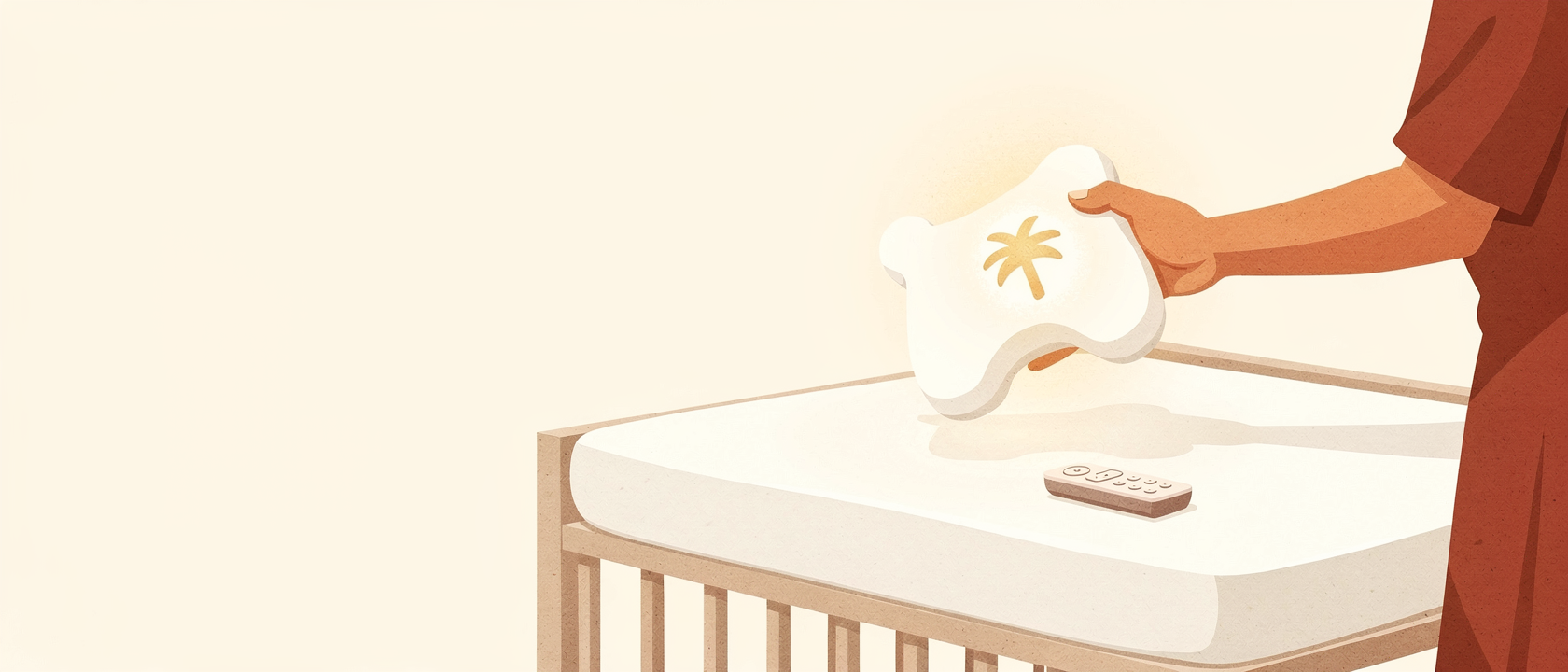
The Office for Product Safety and Standards (OPSS) published a serious-risk safety report on an animal-shaped baby sleep pillow with a built-in warming device on 21 October 2026. The short answer for parents: a baby sleep pillow of any kind does not belong in a cot, and a pillow that also heats up adds a second thing the NHS tells you to avoid. If you have one, stop using it and take it out of the sleep space.
What the OPSS report says about the warming baby sleep pillow
According to the OPSS report (PSD notification 2610-0087), the product was sold on the Wish marketplace under the listing "Infant Comforting Pillow Toy Helps Baby Sleep". It is a white, animal-shaped pillow made in China, marketed for babies from birth to 12 months, with an electronic warming device in the "hand" and a compatible remote control.
OPSS rated the risk serious, stating that the product "presents a risk of suffocation when used in a sleep space for babies", and that it does not meet the General Product Safety Regulations 2005. Wish has removed the listing. OPSS's advice to anyone who owns one is to stop using it, keep it away from children, and contact the seller for a refund or replacement.
Why a heated pillow is a double problem
The report itself points out that pillows and soft toys are advised against in sleep spaces for babies under one year, because they add to the risk of overheating and of the airway becoming blocked, both linked to sudden infant death syndrome (SIDS). A pillow with a warming element combines both concerns in one product.
The NHS safe sleep guidance is clear on each point separately:
- Nothing soft in the cot. The NHS says not to use pillows, duvets, cot bumpers, loose blankets, soft toys or anything to keep your baby in place.
- No heat sources. The NHS says babies should never sleep with a hot water bottle or electric blanket, or next to a radiator, heater or fire.
- Keep the room cool. The NHS recommends a room temperature of about 16 to 20°C, checked with a room thermometer, and says overheating raises the risk of SIDS.
The "comforting" or "soothing" marketing is the trap. A warm, hand-shaped toy is designed to feel like a parent's touch, which is exactly why it is tempting at 3am. But it is the sort of product the NHS guidance rules out, however gentle the warming setting claims to be.
What to do if you have one
- Stop using it and remove it from the cot, Moses basket or bedside crib.
- Keep it out of reach of babies and young children, as OPSS advises.
- Contact the seller for a refund or replacement, keeping the order details and a screenshot of the listing if you still have it.
- Check the room. Use a thermometer and aim for 16 to 20°C. Feel your baby's chest or the back of their neck: cool hands and feet are normal, but if the skin is hot or sweaty, remove a layer. Our winter baby room temperature guide covers what to dress them in as the nights get colder.
Staying warm safely as the nights draw in
With clocks changed and temperatures dropping, it is natural to look for ways to keep a baby cosy. The safer route is layers, not heat: a well-fitting baby sleeping bag with arm holes and no hood, as covered in our baby sleeping bag alert guide, plus a vest or sleepsuit appropriate to the room temperature. Avoid adding extra products to the cot; the same reasoning applies to baby nests and sleeping pods.
This is the latest in a run of sleep-pillow reports. Earlier this month OPSS flagged a cat-shaped pillow sold via Fruugo, which we cover in our baby sleep pillow safety report round-up. OPSS also links the new report to its wider national alert on baby sleep pillows (PSA8).
How to spot risky sleep products online
The marketplace listing is a poor guide to safety. An age label such as "0 to 12 months" does not mean a product has been tested for infant sleep, and the pillow in this report was available to buy until it was removed. A simple test before buying anything for the cot: does the NHS or the Lullaby Trust recommend it? If a product is neither the mattress, a fitted sheet nor an appropriate sleeping bag or light blankets, leave it out of the sleep space. You can check the latest notices on the gov.uk product safety alerts, reports and recalls page.
The Lullaby Trust also runs a free information line if you are unsure about an item in your baby's sleep space.
Frequently asked questions
Is a baby sleep pillow safe for a newborn?+
No. The NHS says not to use pillows, duvets, cot bumpers, loose blankets or soft toys in a baby's sleep space, and OPSS says pillows add to the risk of overheating and airway obstruction linked to SIDS.
What should I do if I bought the warming baby sleep pillow from Wish?+
OPSS advises you to stop using it, keep it away from children, and contact the seller for a refund or replacement. Wish has removed the listing.
What room temperature is safe for a sleeping baby?+
The NHS recommends about 16 to 20°C, monitored with a room thermometer, and says babies should never sleep next to a radiator, heater or fire, or with a hot water bottle or electric blanket.
Sources
Related guides
Britax Baby-Safe Pro & Axkid Minikid Car Seat Recalls
Britax Römer has recalled the Baby-Safe Pro and Axkid the Minikid Core after both seats failed Which? crash tests. Here is how to check your seat, what each maker advises in the meantime, and how to get the free remedy.
Best Bedside Cribs & Moses Baskets Compared (UK)
Six bedside cribs and Moses baskets compared on price, size and lifespan: Silver Cross Lunar, Shnuggle Air Lite, SnuzPod4, HALO BassiNest, Chicco Next2Me Forever and a Mamas & Papas Moses basket. Includes the British Standards the Lullaby Trust lists and NHS safer sleep rules.
Bronchiolitis in Babies: Symptoms & When to Worry
Bronchiolitis is a common winter chest infection in babies. Here is what the NHS says about the symptoms, the signs that mean call 999 or 111, how to care for your baby at home, and how to lower the risk, including RSV protection.

Written by
Sepehr
Software engineer, soon-to-be dad, uncle to four — the tech-obsessed half of the two of us testing this stuff. Currently building this site with my wife, ahead of our own baby arriving.