Best Nursing Pillows Compared: Which Type Suits You?
Six nursing pillows compared by type, price and who they suit, from firm strapped pillows to soft crescents and adjustable microbead designs. Plus what the NHS says about positioning and why the Lullaby Trust says a nursing pillow must never be used for sleep.

The best nursing pillow is the one that matches how you feed, not the one with the most reviews. A firm, strapped pillow such as the My Brest Friend suits parents who want a stable shelf at a consistent height; a soft crescent like the Boppy is more versatile later on; an adjustable microbead pillow such as the bbhugme lets you fine-tune support; and a budget bean-filled cushion covers the basics. None of them is essential, and none of them is a sleep product. This guide compares six nursing pillows we list, explains the differences, and covers the safety rules that matter more than the shape.
Do you actually need a nursing pillow?
No. The NHS says to use pillows or cushions “if necessary” to get comfortable while breastfeeding, and its positioning advice focuses on the fundamentals: support your baby’s neck, shoulders and back so they can tilt their head back and swallow easily, and bring them to the breast with their nose level with your nipple. A nursing pillow is one way to do that. A couple of ordinary cushions or a rolled towel can do the same job.
Where a nursing pillow earns its place is when your arms, back or shoulders ache during long newborn feeds, after a caesarean when you want extra support (ask your midwife for feeding-position advice), or when you are feeding twins. If you are already comfortable, you can safely skip it. Our guide to baby gear you don’t actually need covers the wider question of what to buy and what to leave.
The four types of nursing pillow
Soft crescent pillows
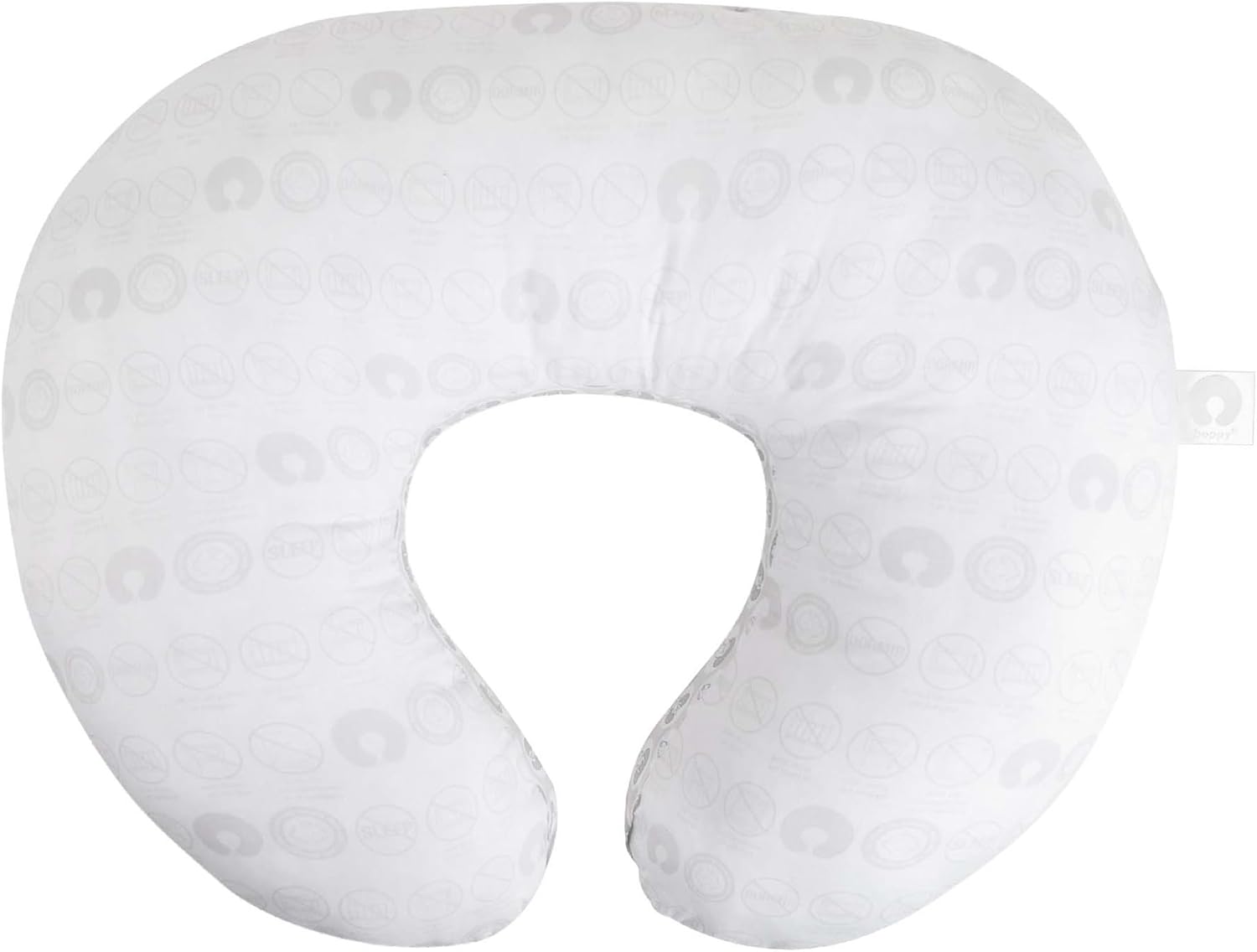
The classic C or U shape, like the Boppy. It rests on your lap, wraps partway round your waist and is soft to lean against. It is light, easy to travel with, and doubles as a prop for supervised tummy time or early sitting practice later. The trade-off is that without a strap it can shift, and the filling compresses with heavy use, so the height changes over time.
Firm wrap-around pillows
The My Brest Friend style: a firm, flat-topped pillow that buckles round your waist so it stays put. The consistent height and flat shelf make positioning simpler while you and your baby are learning to latch. It is bulkier and less useful once feeding is established.
Adjustable and bead-filled pillows
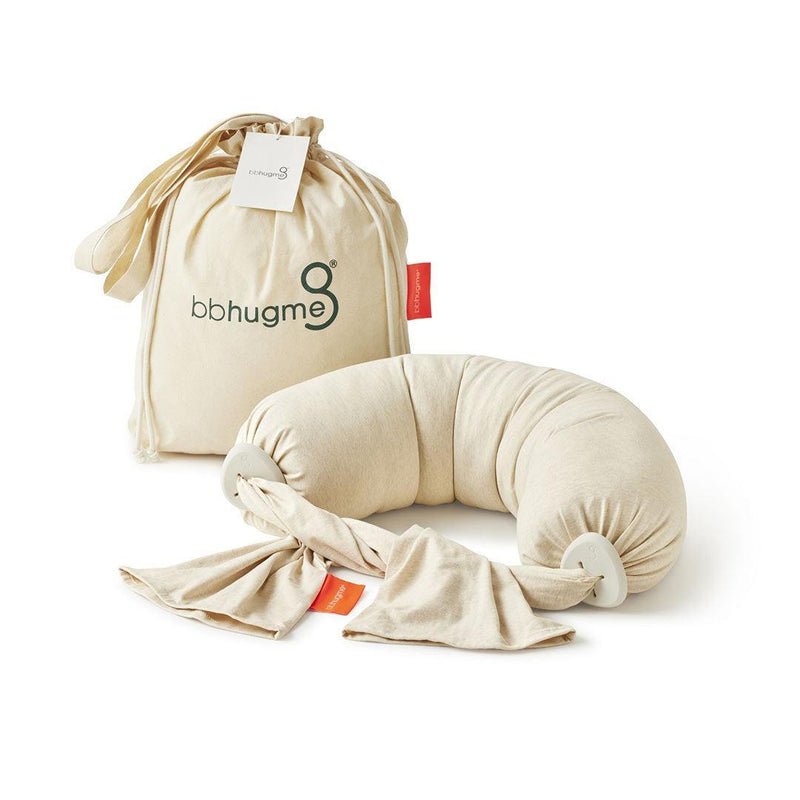
Microbead or bean-filled pillows mould to your body, and some, like the bbhugme, add sliders so you can change the firmness. They suit parents who want to adjust the support as their baby grows, but the support is less rigid than a firm pillow.
Convertible pregnancy-and-nursing pillows
Long, flexible pillows such as the Dreamgenii support your bump and hips in pregnancy, then reshape into a feeding support afterwards. They save buying two products, but they are a compromise: less specialised for feeding than a dedicated pillow. If you are still pregnant, our guide to whether you really need a pregnancy pillow helps you decide which shape to buy first.
Nursing pillows compared
Prices are approximate and come from our product listings; they change, so check the retailer. Specifications are as stated by the manufacturers, and we have not hands-on tested these pillows.
| Pillow | Type | Approx. price | Best for | Main drawback |
|---|---|---|---|---|
| My Brest Friend Original | Firm, waist strap, front pocket | £45 | Stable, consistent support while establishing breastfeeding | Bulky, less useful later |
| Boppy Original | Soft crescent | £35 | All-round use across the first year | Can shift; compresses over time |
| Boppy Bare Naked | Soft crescent, unscented, hypoallergenic | £33 | Households avoiding scented or treated fabrics | No support advantage over the Original |
| bbhugme Nursing Pillow | Adjustable microbeads with firmness sliders; ties round the waist | £69 (RRP £85) | Fine-tuning support as your baby grows | Premium price; less rigid than a firm pillow |
| Dreamgenii Pregnancy & Nursing | Convertible, removable cover | £40 | One pillow for bump support and early feeding | Less specialised for nursing |
| Tutti Bambini Cocoon | Bean-filled, bamboo-cotton cover | £28 (RRP £35) | Tight budgets or a lightweight second pillow | No strap; less consistent support |
You can see every option side by side on our nursing pillows category page.
Which one should you choose?
- Newborn and learning to latch: a firm strapped pillow like the My Brest Friend keeps the height steady.
- You want one pillow that keeps being useful: the Boppy Original is the most versatile, and the Bare Naked version suits a fragrance-free preference.
- You expect your needs to change: the bbhugme’s sliders are the only adjustable option here, if the price fits.
- You are pregnant and hate clutter: a convertible Dreamgenii bridges both stages, accepting that it is less specialised.
- Budget is tight: the Tutti Bambini is the cheapest here, and a couple of ordinary cushions are cheaper still.
How high should the pillow sit?
Height is where nursing pillows most often go wrong. The NHS advice is to bring your baby to your breast rather than leaning your breast towards the baby, with their nose level with your nipple. If the pillow lifts your baby too high, or you find yourself hunching over it, adjust it or take it away. Get your baby latched first and add the pillow only if it helps: a pillow that pushes your baby into an awkward position can make attachment harder, not easier. If breastfeeding hurts or you are struggling, ask your midwife, health visitor or a local infant feeding team to check your baby’s position.
The safety rule that matters most: a nursing pillow is not for sleep
Nursing pillows are feeding aids, not sleep products. The Lullaby Trust advises against letting babies sleep in anything that keeps them in a seated or inclined position, because this can restrict their breathing, and against soft items such as loose bedding and pillows, because a baby’s face can become pressed against them and block their breathing. A soft, curved nursing pillow is exactly that kind of soft item. In practice:
- Never leave your baby lying on or propped in a nursing pillow to sleep or nap. When they finish feeding, move them onto their back in a clear, flat, separate sleep space. Our safer sleep guide for newborns covers what that looks like.
- Don’t leave a baby unattended on the pillow, including on a bed or sofa while you step away.
- Watch out for feeding on a sofa or armchair at night. The Lullaby Trust says never to fall asleep on a sofa or armchair with your baby, as it significantly increases their risk of SIDS, and babies can slip into a position where they are trapped and cannot breathe. If you think you might drift off, put your baby down in a safer sleep space first. The Trust suggests strategies for staying awake, such as taking shifts with a partner, having a snack or drinking cold water.
Feeding pillows are also different from baby self-feeding pillows or prop feeders, which hold a bottle in place so a baby feeds on their back unsupervised. The Lullaby Trust lists these among its product safety alerts, and we explain the official warnings in our guide to baby self-feeding pillows and the OPSS warning. A nursing pillow supports you while you hold and feed your baby; it should never replace an adult holding the baby or the bottle.
Caring for and using your pillow
- Choose a removable, machine-washable cover: milk, sick and leaks are a certainty. Check each cover’s care label for wash temperature.
- Replace a pillow that has gone flat or lumpy; compressed filling changes the feeding height.
- If you buy secondhand, check the cover and filling carefully, and read our advice on buying secondhand baby gear safely.
- Later on, some crescent pillows are used for supervised tummy time or as sitting practice support. Only use them that way while an adult is watching, and follow the manufacturer’s instructions.
Bottom line
Try to get comfortable first with the cushions you already own. If you would still like a nursing pillow, pick the type that matches your situation: firm and strapped for stability, soft crescent for versatility, adjustable for fine-tuning, or convertible if you are still pregnant. Whatever you buy, treat it as a feeding aid only: when the feed ends and your baby is sleepy, they go on their back in their own sleep space.
Mentioned in this guide
Frequently asked questions
Do I need a nursing pillow?+
No. The NHS says to use pillows or cushions if necessary to get comfortable while breastfeeding. A nursing pillow can help with sore arms or after a caesarean, but ordinary cushions can do the same job.
Can my baby sleep on a nursing pillow?+
No. The Lullaby Trust advises against letting babies sleep in seated or inclined positions and on soft items such as pillows. Move your baby onto their back in a clear, flat, separate sleep space once the feed ends.
What is the difference between a nursing pillow and a self-feeding pillow?+
A nursing pillow supports you while you hold and feed your baby. A self-feeding pillow or prop feeder holds a bottle so a baby feeds unattended, and the Lullaby Trust lists these among its product safety alerts. Never use one.
How high should a nursing pillow sit?+
High enough to bring your baby to your breast without hunching, but not so high that they have to reach up. The NHS says to place your baby with their nose level with your nipple, and to support their neck, shoulders and back.
Which nursing pillow is best after a caesarean?+
There is no single best pillow. A firm, strapped pillow such as the My Brest Friend keeps a steady height, but ask your midwife for feeding position advice after surgery, as the NHS notes there are many positions to try.
Sources
Related guides

Best Bedside Cribs & Moses Baskets Compared (UK)
Six bedside cribs and Moses baskets compared on price, size and lifespan: Silver Cross Lunar, Shnuggle Air Lite, SnuzPod4, HALO BassiNest, Chicco Next2Me Forever and a Mamas & Papas Moses basket. Includes the British Standards the Lullaby Trust lists and NHS safer sleep rules.
Bronchiolitis in Babies: Symptoms & When to Worry
Bronchiolitis is a common winter chest infection in babies. Here is what the NHS says about the symptoms, the signs that mean call 999 or 111, how to care for your baby at home, and how to lower the risk, including RSV protection.

Best Baby Carriers Compared (UK Guide)
Six baby carriers compared on price, age range and carry positions: Ergobaby Omni 360, Tula Free-to-Grow, Izmi, BabyBjörn Carrier Mini, Close Caboo and Momcozy Move2Fit. Includes the Lullaby Trust and RoSPA T.I.C.K.S. safety checklist.

Written by
Sepehr
Software engineer, soon-to-be dad, uncle to four — the tech-obsessed half of the two of us testing this stuff. Currently building this site with my wife, ahead of our own baby arriving.