Bed-Sharing & Co-Sleeping Safety: NHS & Lullaby Trust Rules
Bed-sharing and co-sleeping with a newborn explained using NHS and Lullaby Trust guidance: when you should not share a bed (prematurity, smoking, alcohol, drugs, drowsy medicine), why sofas are the biggest danger, and practical steps to reduce risk if you do.
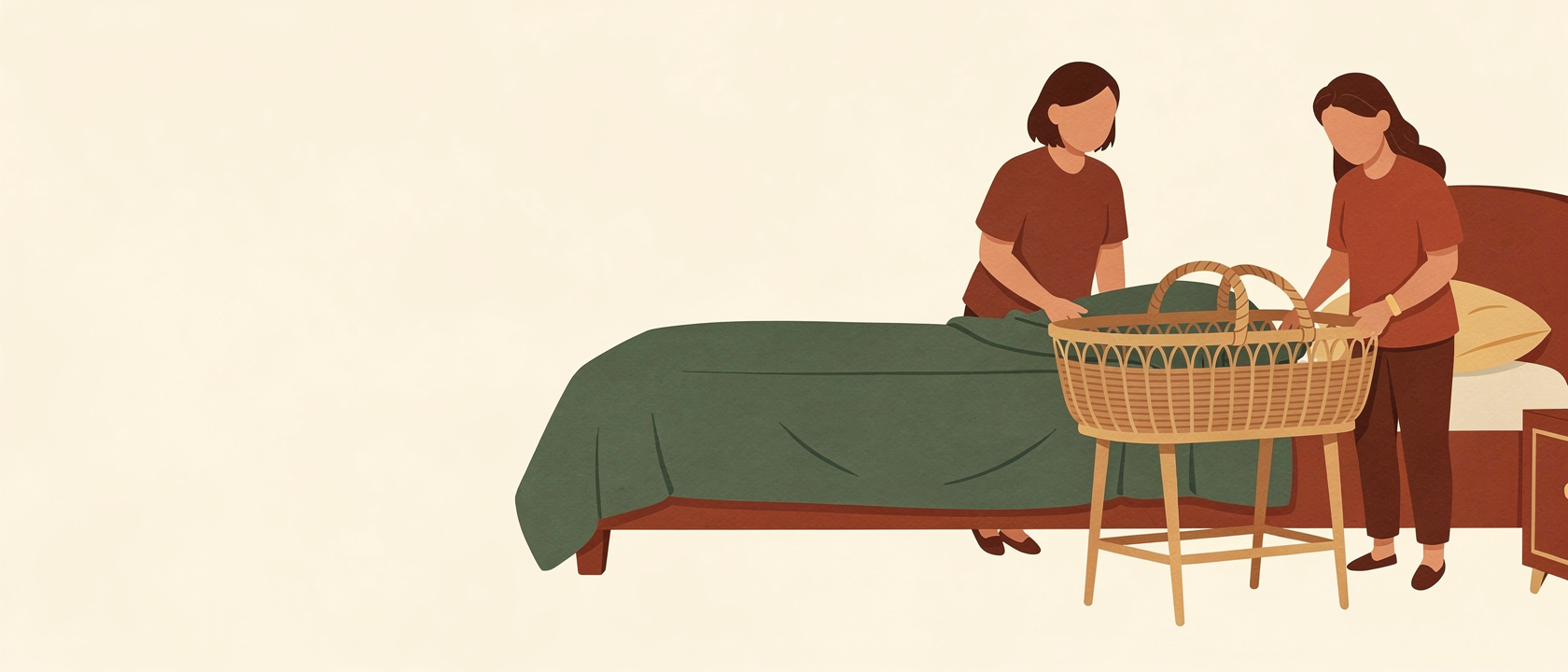
Sharing a bed with a newborn is common, and plenty of parents end up doing it by accident at 3am. The NHS says the safest place for your baby to sleep is in a separate cot or Moses basket in your room, but it does not pretend bed-sharing never happens. This guide explains co-sleeping and bed-sharing safety for UK parents: when the NHS and Lullaby Trust say you should not share a bed at all, and how to make a bed safer if you do.
The short answer: the NHS advises against sharing a bed if your baby was born before 37 weeks or weighed under 2.5kg, if you or your partner smoke, have had two or more units of alcohol, or have taken recreational drugs or drowsy-making medicine. Never fall asleep with your baby on a sofa or in an armchair.
Co-sleeping vs bed-sharing: what the terms mean
The Lullaby Trust describes co-sleeping as parents or carers sleeping with a baby on a bed, sofa or chair. Bed-sharing is more specific: the baby shares an adult bed for most of the night, not just for a feed or a cuddle. It can be planned, or it can happen unintentionally, for example when you fall asleep during a night feed or on holiday "just this once".
The distinction matters because the risk is not the same in every situation. The Lullaby Trust's research summary says evidence is generally more favourable when bed-sharing happens without known risk factors, but that the evidence of danger is clearer and more consistent when specific risk factors are present. It also notes that no study has shown co-sleeping to protect against sudden infant death, which is why the official advice remains a separate sleep space.
What the NHS recommends as the safest option
The NHS recommends putting your baby to sleep in a separate cot or Moses basket in the same room as you for every sleep, day and night, for at least the first six months. The sleep space should be free from toys, blankets and pillows. If you are choosing a sleep space, our guide to cots, cot beds and Moses baskets compares the options, and our newborn safe sleep guide covers the full set of Lullaby Trust rules, including back-to-sleep and a firm, flat mattress.
When you should not share a bed with your baby
The NHS lists specific circumstances in which you should not share a bed with your baby. The Lullaby Trust identifies the same risk factors. If any of these apply, put your baby in their own cot or Moses basket instead, even if you are exhausted.
| Situation | What the NHS says |
|---|---|
| Baby born before 37 weeks or under 2.5kg (5.5lb) | Do not share a bed. These babies are at higher risk of SIDS. For a premature baby, follow safer sleep advice for a year from the due date rather than the birth date. |
| You or your partner smoke | Do not share a bed, even if you never smoke in bed. |
| Alcohol | Do not share a bed if you or your partner have had two or more units of alcohol. |
| Recreational drugs | Do not share a bed if you or your partner have taken them. |
| Medicine that makes you drowsy | Do not share a bed if you or your partner have taken it. |
| Sofa or armchair | Never sleep with your baby on a sofa or in an armchair. |
Why these factors matter
The Lullaby Trust's research summary reports that, in one analysis, the risk of SIDS when co-sleeping was more than fourfold higher where the baby was exposed to smoking, and more than ninefold for babies under three months. It cites one large study finding that co-sleeping next to an adult who had drunk more than two units of alcohol increased the risk of infant death 18 times. It also reports that, compared with sharing a bed, sofa co-sleeping carried an 18-fold increased risk, and that babies born prematurely or at low birth weight have an increased risk whilst co-sleeping regardless of other factors. These figures come from the Lullaby Trust's summary of research studies and are not predictions for any individual family; the message is that these circumstances are where bed-sharing stops being a judgement call.
Why sofas and armchairs are the biggest danger
Falling asleep with a baby on a sofa is the scenario parents most often drift into without meaning to, particularly during night feeds. The NHS says not to sleep with your baby on a sofa or armchair, and lists it as a risk factor. If you feel yourself getting drowsy during a feed, the safest move is to put your baby back in their cot or Moses basket, or to stay in bed with a plan rather than on the sofa. If you are very tired, ask your partner or another adult to take over so you can sleep.
If you choose to share a bed: how to make it safer
If none of the risk factors above apply and you decide to share a bed, or you know you might fall asleep feeding, the NHS gives these practical steps:
- Use a firm, flat mattress and place your baby on their back to sleep.
- Keep pillows, sheets and blankets away from your baby. Make sure they cannot slip over your baby's head.
- Do not swaddle your baby while co-sleeping. The NHS suggests a baby sleeping bag instead. If you use swaddles at other times, see our guide to swaddling safely.
- Keep other children and pets out of the bed.
- Stop your baby falling out or becoming trapped between the mattress and the wall or other furniture.
- Never leave your baby alone in an adult bed. Move them to their cot or Moses basket when you get up, and whenever no adult is in the bed with them.
The Lullaby Trust also advises parents to make a safe co-sleeping plan in advance, and recommends that families who routinely bed-share still have a safe separate space for the baby on nights when they cannot bed-share, for example if they have had a drink or are unwell. Its research summary notes that thick clothing or bedding was linked in one study to a sixfold increase in risk whilst bed-sharing, so keep your baby lightly dressed. Our winter room temperature guide covers how to judge this without overheating.
Bed-sharing and breastfeeding
Many parents bed-share because it makes night feeds easier, and the Lullaby Trust's research summary acknowledges this, noting that bed-sharing is associated with more frequent and longer breastfeeding. It also stresses that this is not the same as protection against SIDS, and that safety advice focuses on reducing hazards. If you are breastfeeding at night, a bedside cot or a Moses basket within arm's reach gives you the closeness without sharing the mattress.
Bedside cribs, nests and "co-sleeping" products
Products marketed as co-sleeping aids need caution. Baby nests, pods and positioners are not a substitute for a cot or Moses basket and should not be placed in an adult bed. We explain the issues in baby nests and sleeping pods: are they safe?. If you want your baby close to you at night, choose a product designed as a cot or crib to current standards rather than an adult-bed insert.
Where to get help
If you are struggling with exhaustion, talk to your midwife or health visitor, who can help you plan safer sleep for your family. The Lullaby Trust runs a baby safety helpline on 0808 802 6869 (weekdays, 10am to 2pm).
Frequently asked questions
Is it safe to co-sleep with a newborn?+
The NHS says the safest place for a baby to sleep is a separate cot or Moses basket in your room. It advises against bed-sharing if your baby was premature or under 2.5kg, or if you or your partner smoke, have had alcohol, or have taken drugs or drowsy medicine.
Is it ever OK to sleep on the sofa with a baby?+
No. The NHS says never to sleep with your baby on a sofa or armchair. If you feel drowsy during a night feed, put your baby back in their cot or Moses basket.
How many units of alcohol before I should not share a bed with my baby?+
The NHS says not to share a bed if you or your partner have had two or more units of alcohol.
How long should a baby sleep in the same room as parents?+
The NHS recommends your baby sleeps in a cot or Moses basket in the same room as you for at least the first six months.
Sources
Related guides
Best Bedside Cribs & Moses Baskets Compared (UK)
Six bedside cribs and Moses baskets compared on price, size and lifespan: Silver Cross Lunar, Shnuggle Air Lite, SnuzPod4, HALO BassiNest, Chicco Next2Me Forever and a Mamas & Papas Moses basket. Includes the British Standards the Lullaby Trust lists and NHS safer sleep rules.
Best Baby Carriers Compared (UK Guide)
Six baby carriers compared on price, age range and carry positions: Ergobaby Omni 360, Tula Free-to-Grow, Izmi, BabyBjörn Carrier Mini, Close Caboo and Momcozy Move2Fit. Includes the Lullaby Trust and RoSPA T.I.C.K.S. safety checklist.
Bronchiolitis in Babies: Symptoms & When to Worry
Bronchiolitis is a common winter chest infection in babies. Here is what the NHS says about the symptoms, the signs that mean call 999 or 111, how to care for your baby at home, and how to lower the risk, including RSV protection.

Written by
Sepehr
Software engineer, soon-to-be dad, uncle to four — the tech-obsessed half of the two of us testing this stuff. Currently building this site with my wife, ahead of our own baby arriving.