Babymore Space Saver Cot Castors: OPSS Overturn Risk
On 23 October 2026 OPSS published a safety report on the grey Babymore Space Saver Cot (model 2620003): it may overturn when pushed sideways with castors fitted, and a sample had a sharp splinter. Babymore has removed the castors; here is what to check.
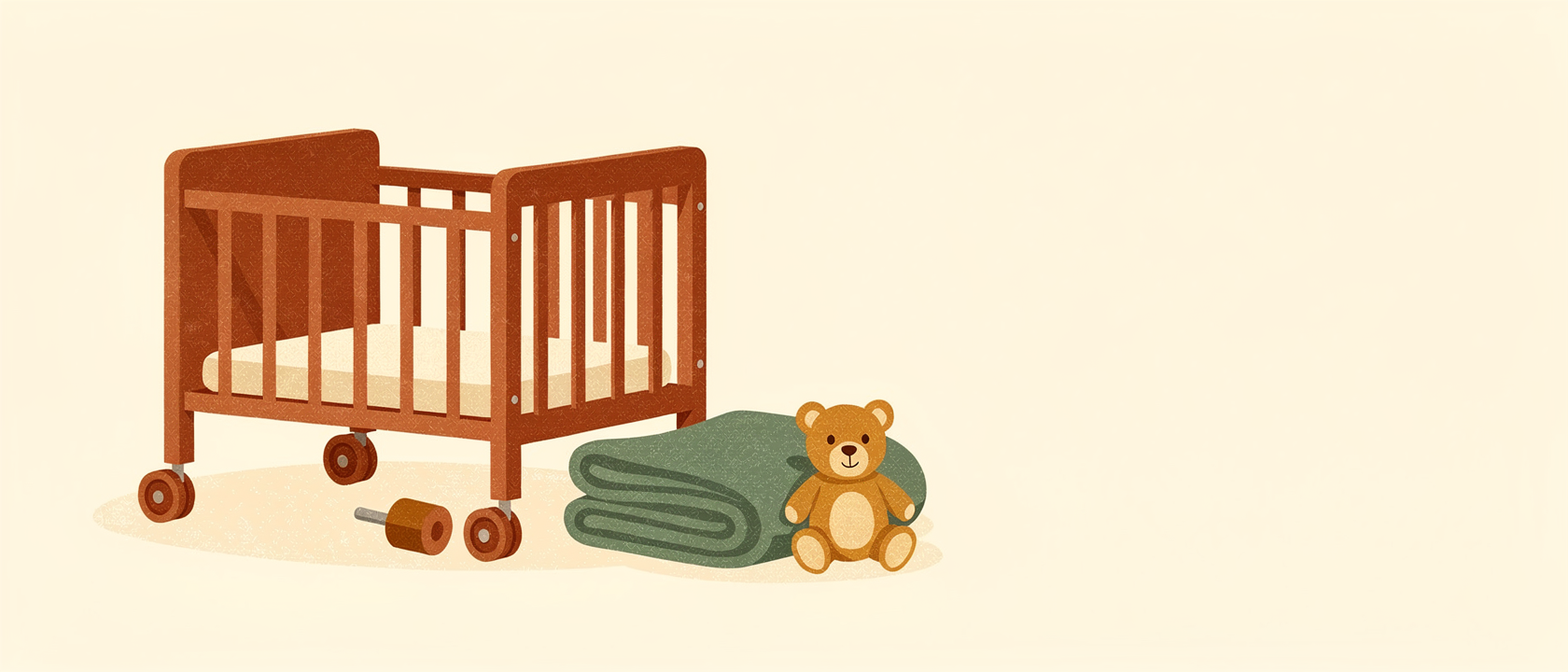
The Office for Product Safety and Standards (OPSS) published a product safety report on the Babymore Space Saver Cot (Grey) on 23 October 2026. The short answer for parents: the report says the cot may overturn if pushed sideways while the castors are fitted, and Babymore has removed the castors from existing stock and future production. If you own one, check whether the castors are on, and follow the manufacturer's updated instructions.
What the OPSS report says about the Babymore Space Saver Cot
According to the report (PSD notification 2610-0027), the product is a grey wooden cot, model 2620003, made in the United Kingdom. It is described as having four adjustable mattress base positions, removable castors (two of them lockable) and teething rails on both sides.
OPSS lists two hazards:
- Overturning: the cot "may overturn when subjected to a horizontal force while assembled with its castors fitted", which could lead to a child falling and being injured.
- Sharp wood: the sample tested had a sharp wood splinter on one side bar and an exposed rough edge, which could cause cuts or lacerations in normal use.
The report states the product does not meet the requirements of the General Product Safety Regulations 2005. The measures recorded are warning consumers of the risks and withdrawal of the product from the market. The report does not name a retailer and does not give a risk level.
What Babymore has done
The manufacturer has removed the castors from existing stock and from future production, and retailers and consumers have been given updated safety information. OPSS says owners should follow the manufacturer's instructions, and that the cot may continue to be used without the castors fitted.
What to do if you have this cot
- Check the model. Look for the Babymore Space Saver Cot in grey, model 2620003, or the barcode 5060417270910 quoted in the report.
- Remove the castors following Babymore's instructions, so the cot sits on its fixed feet or base rather than wheels.
- Run your hand along the side bars and rails for splinters or rough edges. If you find any, stop using the cot and contact the manufacturer or retailer.
- Keep the cot away from the sleep space hazards the NHS lists: the NHS advises a firm, flat mattress and nothing else in the cot such as pillows, duvets, bumpers or soft toys.
This is a product safety report rather than a recall of every unit, so the practical outcome is a fix (castors off) rather than a blanket instruction to stop using the cot. Check the live GOV.UK page for any update.
Why wheels on a cot matter
Castors make a small cot easy to move between rooms, which is part of the appeal of a space-saver design. The OPSS finding is that wheels also make the cot less stable when force is applied from the side, for example a toddler leaning, a sibling bumping into it or a pet pushing past. That is the scenario the report describes. If you want a cot you can shift around, lock any castors when it is in use and read the instructions for the maximum safe use, and consider whether a fixed cot suits your space better.
If you are still choosing, our guides on cot vs cot bed vs Moses basket and the best cot beds compared explain the trade-offs, and buying secondhand baby gear safely covers what to check if you are buying a pre-owned cot, which matters here because the castor fix may not have reached second-hand owners.
Cot safety checks worth repeating
The Lullaby Trust's safer sleep advice and the NHS both say babies should sleep on a firm, flat mattress that fits snugly, on their back, in a clear sleep space for every sleep. The NHS also advises keeping the room at about 16 to 20°C. Our winter room temperature guide walks through this. When your child outgrows the cot, moving from cot to toddler bed covers the transition.
How to stay on top of safety reports
OPSS publishes alerts, reports and recalls on GOV.UK. It is worth searching the product name and model number before you buy new or second-hand nursery furniture, and registering larger purchases with the manufacturer so you hear about corrective actions.
Frequently asked questions
Is the Babymore Space Saver Cot safe to use?+
OPSS says it may overturn with castors fitted, and Babymore has removed the castors. OPSS states the cot may continue to be used without castors, following the manufacturer's instructions.
What should I do if I own a Babymore Space Saver Cot?+
Check it is the grey model 2620003, remove the castors per Babymore's instructions, and check the side bars for splinters or rough edges. Contact the manufacturer or retailer if you find any.
Is this a full recall?+
The OPSS entry is a product safety report with measures of warning consumers and withdrawing the product from the market. The corrective action is removing the castors rather than stopping use altogether.
Sources
Related guides
Visitors Kissing Your Newborn: Lullaby Trust Advice
New Lullaby Trust research says 57% of parents have had a baby kissed without asking. Here is the Trust's THANKS guidance on handwashing, kissing and unwell visitors for newborns, plus practical ways to set boundaries with family without causing offence.
Warming Baby Sleep Pillow Toy: OPSS Serious Risk
On 21 October 2026 OPSS published a serious-risk report on an animal-shaped baby sleep pillow with a built-in warming device, sold via Wish. Here is what the report says, why the NHS advises against both pillows and heat sources in the cot, and what to do if you have one.
Britax Baby-Safe Pro & Axkid Minikid Car Seat Recalls
Britax Römer has recalled the Baby-Safe Pro and Axkid the Minikid Core after both seats failed Which? crash tests. Here is how to check your seat, what each maker advises in the meantime, and how to get the free remedy.

Written by
Sepehr
Software engineer, soon-to-be dad, uncle to four — the tech-obsessed half of the two of us testing this stuff. Currently building this site with my wife, ahead of our own baby arriving.