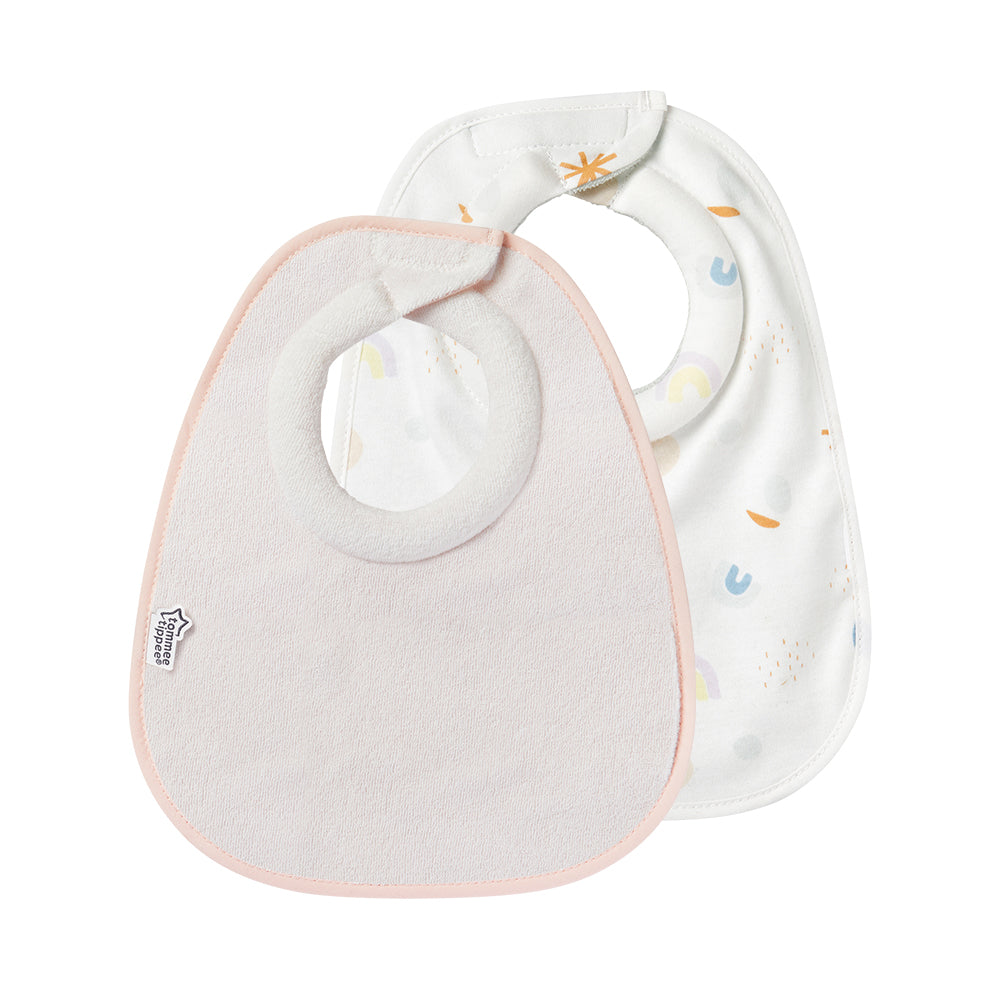
Tommee Tippee
Milk Feeding Bibs, Pack of 2
6.9/10 overallAround £5.49 for 2
Simple wipeable weaning bibs with a soft roll-up pocket and stretchy neck loop.
The verdict
Tommee Tippee's weaning bibs, around £5.49 for two, use a stretchy neck loop instead of poppers for fast on-and-off changes, with a wipeable roll-up pocket. Best for parents who want speed and simplicity across dozens of meals a week rather than maximum mess containment. Skip it for heavy, messy self-feeding stages, where a deeper crumb-catcher pocket like Bibetta's UltraBib works better.
These are a straightforward, no-fuss weaning bib: a roll-up pocket to catch mess, a stretchy neck loop instead of poppers, and a wipeable coated fabric. The stretchy loop is genuinely faster to get on and off a wriggling baby than a popper fastening, which matters at every single meal, several times a day.
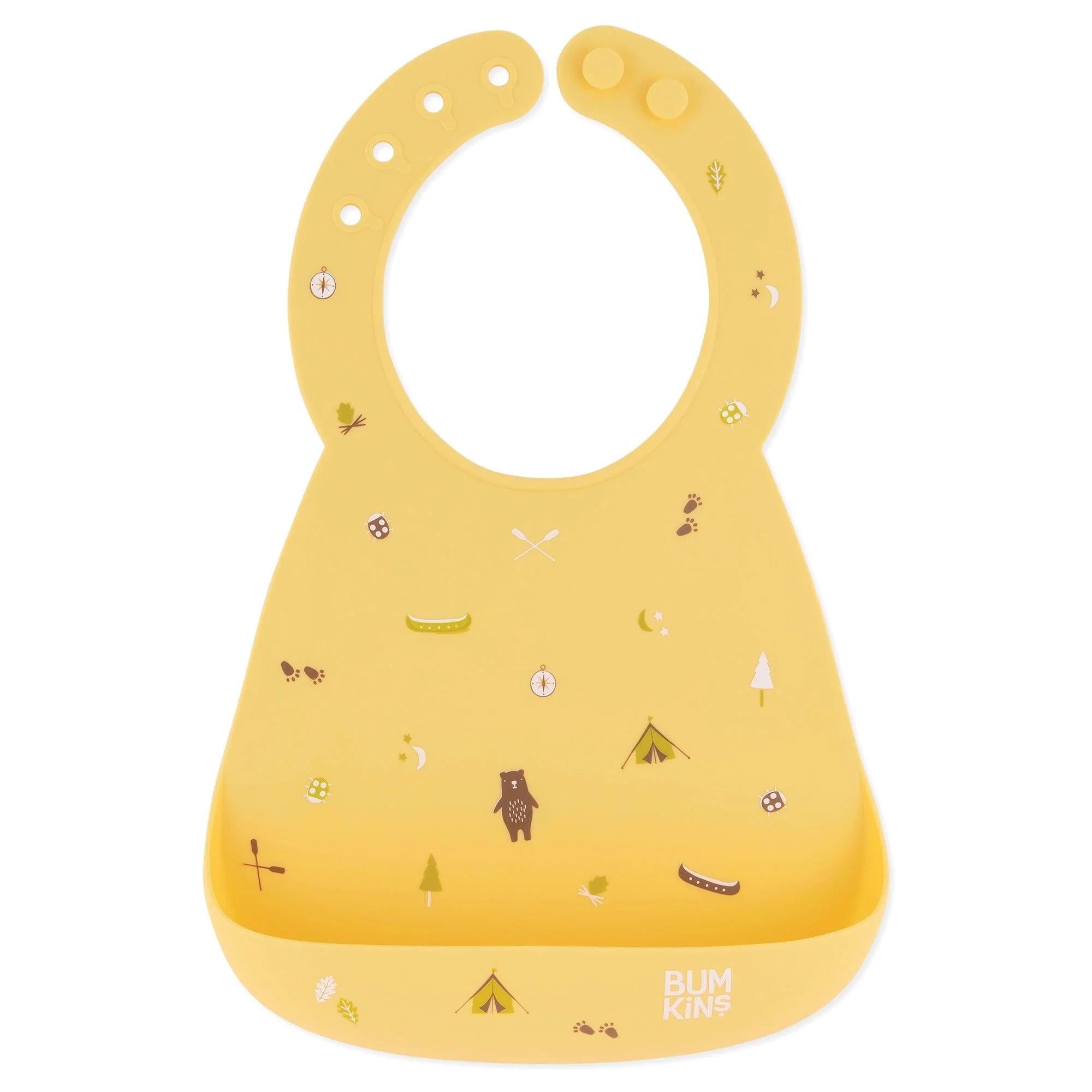
Compared with Bibetta's UltraBib, the pocket here is shallower and less rigid, so it catches less of what's actively dropped, but the trade-off in speed and simplicity of fastening is real and adds up across dozens of meals a week.
Is the Milk Feeding Bibs, Pack of 2 worth it?
- Fast to put on and take off with a stretchy loop
- Good value with two bibs per pack
- Wipes clean easily after meals
What are the downsides of the Milk Feeding Bibs, Pack of 2?
- Shallower pocket catches less than a deep crumb-catcher design
- Stretchy loop can loosen over time
- Not as robust for heavy, messy self-feeding stages
Specs
- Roll-up catch pocket
- Material
- Wipeable coated fabric
- Fastening
- Stretchy neck loop, no poppers
- Pack size
- 2 bibs
How we scored it
Mess Containment
How well it catches food, purée and dribble before it reaches clothes or the floor.
Shallower pocket than dedicated crumb-catcher bibs.
Comfort & Fit
How comfortable the fastening and material are against a baby's neck for a full meal.
Stretchy loop is fast and comfortable to fit.
Durability
How well it holds up to daily use, wiping down and dishwasher or machine washing.
Holds up well to daily washing.
Weighted by importance for this category — see our editorial policy for how we test.
How this review was done
We haven't used the Milk Feeding Bibs, Pack of 2 ourselves yet. This review is built from Tommee Tippee's published specifications and product information, and scored the same way as everything else on the site. We'll update it, and the badge above, once we've tested it hands-on.
How it compares
|  |  |  | |
|---|---|---|---|---|
| Price | Around £5.49 for 2 | £6.99 | £12.99 | Around £10.99 for 2 |
| Overall score | 6.9/10 | 6.4/10 | 8.1/10 | 7/10 |
| material | — | Polypropylene (BPA free) | Food-grade silicone | — |
| age_range | — | From around 3 months | 6-24 months | — |
| dishwasher_safe | — | Yes, top rack | Yes, top rack | — |
Frequently asked questions
Why use a stretchy loop instead of poppers?+
The stretchy loop is genuinely faster to get on and off a wriggling baby than a popper fastening, which matters at every single meal, several times a day.
How much mess does this bib catch?+
It has a shallower, less rigid pocket than a deep crumb-catcher design, so it catches less of what's actively dropped compared with a bib like Bibetta's UltraBib.
Does the neck loop loosen over time?+
It can — the stretchy loop can loosen with wear, which is the trade-off for how quick and easy it is to fasten.
Is this bib easy to clean?+
Yes — it's a wipeable coated fabric that wipes clean easily after meals.
Guides that mention this

Best Baby Cups and Weaning Bibs Compared (UK)
The NHS recommends an open or free-flow cup without a valve from around 6 months. This guide compares three baby cups and three weaning bibs on price, design and mess, and flags the one cup that uses a valve.

When to Start Weaning: The NHS Guidance Explained
Around 6 months is the NHS's headline advice, but 'around' is doing a lot of work in that sentence. Here's how to read your baby's actual readiness signs.

Toddler Fussy Eating: What Actually Helps (and What Makes It Worse)
Fussy eating is extremely common between 1 and 3 years old. Pressure tends to make it worse, not better — here is what genuinely helps.

Reviewed by
Sepehr
Software engineer, soon-to-be dad, uncle to four — the tech-obsessed half of the two of us testing this stuff. Currently building this site with my wife, ahead of our own baby arriving.