Best Baby Cups and Weaning Bibs Compared (UK)
The NHS recommends an open or free-flow cup without a valve from around 6 months. This guide compares three baby cups and three weaning bibs on price, design and mess, and flags the one cup that uses a valve.
The best first baby cup is an open cup or a free-flow cup with no valve, and the best weaning bib is a wipeable one with a deep pocket that fits snugly at the neck. The NHS advises introducing a cup from around 6 months and offering sips of water with meals, and it specifically recommends open or free-flow cups without a valve because they help a baby learn to sip rather than suck. This guide compares three baby cups and three weaning bibs we list, and flags the one cup that runs against that NHS advice.
What the NHS says about baby cups
NHS guidance on drinks and cups says to introduce your baby to drinking from a cup or beaker from around 6 months, and to offer sips of water with meals. It recommends an open cup or a free-flow cup without a valve, because these help a baby learn to sip and are better for their teeth. The NHS also says that once a baby is 1 year old, feeding from a bottle should be discouraged, and it warns that comfort sucking on sweetened drinks from a bottle causes tooth decay because drinks flow slowly through a teat and stay in contact with the teeth for longer.
Two other NHS points shape what to buy. Drinking water for babies over 6 months does not need to be boiled first, and fully breastfed babies do not need any water until they start eating solid foods. That means a cup is a skill-building tool at first, not a way of getting fluid in. If you are still working out when solids should begin, our guide to when to start weaning covers the NHS timing.
Baby cups compared
| Cup | Price | Design | Valve? | Best for |
|---|---|---|---|---|
| Doidy Cup, 200ml | £6.99 | Slanted open rim, two handles | No | Learning to sip from around 3 months (as specced by the brand) |
| Munchkin Miracle 360 | £8 | 360-degree rim, removable handles | No | Spill-resistant sipping without a valve |
| Vital Baby Easy Sipper, pack of 2 | £10.99 | Soft silicone spout, twin handles | Yes (anti-spill valve included) | Bridging from bottle, with caveats below |
Doidy Cup: the open-cup option
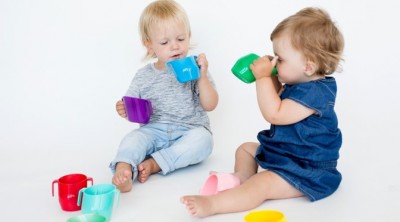
The Doidy Cup (200ml, about £7) is a UK-made, slanted open cup with two handles and no spout or valve, made from BPA-free polypropylene. It matches the NHS description of an open cup closely, and the slanted shape is designed so a baby can tip the rim toward their mouth while the parent holds it. It is specced for use from around 3 months, but given the NHS timing of around 6 months for water sips with meals, treat it as a cup to start using alongside solids. The trade-off is mess: an open cup will spill while a baby learns, so expect wet bibs. It is dishwasher safe on the top rack.
Munchkin Miracle 360: the free-flow compromise
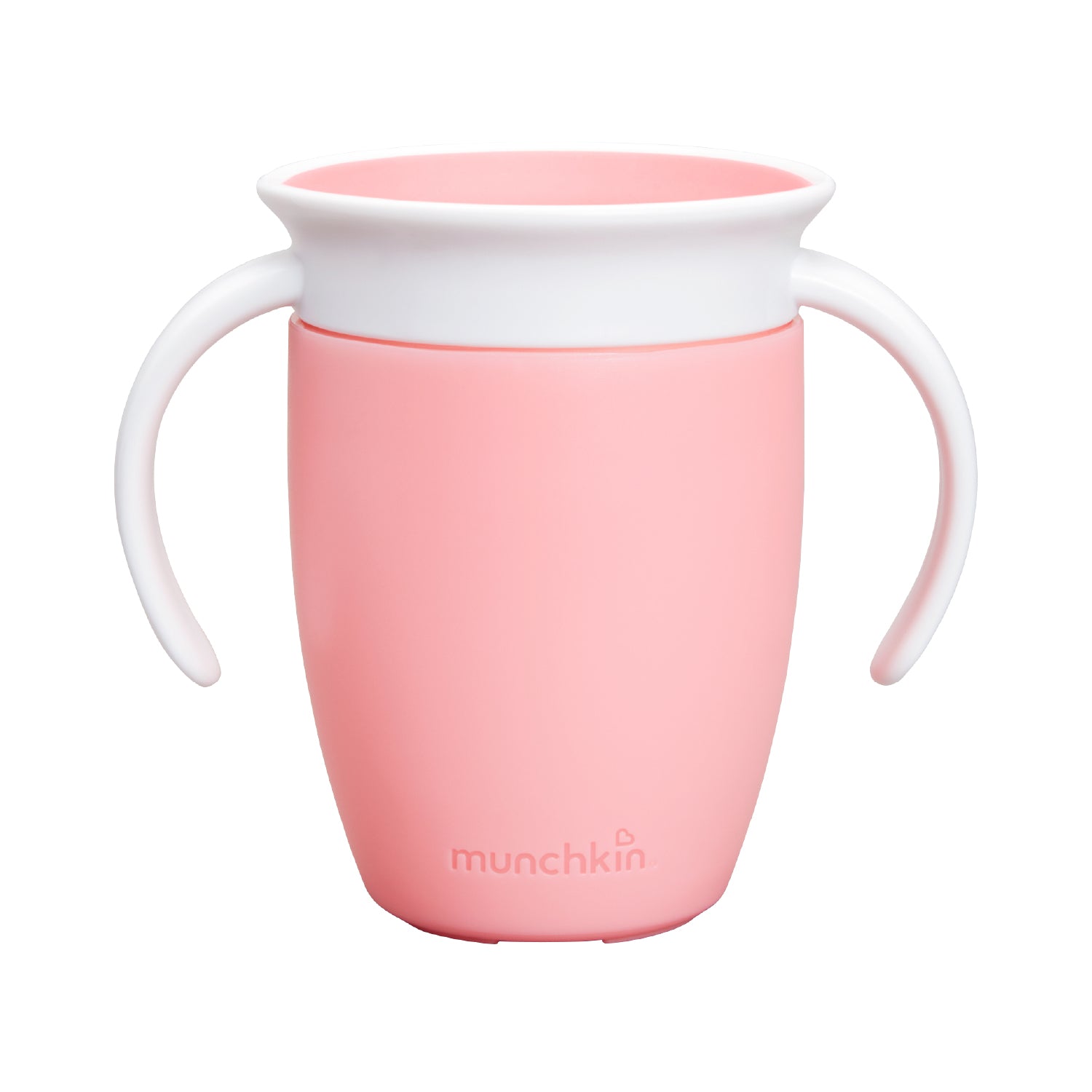
The Munchkin Miracle 360 Trainer Cup (about £8) is valve-free with a 360-degree rim, so a baby can drink from anywhere round the edge, and the design is meant to keep liquid in when the cup is tilted or dropped. Because it has no valve, it fits the NHS preference for cups that teach sipping. It comes in 177ml and 296ml options and has removable handles, which is handy as a baby gets more confident. If a fully open cup feels like too much mess, this is the middle ground.
Vital Baby Easy Sipper: read this one carefully
The Vital Baby Easy Sipper (pack of 2, about £11, 150ml) has a soft silicone spout, twin handles and an anti-spill valve. That valve is the catch. The NHS advises choosing an open cup or a free-flow cup without a valve, so this style is not the NHS's preferred option for learning to sip. A soft-spout cup can still be a practical stepping stone for some families moving on from a bottle, but treat it as a transition tool rather than the destination, and plan to move to an open or free-flow cup. If you are weighing it up against the bottle side of things, our comparison of anti-colic bottles covers the feeding-equipment side.
Weaning bibs compared
| Bib | Price | Material | Fastening | Cleaning |
|---|---|---|---|---|
| Bumkins Silicone Bib, 6-24 months | £12.99 | Food-grade silicone | Adjustable snap, 3 positions | Wipe, rinse or dishwasher (top rack) |
| Bibetta UltraBib | £9 | Wipeable laminated fabric | Popper neck | Wipe clean or machine washable |
| Tommee Tippee Milk Feeding Bibs, pack of 2 | £5.49 | Wipeable coated fabric | Stretchy neck loop, no poppers | Wipe clean |
Bumkins Silicone Bib: best for baby-led weaning mess
The Bumkins Silicone Bib (6-24 months, about £13) is a one-piece food-grade silicone bib with a deep pocket that stays open and an adjustable three-position snap neckline. It is aimed at baby-led weaning mess, where food routinely lands in a baby's lap, and it can be wiped, rinsed under the tap or put in the dishwasher on the top rack. It is the most expensive bib here, and a stiff silicone bib can feel less forgiving around the neck than fabric, so check the fit as your baby grows.
Bibetta UltraBib: best all-rounder
The Bibetta UltraBib (about £9) is a soft, wipeable laminated-fabric bib with a deep, self-opening crumb-catcher pocket and a popper neck fastening. It can be wiped clean or machine washed, which gives it an edge over silicone if you like the option of a hot wash after a particularly messy meal.
Tommee Tippee Milk Feeding Bibs: best budget
The Tommee Tippee bibs (pack of 2, about £5.49) are simple wipeable bibs with a soft roll-up pocket and a stretchy neck loop with no poppers. They are the cheapest option and the easiest to pull over a wriggling baby's head, but the pocket is shallower than the Bumkins or Bibetta and a stretchy loop gives less adjustability as the neck size changes.
Mealtime set-up: bibs, cups and highchairs
A bib and a cup are only part of a mealtime. For the wider set-up, including safe seating and what to offer first, see our guides to choosing a highchair and baby-led weaning versus purees, and for pouches see best baby food pouches for weaning.
Which should you buy?
If you buy one cup, make it an open or free-flow one: the Doidy Cup if you are happy to accept some mess, or the Munchkin Miracle 360 if you want fewer spills. Keep the Vital Baby Easy Sipper as an optional stepping stone, not your only cup. For bibs, most families need two or three in rotation: one silicone catch-all bib for main meals such as the Bumkins, plus a cheaper wipeable one such as the Tommee Tippee for on-the-go. None of the products here has been hands-on tested by us, so this comparison is based on manufacturer specifications and NHS guidance rather than our own trials.
Mentioned in this guide
Frequently asked questions
When should a baby start using a cup?+
The NHS advises introducing a cup or beaker from around 6 months and offering sips of water with meals.
Are valve sippy cups bad for babies?+
The NHS recommends an open cup or a free-flow cup without a valve because these help a baby learn to sip and are better for their teeth, so valve cups are not its preferred option.
When should babies stop using bottles?+
The NHS says that once a baby is 1 year old, feeding from a bottle should be discouraged.
Sources
Related guides
Baby Cold: Blocked Nose Relief & When to Worry (NHS)
Most baby colds clear up within 2 weeks, according to the NHS. Here is what the NHS advises for a blocked nose, which medicines to avoid, how long a cough lasts and the signs that mean calling NHS 111 or 999.
Best Double and Twin Buggies Compared (UK Guide)
Six double and twin buggies compared on price, width and newborn options: Ickle Bubba Venus Prime, Mountain Buggy Duet, Out n About Nipper V6, Baby Jogger City Select 2, iCandy Peach 7 and Bugaboo Donkey 6 Twin, plus RoSPA buggy safety checks.
Plush Toy Safety UK: Caterpillar Report and What to Check
On 13 October 2026 OPSS published a high-risk report on InteDesign plush caterpillar toys sold via Amazon: a torn seam exposing filling, a detaching loop and a too-thin plastic bag. Here is what it found and a 60-second check for any plush toy.

Written by
Sepehr
Software engineer, soon-to-be dad, uncle to four — the tech-obsessed half of the two of us testing this stuff. Currently building this site with my wife, ahead of our own baby arriving.