SMA Newborn Screening in England: Heel Prick Test
From October 2026, SMA (spinal muscular atrophy) screening is being added to the newborn heel prick test in England. Here is what is changing, how the rollout works, when you get results and what the NHS says about the test being optional.
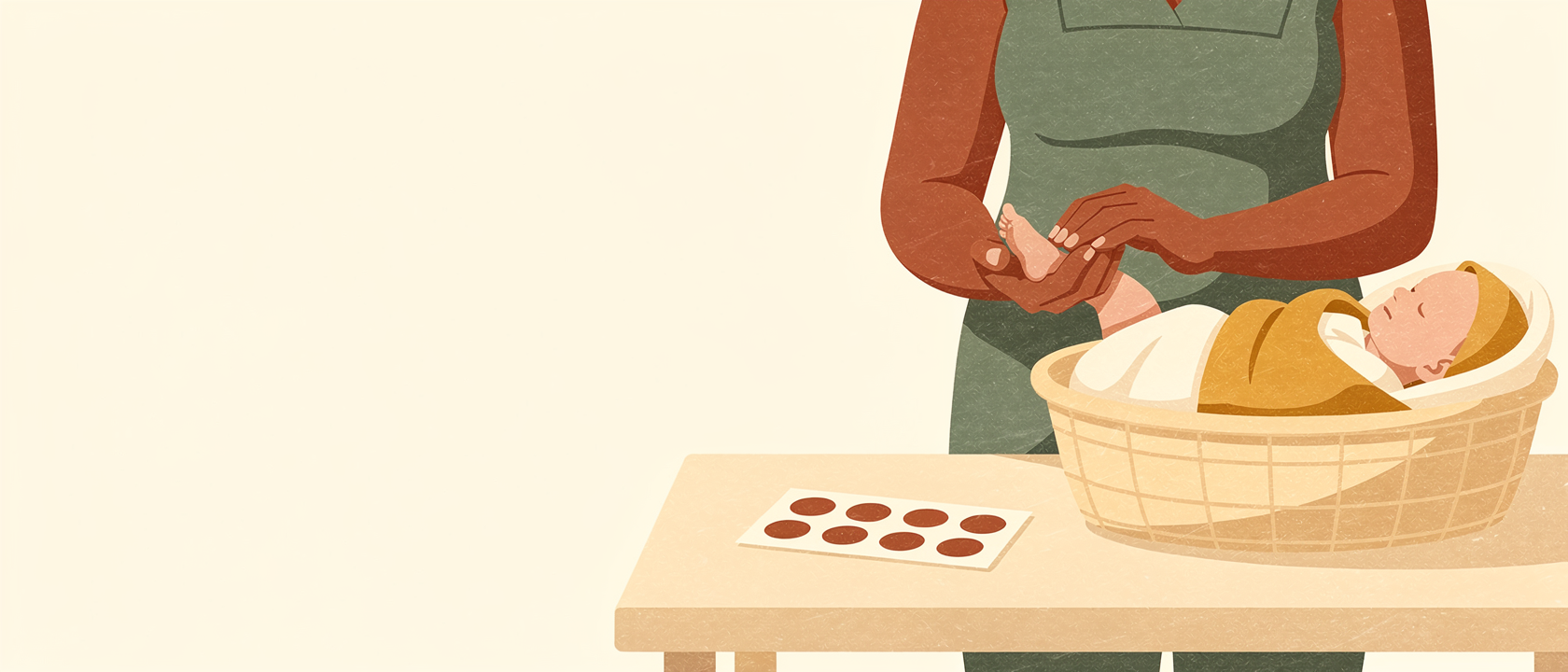
From October 2026, babies in England are being screened for spinal muscular atrophy (SMA) as part of the routine newborn heel prick test. There is nothing extra to buy, book or prepare: SMA is added to the blood spot test your baby is already offered in the first week. This guide explains what is changing, when your local area is likely to start, what the test involves and what to expect if you are due soon.
What is changing with newborn SMA screening in England?
On 16 July 2026 the government announced that every baby in England will be offered a genetic test for SMA from birth. According to gov.uk, testing works through a simple heel prick to collect a small blood sample shortly after birth, and laboratories begin testing from October 2026 – three months earlier than first planned. The remaining screening laboratories follow from October 2027, so coverage is being phased in rather than switched on everywhere on one day.
Gov.uk also says a £4.1 million evaluation study, funded through the National Institute for Health and Care Research and led by the University of Oxford, will assess how well screening works. That evidence will inform future UK National Screening Committee recommendations on whether SMA should be added to the newborn blood spot test permanently.
What is SMA?
The NHS describes spinal muscular atrophy as a rare genetic condition that causes muscle weakness which gets worse over time. Symptoms can include difficulty moving, breathing and swallowing problems, and bone and joint problems such as scoliosis. The NHS notes that SMA does not affect intelligence.
The NHS lists four common types based on when symptoms start:
| Type | When symptoms usually start (NHS) |
|---|---|
| Type 1 | Babies under 6 months |
| Type 2 | 6 to 17 months |
| Type 3 | 18 months to 17 years |
| Type 4 | Adulthood (18+) |
There is no cure, but the NHS says three gene-targeting medicines are available (nusinersen, risdiplam and onasemnogene abeparvovec), alongside supportive care such as physiotherapy and help with breathing and swallowing. Gov.uk's announcement frames the point of screening as early diagnosis, which can allow babies to live full and healthy lives.
How does the SMA heel prick test work?
SMA screening uses the same sample as the existing newborn blood spot test. The NHS explains that a healthcare professional pricks your baby's heel with a device that has a tiny needle and collects a few drops of blood on a special card. The test is typically done when your baby is 5 days old, though it may happen earlier or later. Often this is a visit from your community midwife at home, so it is worth knowing the date in case you are expecting a visit during the first week.
The blood spot test already checks for cystic fibrosis, sickle cell disease, congenital hypothyroidism and seven inherited metabolic diseases. The NHS currently lists SMA as screened for in select areas of England – which matches the phased rollout.
Will my baby be offered the SMA test?
If you give birth in England after your local laboratory starts SMA testing, SMA should be included in the blood spot screening your baby is offered. Because the rollout runs from October 2026 to October 2027, it depends on which laboratory processes your area's samples. Ask your midwife during antenatal appointments whether SMA is included where you live. Screening is also not a separate appointment – you do not need to request it, pay for it or arrange anything extra.
This guide covers England only, so if you live elsewhere in the UK check with your local midwife or health board if you live elsewhere in the UK.
Is the newborn blood spot test optional?
Yes. The NHS says the test is recommended for all babies but is optional, and parents are asked during pregnancy and again after birth whether they want their baby to be tested. You can ask your midwife for the leaflet and talk through any questions before the test day.
When do you get the results?
The NHS says you should get the results of a newborn blood spot test by the time your baby is 6 weeks old, or sooner depending on the result. Most babies have a "no conditions suspected" result. If a repeat test is needed, the healthcare team will contact you to explain why and arrange it – the NHS stresses this does not necessarily mean there is a problem.
Does SMA screening mean my baby has a higher risk?
No – screening is offered to every baby, whatever your family history. SMA is usually inherited: the NHS says most cases are caused by an altered SMN1 gene, and if both parents carry it there is a 25% chance of a child having SMA, a 50% chance of being a carrier and a 25% chance of neither. Many carriers have no idea they carry the gene, which is one reason universal screening is valuable. If SMA runs in your family, speak to your GP or midwife about genetic counselling – the NHS lists this and prenatal tests as options.
Practical tips for the first week
- Keep your baby warm and calm. A feed or cuddle around the heel prick is a common comfort; see our guide to how often a newborn should feed.
- Note the date. Your midwife will usually tell you when the blood spot test is due; ask before you are discharged.
- Know who to call. If you are not contacted about results by 6 weeks, ask your midwife or GP.
- Keep your baby's health records handy. The red book is the place to note screening results; our hospital bag checklist includes the paperwork worth bringing.
- Know other early checks. Newborn jaundice and cord care are also covered in our jaundice guide.
Bottom line
SMA screening is a quiet but significant change to the first week of life in England: same heel prick, same timing, one more rare condition checked. Nothing needs buying or booking, and as with the rest of the blood spot test, the choice remains yours. For the latest on how your area is covered, ask your midwife, and rely on the NHS pages above for medical guidance.
Frequently asked questions
Is SMA screening part of the newborn heel prick test?+
Yes. Gov.uk says SMA testing uses a simple heel prick to collect a small blood sample shortly after birth, with laboratories in England starting from October 2026 and the rest following by October 2027.
Is the newborn blood spot test compulsory?+
No. The NHS says it is recommended for all babies but optional, and parents are asked during pregnancy and again after birth whether they want it.
When do you get newborn blood spot test results?+
The NHS says you should get results by the time your baby is 6 weeks old, or sooner depending on the result.
Sources
Related guides

Best Bedside Cribs & Moses Baskets Compared (UK)
Six bedside cribs and Moses baskets compared on price, size and lifespan: Silver Cross Lunar, Shnuggle Air Lite, SnuzPod4, HALO BassiNest, Chicco Next2Me Forever and a Mamas & Papas Moses basket. Includes the British Standards the Lullaby Trust lists and NHS safer sleep rules.

Best Baby Carriers Compared (UK Guide)
Six baby carriers compared on price, age range and carry positions: Ergobaby Omni 360, Tula Free-to-Grow, Izmi, BabyBjörn Carrier Mini, Close Caboo and Momcozy Move2Fit. Includes the Lullaby Trust and RoSPA T.I.C.K.S. safety checklist.
Bronchiolitis in Babies: Symptoms & When to Worry
Bronchiolitis is a common winter chest infection in babies. Here is what the NHS says about the symptoms, the signs that mean call 999 or 111, how to care for your baby at home, and how to lower the risk, including RSV protection.

Written by
Sepehr
Software engineer, soon-to-be dad, uncle to four — the tech-obsessed half of the two of us testing this stuff. Currently building this site with my wife, ahead of our own baby arriving.