How to Choose a Double or Twin Buggy: A Buying Guide
Double and twin buggies split into two basic shapes — side-by-side and tandem — and the right one for you comes down to doorway width, whether you need it from birth, and whether both children are the same age. Here's how to work through the decision.
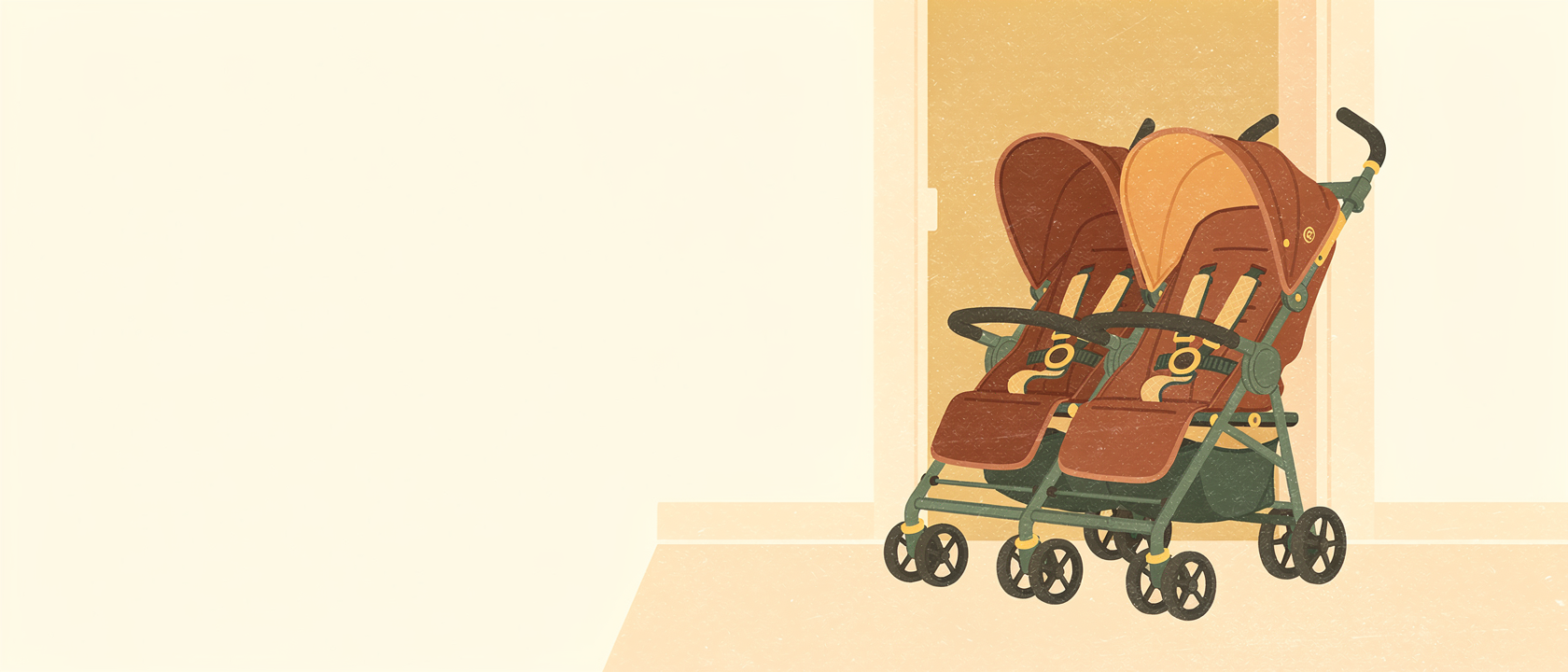
The core decision with any double or twin buggy is side-by-side versus tandem, and it comes down to one trade-off: side-by-side lets both children sit level and face each other, but is wider and harder to fit through narrow doorways; tandem stacks one seat behind the other, so it's narrower and clears standard front doors more easily, but the rear child gets a headrest view rather than the world. Everything else — from-birth compatibility, weight limits, budget — sits underneath that first choice.
Side-by-side vs tandem: the real difference
Side-by-side doubles put both children next to each other at the same eye level, which means they can see each other and you, and either seat can usually recline independently without disturbing the other. The cost is width — models in this category range from around 71cm (Out n About Nipper Double V6) up to nearly a metre (Ickle Bubba Venus Prime Double at 99.5cm), and standard UK internal doors are typically 78–82cm wide, so a wide side-by-side may not clear every doorway or hallway in your home.
Tandem doubles, like the Baby Jogger City Select 2 and iCandy Peach 7 Double, fold to around 60–61cm wide because the seats stack front-to-back rather than side-by-side. That narrower footprint is the main reason parents pick tandem — it's the difference between squeezing through a narrow front door or shop aisle and not. The trade-off is that the rear seat sits lower and further back, so that child has a less social view, and swapping who sits where is more involved than in a side-by-side.
Do you need it from birth?
Not every double buggy takes a newborn straight out of the box. Some, like the Nipper Double V6 and the Mountain Buggy Duet, need a separate carrycot (or carrycot bundle) bought on top of the buggy price before they're usable from birth. Others build from-birth use into the seat itself — the City Select 2's seats fully recline flat and are usable from birth with no separate carrycot, and the Ickle Bubba Venus Prime Double uses an optional Newborn Cocoon insert rather than a full carrycot. If you're expecting twins, or a newborn arriving close behind an older toddler, check exactly what “suitable from birth” means for the specific model — a carrycot, a cocoon insert, or full seat recline — since it changes the real cost and the number of separate items you're carrying.
Weight limits and how long it'll last you
Per-seat weight limits vary more than you'd expect: the Venus Prime Double is rated to around 15kg per seat (roughly 3 years), while the Nipper Double V6 and iCandy Peach 7 Double go up to 22–25kg per seat, comfortably covering a child into the early school years. If your two children are a toddler and a newborn rather than same-age twins, a higher per-seat limit means less pressure to replace the buggy as the older one grows — worth checking against your own timeline before you buy.
Terrain, folding, and getting it in the car
Most double buggies are built for pavements and smooth ground; only a handful, like the Nipper Double V6 with its 12in air-filled tyres and real suspension, are genuinely built for parks, gravel paths, or uneven pavements on a daily basis. If you're mostly on smooth urban ground, a lighter, cheaper option without off-road tyres — like the Venus Prime Double — will do the job and be easier to lift into a car boot. Fold size matters here too: a tandem that folds to roughly 60cm x 30cm will generally fit a smaller boot more easily than a wide side-by-side, so it's worth checking folded dimensions (not just unfolded width) against your own car boot before ordering.
Budget: what you actually get at each price point
Double and twin buggies in this category span a wide range — from around £350 for the Ickle Bubba Venus Prime Double up to over £1,600 for the Bugaboo Donkey 6 Twin and iCandy Peach 7 Double. The step up in price generally buys better suspension and tyres, a more premium fold and frame, and — in the case of modular systems like the City Select 2 — the flexibility to reconfigure the buggy into more than a dozen seating layouts as your family changes, though note the second seat is sold separately on that model, adding roughly £200–£240 to the headline price. If you're planning for a second child down the line rather than buying for two now, a single-to-double convertible frame (Peach 7 Double, Donkey 6 Twin, City Select 2) means you're not buying a second buggy outright later.
Safety basics that apply to any double buggy
Whichever shape you choose, RoSPA's pushchair and buggy safety guidance applies equally: check that the harness has five straps and use it every time, and check the brakes — lock and unlock them, then push, before you put a child in — every time you use the buggy, new or second-hand. RoSPA also notes that non-reclining seats aren't suitable for a child under six months old, which matters most for the rear or upper seat on a tandem if you're using it for a younger baby. Look for compliance with BS EN 1888-1:2018+A1:2022 (or the older BS 7409:1996) on any pushchair or buggy you're considering, new or second-hand.
For the car journeys either side of a walk, our UK car seat law guide covers what's legally required, and if you're still deciding between a single travel system and going straight to a double, our pushchair and travel system buying guide covers the single-buggy basics this article builds on.
A quick way to decide
If you're short on time, work through it in this order. First, measure your front door, hallway, and any tight turns inside your home — that number rules out anything wider than it. Second, decide whether you need the buggy usable from birth this year, or whether you're buying ahead of a second child arriving later; that determines whether a carrycot, a newborn insert, or a fully reclining seat is non-negotiable. Third, be honest about terrain — daily park and gravel use points towards air-filled tyres and real suspension, while mostly-pavement use means you can save weight and money on a lighter frame. Only once those three are settled does budget become the deciding factor between the remaining options, since price differences at that point mostly buy suspension quality, fold convenience, and — on modular frames — the ability to reconfigure as your family changes rather than buy again from scratch.
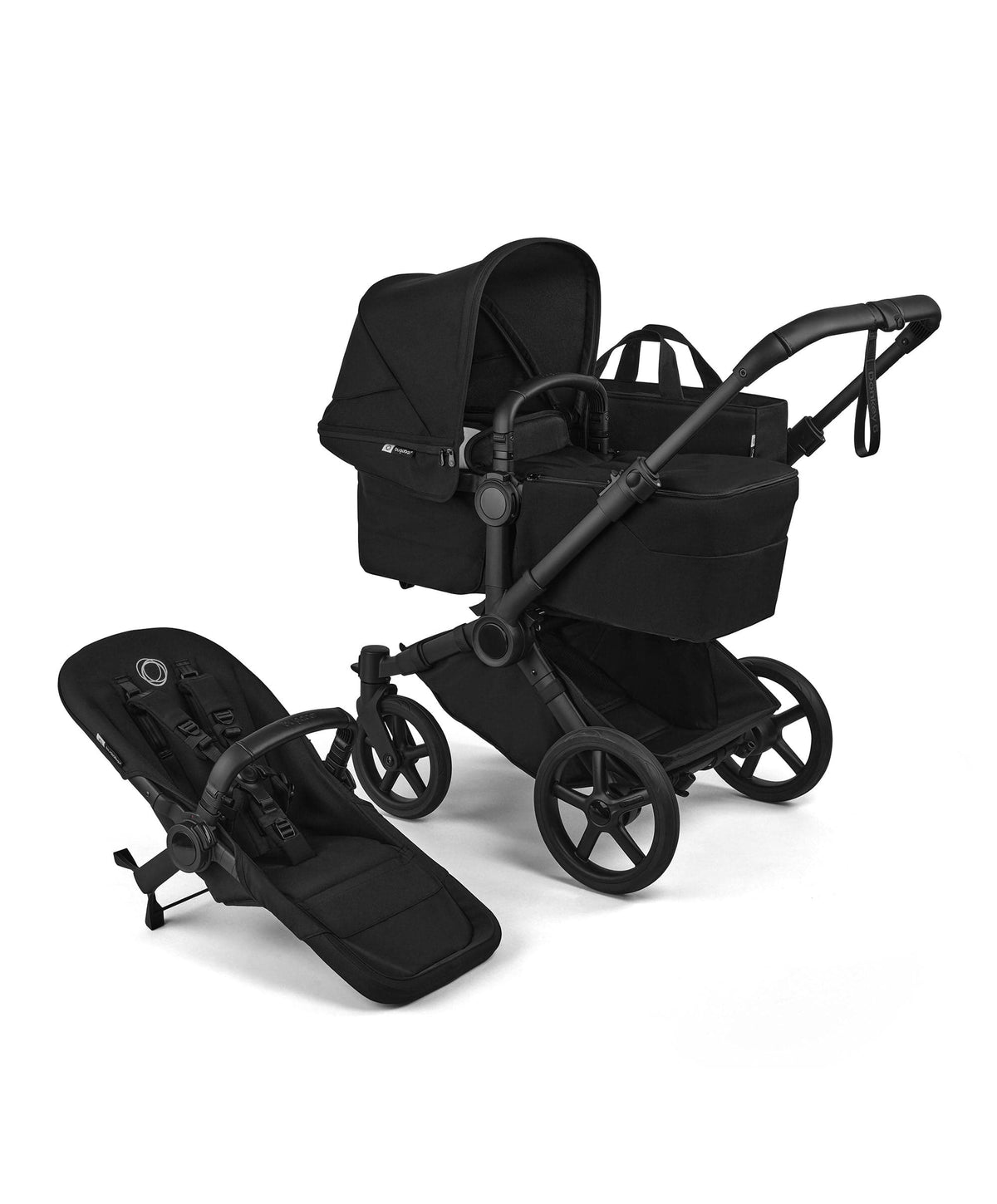
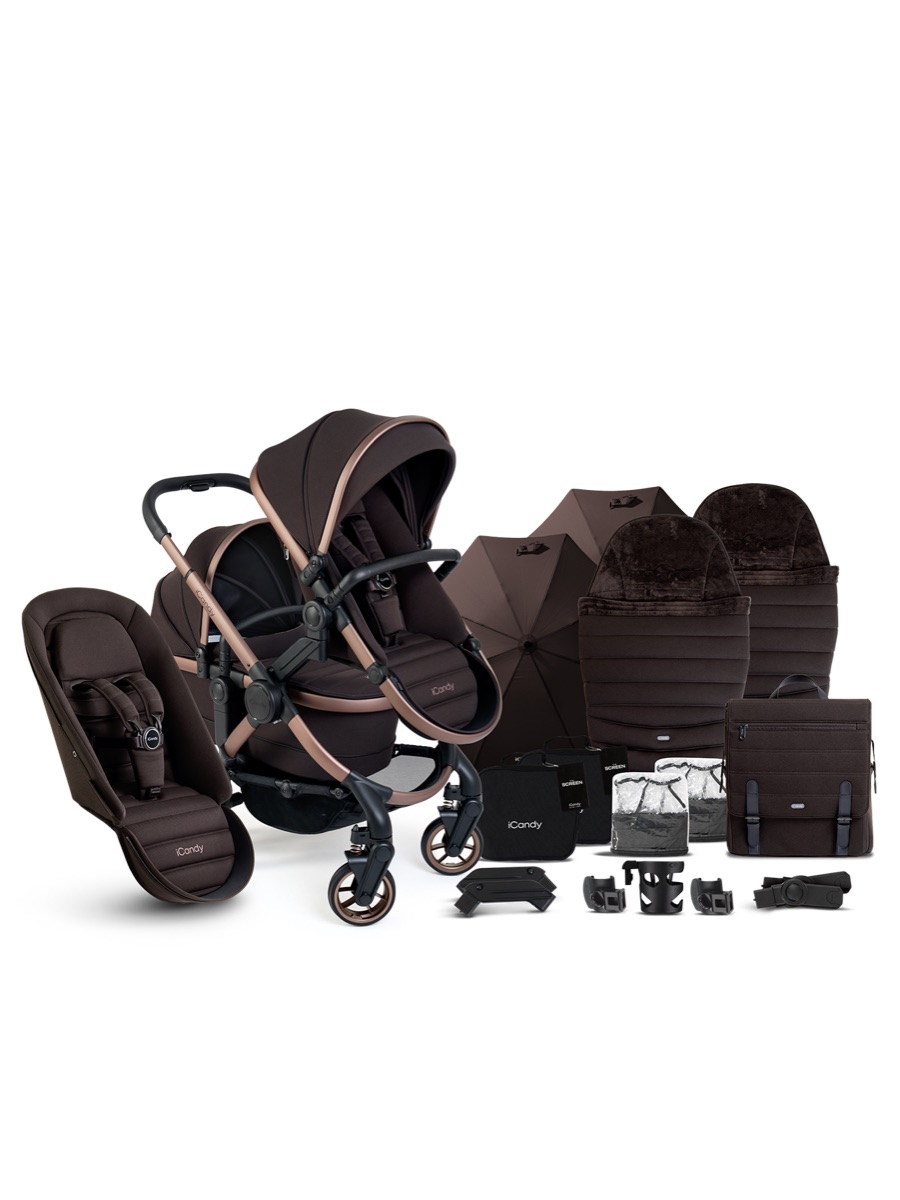
Mentioned in this guide
Frequently asked questions
Is a side-by-side or tandem double buggy better?+
Neither is objectively better — a side-by-side lets both children sit level and interact, but is wider (roughly 71–99cm across current models), while a tandem stacks seats front-to-back and folds narrower (around 60–61cm), clearing standard UK doorways more easily. Pick based on your own doorways and whether you want both children facing each other.
Can I use a double buggy from birth?+
It depends on the model. Some need a separate carrycot or newborn insert bought on top of the buggy price; others, like the Baby Jogger City Select 2, have seats that recline flat and are usable from birth without a separate carrycot. Always check the specific model's from-birth setup before buying.
What should I check before buying a double buggy, new or second-hand?+
RoSPA recommends checking that the harness has five straps and testing the brakes (lock, unlock, then push) before every use. Look for compliance with the UK safety standard BS EN 1888-1:2018+A1:2022 or BS 7409:1996 on the buggy itself.
Sources
Related guides
Baby Cold: Blocked Nose Relief & When to Worry (NHS)
Most baby colds clear up within 2 weeks, according to the NHS. Here is what the NHS advises for a blocked nose, which medicines to avoid, how long a cough lasts and the signs that mean calling NHS 111 or 999.
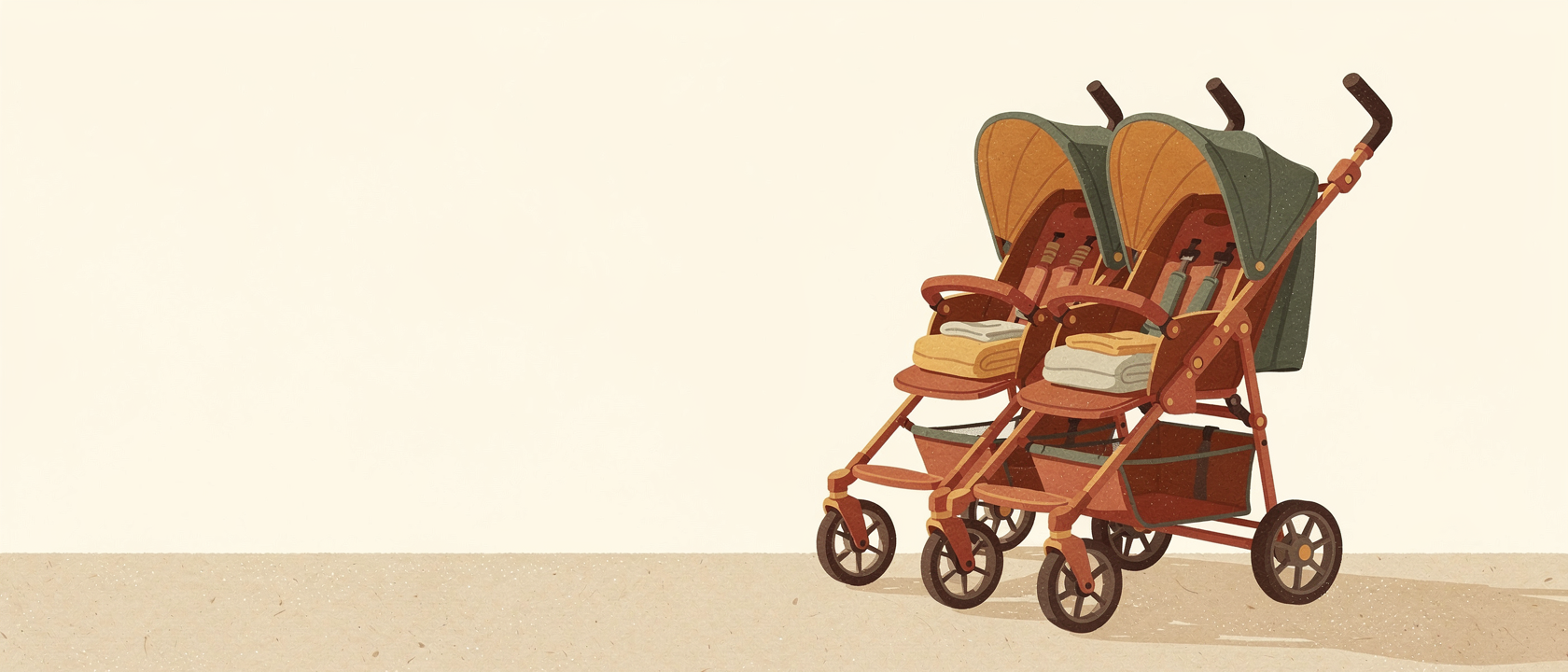
Best Double and Twin Buggies Compared (UK Guide)
Six double and twin buggies compared on price, width and newborn options: Ickle Bubba Venus Prime, Mountain Buggy Duet, Out n About Nipper V6, Baby Jogger City Select 2, iCandy Peach 7 and Bugaboo Donkey 6 Twin, plus RoSPA buggy safety checks.
Plush Toy Safety UK: Caterpillar Report and What to Check
On 13 October 2026 OPSS published a high-risk report on InteDesign plush caterpillar toys sold via Amazon: a torn seam exposing filling, a detaching loop and a too-thin plastic bag. Here is what it found and a 60-second check for any plush toy.

Written by
Sepehr
Software engineer, soon-to-be dad, uncle to four — the tech-obsessed half of the two of us testing this stuff. Currently building this site with my wife, ahead of our own baby arriving.