Clocks Go Back 2026: Baby and Toddler Sleep Guide
The clocks go back on Sunday 25 October 2026, which can mean an hour-early wake-up for babies and toddlers. Here is a gentle plan for adjusting bedtime, using daylight, handling early mornings, and keeping winter sleep safe with NHS and Lullaby Trust guidance.
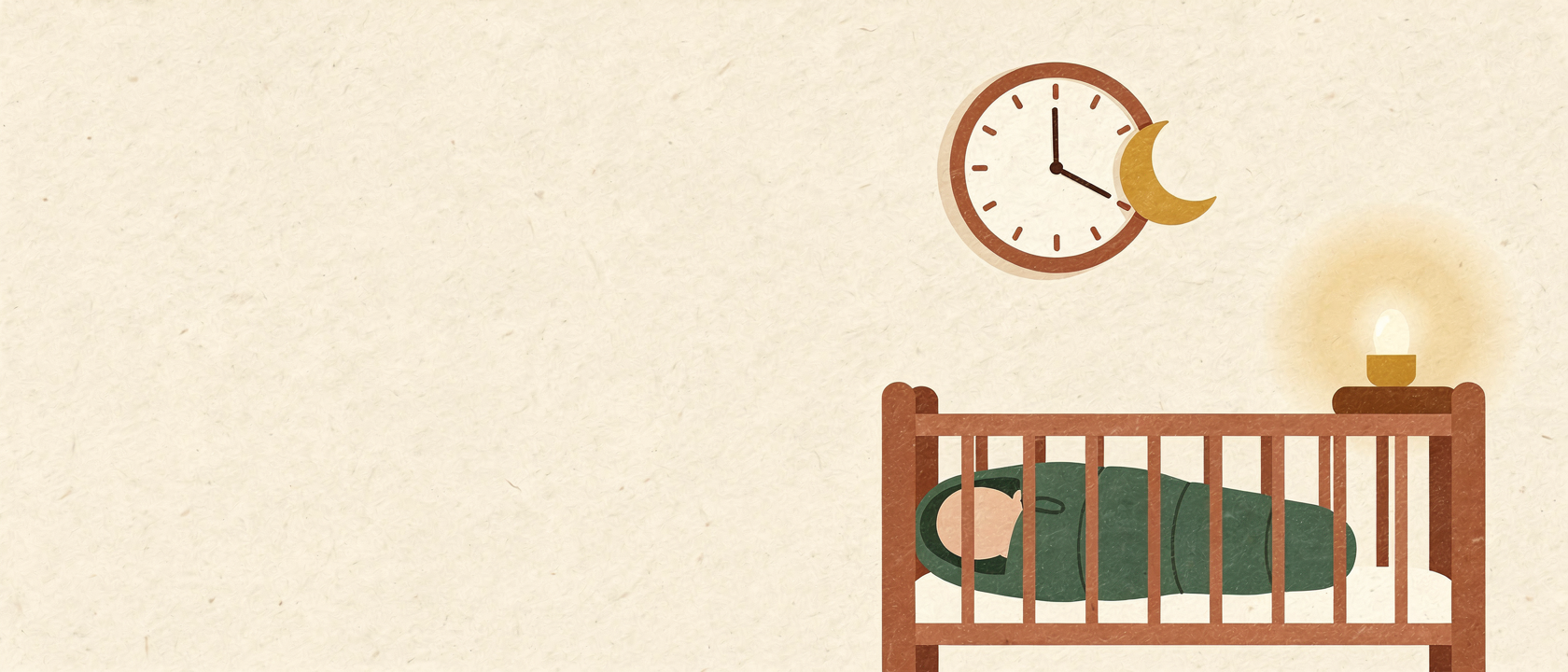
The clocks go back on Sunday 25 October 2026 at 2am, and for a baby or toddler who doesn't read clocks, that usually means the same body-clock wake-up now arrives an hour early by the kitchen clock. The short answer: you don't need to do anything dramatic. Nudge bedtime in small steps, use daylight to reset the body clock, and keep your normal safe-sleep set-up. Here is how to handle the clock change with a baby or toddler.
What actually changes when the clocks go back
Nothing about your child's sleep changes at 2am on the Sunday except the number on the clock. A child who normally wakes at 6am will still wake at what their body thinks is 6am, which is now 5am on the wall. The NHS explains that babies are not born with a body clock, and that it develops over time; you can help it along by teaching them that daylight is for being awake and darkness is for sleeping (NHS). For a newborn who sleeps in short stretches around the clock, the change will barely register. It matters most for older babies and toddlers who have settled into a predictable routine.
A gentle plan for the week before
There is no single official clock-change protocol for babies, so treat the following as a practical reading of general NHS sleep advice rather than a prescription. The NHS suggests starting a calming wind-down routine about 30 minutes before your child usually falls asleep, and shifting it by 5 to 10 minutes a week when you want to move bedtime (NHS). An NHS sleep service therapist's advice for the clock change itself is to move bedtime and wake-up by around 15 minutes a day for several days beforehand (Norfolk and Suffolk NHS Foundation Trust).
| Approach | How it works | Best for |
|---|---|---|
| Gradual shift | Move bedtime and wake-up a little later each day from about Wednesday 21 October, using steps of 5 to 15 minutes | Toddlers and babies with a firm routine |
| Switch on the day | Keep the same routine on the new clock time from Sunday morning and accept a few early-ish days | Young babies and anyone who prefers low effort |
| Split the difference | Shift by half an hour before the weekend, then let the remainder settle by itself | Light sleepers who dislike big changes |
Whichever you pick, adjust everything together: wake-up, naps, meals and bedtime. Moving only bedtime just gives you a shorter night.
Use daylight to reset the body clock
Light is the strongest cue. The NHS suggests a morning walk or time outdoors during the day to help babies learn day from night (NHS), and the Norfolk and Suffolk NHS advice for the clock change is to open the curtains as soon as you are up and get outside where you can (NHS Foundation Trust). With evenings getting darker after the change, a lunchtime pram walk or a trip to the park before the light goes is worth protecting.
Handling the early wake-up
If your child wakes at what feels like 5am for a few mornings, keep the room dark, keep interaction low-key and avoid turning it into playtime. The NHS advice for night waking is to leave lights off and be as boring as possible so you don't excite them (NHS). For toddlers who are afraid of the dark, the NHS suggests a nightlight or a landing light left on. Some families find blackout blinds help, but they are optional; the safe-sleep points below matter far more.
A night clock or sleep-trainer clock can help older toddlers learn when it's time to get up, and the NHS notes that night clocks can help children know when it is night time. If you use a white-noise machine or other sleep aids, our guide to white noise machines and sleep aids covers safe volume and placement.
Darker, colder evenings: keep sleep safe
Clock-change season is also when the heating goes on and parents reach for extra layers. The Lullaby Trust recommends keeping a baby's sleep room at 16 to 20°C, using a room thermometer rather than guessing, and checking your baby's chest or the back of their neck to see if they are too warm. Babies do not need to wear hats indoors or sleep under a duvet or quilt, and a lightweight sleep bag is the recommended alternative to loose bedding (Lullaby Trust). If you are buying a sleeping bag for winter, note the product safety alert issued on 1 October 2026 about bags with no armholes or with hoods; we explain it in our baby sleeping bag alert guide.
Don't be tempted to fix an unsettled week with sleep positioners, nests or pillows. The basics in our safe sleep guide for newborns don't change when the clocks do: back to sleep, on a firm flat surface, in the same room as you for at least the first six months.
Toddlers: screens, naps and bedtime resistance
Toddlers feel the shift most. The NHS advises keeping a predictable bedtime routine that happens at the same time and includes the same things each night, avoiding long afternoon naps, and keeping laptops, tablets and phones away in the 30 to 60 minutes before bed because screen light can interfere with sleep (NHS). If you are also thinking about a bed move, don't combine it with the clock change; our guide to moving from cot to toddler bed is easier to follow in a calmer week. And if a rough few nights coincide with a developmental jump, our sleep regressions explainer may help you tell the two apart.
A quick checklist for the weekend
- Start shifting bedtime and wake-up in small steps from about Wednesday 21 October, or simply switch on the day.
- Move naps and meals with bedtime.
- Open the curtains and get outdoors early each morning.
- Keep the room at 16 to 20°C with a room thermometer.
- Use a lightweight sleep bag with armholes and no hood, not loose bedding.
- Expect a few unsettled days while your child's body clock catches up.
If your baby is unusually sleepy, feeding poorly, feverish or you are worried about their sleep for any reason, talk to your health visitor or GP, or call NHS 111, rather than assuming it is the clocks.
Frequently asked questions
When do the clocks go back in 2026?+
The clocks go back one hour at 2am on Sunday 25 October 2026, when British Summer Time ends.
How do I adjust my baby's sleep when the clocks go back?+
Shift bedtime, naps and wake-up together in small steps, or switch on the day. NHS advice is to move a bedtime routine in steps of 5 to 10 minutes, and an NHS sleep service suggests around 15 minutes a day before the change. Get daylight each morning.
What room temperature is safe for a baby to sleep in?+
The Lullaby Trust recommends 16 to 20°C, checked with a room thermometer. Check your baby's chest or the back of their neck for overheating.
Sources
Related guides
Baby Cold: Blocked Nose Relief & When to Worry (NHS)
Most baby colds clear up within 2 weeks, according to the NHS. Here is what the NHS advises for a blocked nose, which medicines to avoid, how long a cough lasts and the signs that mean calling NHS 111 or 999.
Best Double and Twin Buggies Compared (UK Guide)
Six double and twin buggies compared on price, width and newborn options: Ickle Bubba Venus Prime, Mountain Buggy Duet, Out n About Nipper V6, Baby Jogger City Select 2, iCandy Peach 7 and Bugaboo Donkey 6 Twin, plus RoSPA buggy safety checks.
Plush Toy Safety UK: Caterpillar Report and What to Check
On 13 October 2026 OPSS published a high-risk report on InteDesign plush caterpillar toys sold via Amazon: a torn seam exposing filling, a detaching loop and a too-thin plastic bag. Here is what it found and a 60-second check for any plush toy.

Written by
Sepehr
Software engineer, soon-to-be dad, uncle to four — the tech-obsessed half of the two of us testing this stuff. Currently building this site with my wife, ahead of our own baby arriving.