Best Baby Bottles Compared (UK Guide)
Six baby bottles compared on price, venting, material and best use: Tommee Tippee, Dr Brown's, Philips Avent, MAM, NUK and Comotomo. Includes NHS advice on choosing teats, newborn flow and safe bottle feeding.
The best baby bottle for most UK families is a simple, easy-to-clean bottle with a slow-flow teat that your baby accepts, and you can start from about £5.50 a bottle. The NHS says the types of bottles and teats you buy depend on your baby and their stage, and its equipment guidance does not name any brand or bottle type as better than another. This guide compares the six bottles we list (Tommee Tippee, MAM, NUK, Dr Brown's, Philips Avent and Comotomo) using manufacturer specs and retailer prices, so you can pick two to try rather than buying a full set blind. For sterilising, see our best baby bottle sterilisers guide.
What the NHS says about choosing bottles and teats
The NHS "things you need for formula feeding" page lists bottles with teats and caps, brushes to clean bottles and teats, and sterilising equipment such as a cold-water, microwave or steam steriliser. It says smaller bottles are often used first and larger ones as your baby grows, that teats come in rounded and "natural" shapes you can try to see which your baby prefers, and that newborns should have a slower-flow teat, moving to a faster flow as they get used to feeding and grow. It also says to clean and sterilise all the equipment to prevent infections and stomach upsets.
Because the NHS does not rank brands, the sensible approach is to buy one or two different bottles first, see which your baby takes, then stock up. If you are combining breast and bottle, our breastfeeding vs formula feeding basics guide covers the wider picture.
Baby bottles compared
| Bottle | Price we list | Material | Anti-colic design | Best for |
|---|---|---|---|---|
| Tommee Tippee Closer to Nature (260ml) | £10.99 for 2 | Polypropylene (BPA-free) | Valve in the teat | Budget, breast-to-bottle switching |
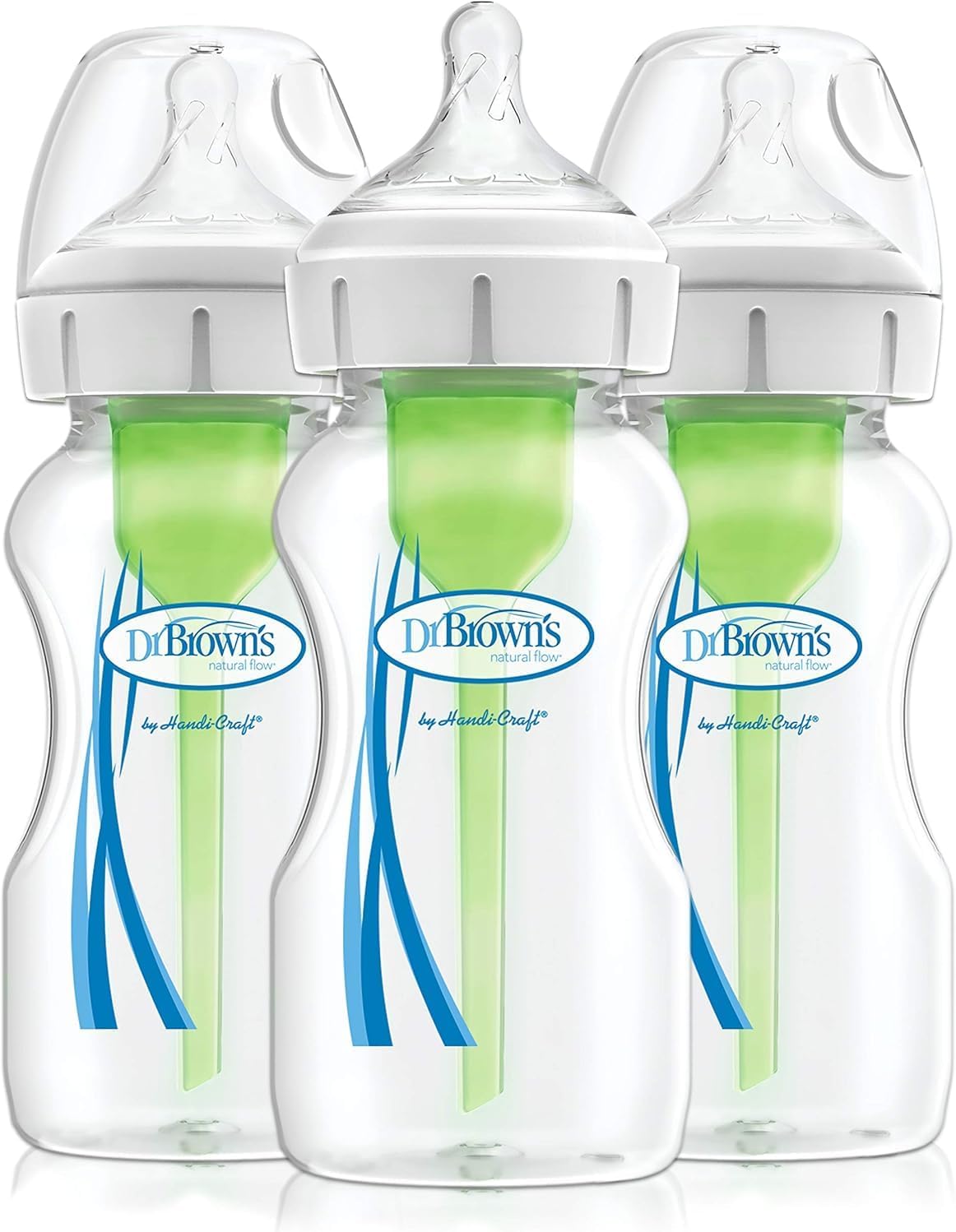
| Dr Brown's Options+ Wide-Neck (270ml) | Around £11 for the pack | Plastic | Internal vent tube (removable) | Parents who want the most venting |
| Philips Avent Natural Response (glass) | £11.99 | Glass | Valve | Combination feeding, few parts |
| MAM Easy Start Anti-Colic (320ml) | £19.99 large set | BPA-free plastic | Vented base | Self-sterilising in the microwave |
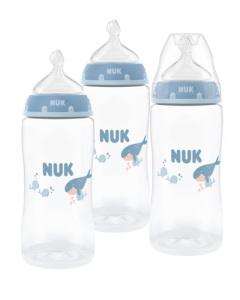
| NUK First Choice+ (glass) | £20.99 for 4 | Glass | Single air vent | Heat indicator, widely stocked |
| Comotomo Natural Feel (250ml) | £24.99 for 2 | Silicone | Dual base vents | Squeezable, easy-clean, premium |
Prices and pack sizes are the figures we list and they move, so check the retailer before buying (a couple of listings give slightly different sizes and pack counts in different places, which is another reason to check the pack). We have not hands-on tested any of these, so everything below comes from manufacturer specs and retailer information rather than our own use.
Best budget bottle: Tommee Tippee Closer to Nature (£10.99 for two)
Tommee Tippee describes this as the UK's best-selling bottle, with a breast-like teat and an anti-colic valve. The 260ml bottle is made from BPA-free polypropylene, comes with a slow-flow newborn teat, and is specced as compatible with steam, cold-water and microwave sterilising and the dishwasher's top rack. At about £5.50 a bottle it is the cheapest here and easy to find. The trade-offs: the small valve is easy to lose, and its venting is less aggressive than MAM's, according to our product notes.
Best vented bottle: Dr Brown's Options+ (around £11)
Dr Brown's wide-neck bottle uses an internal vent tube designed to keep air out of the milk, and the vent can be removed once you no longer want it, which extends the bottle's life. The wide neck makes scooping formula and cleaning easier. The catch is more parts to wash, sterilise and reassemble correctly, and the tube needs care to avoid trapped residue. If you are prepared for the extra washing-up, it is the strongest on venting in this group.
Best for combination feeding: Philips Avent Natural Response (£11.99)
Avent's Natural Response teat is designed so that baby has to suck actively and controls the flow, similar to breastfeeding, with a wide breast-shaped teat and an anti-colic valve. It has few parts and is easy to clean. It costs a little more than the most basic bottles, and babies used to a faster passive flow can take time to adjust. Note that the capacity is listed inconsistently (120ml in the product name, 260ml in the spec), so check the size on the pack.
Best self-sterilising bottle: MAM Easy Start (£19.99)
MAM's large set (320ml) includes a vented-base bottle, a SkinSoft silicone teat and a box that self-sterilises in the microwave in about three minutes, according to MAM. Most babies accept the teat quickly, and the large set gives good starting stock. It is pricier than Tommee Tippee, the extra valve piece makes cleaning a bit fiddlier, and the teat can wear faster with heavy teethers.
Best for wide availability: NUK First Choice+ (£20.99 for four)
NUK's glass bottle has an orthodontic teat shape, a single anti-colic air vent and a temperature control strip that changes colour if the milk is too hot. It is dishwasher and steriliser safe and the four-pack makes it good value per bottle. The single vent is simpler than Dr Brown's, and some babies take longer to accept the teat if switching from breast. Whatever the strip says, still check milk temperature yourself before feeding.
Best premium squeezable bottle: Comotomo Natural Feel (£24.99 for two)
Comotomo is a wide, soft, all-silicone bottle with dual anti-colic vents in the base, three parts in total and a top-rack dishwasher-safe finish. The extra-wide neck is easy to clean and fill. It is the most expensive per bottle here, and the soft body is a matter of taste, so it suits parents who want few parts and a breast-like feel and do not mind paying for it.
Do you need an anti-colic bottle?
Anti-colic venting is designed to reduce the air your baby swallows, which may help with wind, but it is not a cure for colic. Our guide on whether anti-colic bottles actually work goes through what they can and cannot do. If your baby cries for long periods, speak to your health visitor or GP rather than assuming a new bottle will fix it.
How to choose
- Start small: buy two different bottles first, then stock up on whichever your baby takes.
- Newborn teat: use a slow-flow teat for newborns, as the NHS advises, and move up only as your baby grows and gets used to feeding.
- Fewer parts, faster washing: every extra valve or tube is another thing to clean and sterilise properly.
- Material: glass is heavier but does not scratch; plastic and silicone are lighter for travel and nights.
- Budget: a basic bottle does the same job as a premium one, according to the NHS not recommending any brand.
Safe bottle feeding
The NHS advises holding your baby semi-upright for bottle feeds, giving them plenty of time, and never leaving your baby alone to feed with a propped-up bottle, because they may choke. It also says to check that the hole in the teat is not too big, since fast milk flow can cause sickness, and to throw away any milk left over after a feed. Make up one feed at a time, following our NHS guide to making up formula safely, and see our guide to sterilising baby feeding equipment for the cleaning routine.
Mentioned in this guide
Frequently asked questions
What is the best baby bottle for a newborn?+
The NHS does not name a best bottle or brand. It says the right bottles and teats depend on your baby, and recommends a slower-flow teat for newborns. Buy one or two different bottles first and see which your baby takes.
Do I need an anti-colic bottle?+
Anti-colic bottles use valves or vents to reduce swallowed air, which may help with wind, but they are not a cure for colic. The NHS does not name any bottle type as better than another, so a basic bottle is a reasonable choice.
How many baby bottles do I need?+
The NHS equipment page does not give a number. Many families start with a few bottles and add more once they know which type their baby accepts, remembering that every feed needs a clean, sterilised bottle.
Can I leave my baby with a propped-up bottle?+
No. The NHS says never to leave your baby alone to feed with a propped-up bottle, because they may choke. Hold them semi-upright and stay with them.
What teat flow should I use?+
The NHS suggests a slower flow for newborns, moving to a faster-flowing teat as your baby grows and gets used to feeding. Check the teat hole is not too big, as fast flow can cause sickness.
Sources
Related guides

Best Bedside Cribs & Moses Baskets Compared (UK)
Six bedside cribs and Moses baskets compared on price, size and lifespan: Silver Cross Lunar, Shnuggle Air Lite, SnuzPod4, HALO BassiNest, Chicco Next2Me Forever and a Mamas & Papas Moses basket. Includes the British Standards the Lullaby Trust lists and NHS safer sleep rules.

Best Baby Carriers Compared (UK Guide)
Six baby carriers compared on price, age range and carry positions: Ergobaby Omni 360, Tula Free-to-Grow, Izmi, BabyBjörn Carrier Mini, Close Caboo and Momcozy Move2Fit. Includes the Lullaby Trust and RoSPA T.I.C.K.S. safety checklist.
Bronchiolitis in Babies: Symptoms & When to Worry
Bronchiolitis is a common winter chest infection in babies. Here is what the NHS says about the symptoms, the signs that mean call 999 or 111, how to care for your baby at home, and how to lower the risk, including RSV protection.

Written by
Sepehr
Software engineer, soon-to-be dad, uncle to four — the tech-obsessed half of the two of us testing this stuff. Currently building this site with my wife, ahead of our own baby arriving.