How to Choose a Toddler Car Seat: Group 2/3 Buying Guide
Moving your toddler out of an infant seat isn't just about size — it's a new set of rules and fitting choices. This guide covers i-Size vs R44 approval, ISOFIX vs belt-fitted, extended rear-facing vs forward-facing, and exactly when (and how) to make the switch, with every safety claim sourced to gov.uk, ROSPA and Lullaby Trust.
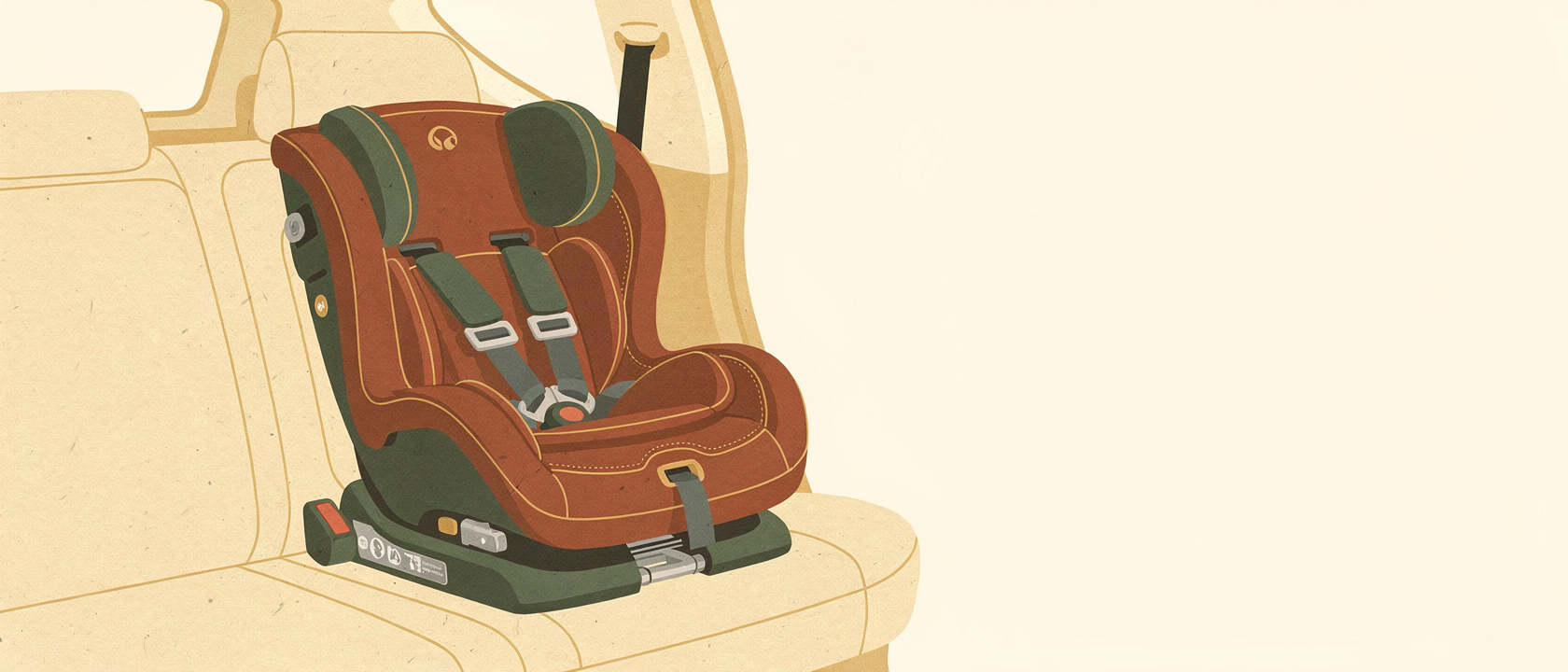
Most toddlers move out of an infant carrier and into a bigger car seat somewhere between 9 months and 4 years old, once they outgrow the carrier's height or weight limit. The seat you choose next should be approved to either i-Size (R129) or the older R44 standard, fit securely with ISOFIX or a diagonal seat belt, and — where possible — keep your child rear-facing for as long as the seat allows. Under UK law, children must use an appropriate car seat until they're 12 years old or 135cm tall, whichever comes first, according to gov.uk's child car seat rules.
i-Size (R129) vs R44: what's the difference?
You'll see two approval marks on car seats sold in the UK: a capital "E" in a circle with "R129" (i-Size), or the same mark with "ECE R44". Both are legal to use. Gov.uk explains that you can choose a car seat based on your child's height or weight — i-Size seats are categorised by height, older R44 seats by weight (the familiar "Group 0+/1/2/3" labelling).
The practical difference that matters most for toddlers: i-Size (R129) seats have a built-in minimum rear-facing age. Gov.uk is explicit that height-based (i-Size) seats must be rear-facing until your child is over 15 months old, and can only move to forward-facing after that point. R44 seats don't carry this same built-in rule, which is one reason many parents choose to stay with rear-facing well beyond the legal minimum (more on that below).
i-Size is also widely reported by seat manufacturers to have introduced mandatory side-impact testing as part of its approval process, though this isn't spelled out with exact test thresholds on gov.uk itself — treat side-impact claims from a specific seat as manufacturer-specced rather than independently verified figures.
ISOFIX vs belt-fitted: which is safer?
ISOFIX seats clip directly into fixing points built into your car, usually backed up by a top tether or support leg. ROSPA describes ISOFIX as a more secure and easier way of attaching a child seat than routing the adult seat belt through it, precisely because the top tether or support leg stops the seat tilting or rotating in a crash.
Belt-fitted seats are still fully legal and safe when fitted correctly — gov.uk's rules simply require that a car seat is used with a seat belt that has a diagonal strap, unless the seat is designed to be fitted with ISOFIX anchor points instead. The real-world risk with belt-fitted seats isn't the method itself, it's incorrect fitting: a loose or twisted belt route is one of the most common car seat mistakes. If you're not confident routing a belt correctly, an ISOFIX seat removes that variable, which is why it's often the easier default for parents doing the fitting themselves.
Whichever fitting method you choose, never fit a rear-facing seat in a front passenger seat with an active airbag — gov.uk states plainly that front airbags must be deactivated before a rear-facing seat can go in that position, and using one with the airbag switched on is illegal.
Extended rear-facing vs forward-facing: when should you switch?
The legal minimum is clear: i-Size seats must stay rear-facing until your child is over 15 months old. Beyond that legal floor, ROSPA notes that some seats on the market allow children to stay rear-facing for considerably longer — typically up to around four years old, and in some cases up to around six — reflecting a wider view among road safety researchers that rear-facing offers better protection for a young child's head, neck and spine in a frontal collision, since it spreads crash forces across the back of the seat rather than the neck.
ROSPA cites a Swedish study finding that rear-facing seats reduced the likelihood of injury by 90% compared with being completely unrestrained, and forward-facing seats reduced injury risk by 77% for 4-to-10-year-olds compared with unrestrained travel (both figures are against no restraint at all, not a direct rear- vs forward-facing comparison, so use them as context rather than a head-to-head statistic). The takeaway for a toddler car seat purchase: if budget and boot space allow, an extended rear-facing seat that lets your child stay rear-facing well past 15 months is a reasonable choice on current road-safety guidance, not just an infant-seat feature you've outgrown.
When to move up from an infant seat
Your baby's first (infant/carrier) seat has its own height or weight limit printed on the seat and in the manual — once your child reaches it, or once their head is level with the top of the shell, it's time to move to the next seat, regardless of age. There's no single national cut-off age for this move; it's set by the seat's own approval limits, so check the label rather than going by a rule of thumb. If you're still working through infant-seat choices before this stage, our infant car seats compared by budget guide covers that first purchase.
Group 2/3-style seats (the R44 convention) are commonly specced by manufacturers at roughly 15–36kg or around 100–150cm, covering a child from toddler through to the 135cm/12-year mark where a car seat is no longer legally required. These figures are manufacturer/retailer convention rather than a single statutory number, so always check the specific seat's own approval range before buying rather than assuming your child fits a "Group 2/3" label by age alone.
Fitting checklist before you buy
- Confirm the seat's approval mark (R129/i-Size or ECE R44) and its stated height/weight range against your child's current size, not just their age.
- Check whether your car has ISOFIX points if you want an ISOFIX seat — not every seating position in every car has them.
- If belt-fitted, get someone experienced (a retailer's fitting service, for example) to check the first fit, and re-check the belt route each time you move the seat between cars.
- Never place a rear-facing seat in a front seat with an active airbag — deactivate it first, per gov.uk's rules.
- Re-check the fit and harness height every few months — toddlers grow quickly, and a harness that's too low or too loose reduces protection even in an otherwise correct seat.
Once your toddler eventually outgrows a car seat altogether at 135cm or 12 years old, whichever comes first, they move to an adult seat belt — but until then, our UK car seat law explained guide covers the full legal picture, including exemptions for short, unexpected journeys. And if you're weighing up a car seat against reins or a harness for out-of-car safety as your toddler becomes more mobile, see our guide to reins and harnesses vs letting toddlers walk free.
Frequently asked questions
At what age can a toddler move to a forward-facing car seat?+
Gov.uk states that height-based (i-Size/R129) car seats must be rear-facing until your child is over 15 months old, after which they can legally move to forward-facing. Many parents choose to stay rear-facing for longer, as ROSPA notes some seats allow this up to around four to six years old.
Is ISOFIX safer than a belt-fitted car seat?+
Both are legal and safe when correctly fitted. ROSPA describes ISOFIX as generally more secure and easier to fit correctly, since the top tether or support leg stops the seat tilting or rotating in a crash — belt-fitted seats rely more on correct manual fitting each time.
How do I know when to move my child out of an infant car seat?+
Move up once your child reaches the height or weight limit printed on their current seat, or once their head reaches the top of the seat shell — whichever comes first. There's no set national age for this; it depends on the specific seat's approval range.
Until what age does a child legally need a car seat in the UK?+
Under gov.uk's rules, children must normally use an appropriate child car seat or booster seat until they are 12 years old or 135cm tall, whichever happens first. After that, they can use an adult seat belt.
Sources

Written by
Sepehr
Software engineer, soon-to-be dad, uncle to four — the tech-obsessed half of the two of us testing this stuff. Currently building this site with my wife, ahead of our own baby arriving.