First Walking Shoes: When to Buy and How to Fit Them
Barefoot is best for as long as it's practical, and first shoes are really about protection outdoors, not walking practice. Here's when to buy them, what to check for fit, and how often growing feet need re-measuring.
Your toddler doesn't need shoes to learn to walk — they need them once they're walking confidently outdoors, and mainly for protection rather than support. Going barefoot indoors, and outdoors when it's safe to, is genuinely better for foot development, so the honest advice on first shoes is to wait longer than the shops would like, then get the fit checked properly once you do buy.
When your toddler actually needs shoes
NHS guidance from Bradford District Care NHS Foundation Trust's children's foot health service is direct on timing: a child does not need shoes until they are walking competently. Before that point, shoes can get in the way of learning to walk rather than helping it — a baby's toes are still soft, and letting the bones grow and straighten without being pinched into a shoe matters more than looking the part in tiny trainers.
Barefoot walking also does something shoes can't: it lets the foot develop the natural 'grasping' action of the toes, which builds balance, strength, and co-ordination as your toddler works out how to stay upright. The same NHS guidance notes that the arch of the foot doesn't even begin to develop until around age two, and isn't fully formed until roughly age six — so there's no rush to get feet into structured shoes before then either.
In practice, this means: keep your toddler barefoot indoors and on safe surfaces outdoors (grass, sand, a garden) for as long as you reasonably can, and only reach for shoes once they're confidently walking outside on pavements, at nursery, or anywhere barefoot isn't practical or safe.
What a good first shoe actually needs
Once shoes are needed, the Royal College of Podiatry's fitting checklist is a useful filter for anything you're considering, including options like the Bobux I-Walk First Shoes or Start-Rite Baby Bubble Pre-Walker Shoes:
- Room to grow. There should be growing room built in, without the shoe being so loose it slips at the heel.
- No pressure on the toes. Toes need to be able to wiggle and splay naturally, not curl up against a tight toe box.
- Breathable materials. The College recommends natural linings, and socks with a high natural fibre content, so feet don't overheat or get damp inside the shoe.
- Adjustable fastening. Hook-and-loop (Velcro-style) fastenings are usually easier to get a secure, adjustable fit with than laces or buckles at this age, and easier for a toddler to eventually manage themselves.
- A flexible sole. The sole should bend where the foot naturally bends, rather than being stiff underfoot — a rigid sole works against the barefoot-style movement your toddler has just learned.
- Correct width, not just length. The College is clear that width matters as much as length; a shoe that's the right length but too narrow will still cause problems.
Novelty features — flashing lights, stiff character motifs across the toe box — are worth deprioritising in favour of fit, even though they're often what catches a toddler's eye in the shop.
Signs it's actually time to buy
Rather than picking a date on the calendar, it's more useful to watch for what your toddler is actually doing. A few practical signals that first shoes are genuinely due:
- They're walking outside pavements or on rough ground without holding on, rather than a few unsteady steps between pieces of furniture indoors.
- Nursery or childcare needs shoes for outdoor play — many settings ask for outdoor footwear once a toddler is mobile, even if you'd otherwise keep them barefoot at home.
- The weather or ground isn't safe barefoot — cold pavements, gravel, or anywhere with a realistic risk of glass or grit underfoot.
None of these mean shoes need to go on all the time. Even once your toddler has their first pair, the same NHS guidance is clear that barefoot time indoors and on safe surfaces is still worth protecting — first shoes are for the parts of the day where barefoot genuinely isn't an option, not a permanent switch.
Leather, canvas, or a soft first-walker style
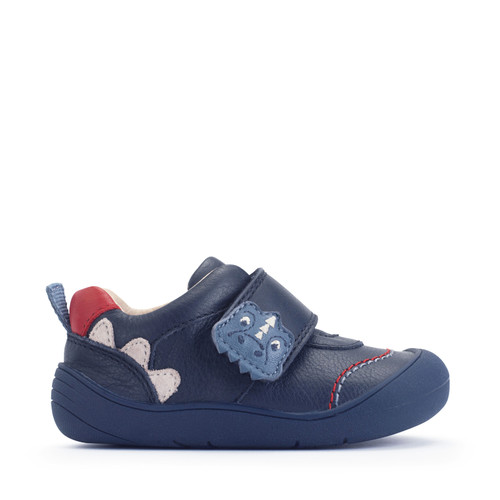
Within the fitting checklist above, there's still a genuine choice of style. Soft, flexible first-walker designs — like the Term First Shoes or the Geox Steppieup Baby Shoes — prioritise a thin, bendy sole that mimics barefoot movement as closely as possible, which suits a toddler who's only just transitioning from indoor barefoot walking to short outdoor stretches. More structured leather shoes, such as Start-Rite's Tread First Walking Shoes, add a bit more protection and durability for a toddler who's outdoors more often, at the cost of being slightly stiffer underfoot. Neither is wrong — it's worth matching the shoe to how much genuinely outdoor, unsupervised walking your toddler is actually doing, rather than buying the most structured option by default.
Getting the fit checked properly
Both the NHS trust guidance and the Royal College of Podiatry recommend having first shoes fitted by a trained shoe fitter rather than guessing from a size chart alone, since toddler feet vary in width and shape as much as length. A proper fitting involves guiding the toes gently to the front of the shoe, then checking there's still growing room behind the heel, checking for any slipping at the heel when your toddler walks, and watching how they actually move in the shoes — looking for creasing, restriction, or an odd gait that might mean the fit is wrong even if the size on the box looks right.
It's worth doing this in person at least for the first pair or two, even if you buy online afterwards once you know a brand's fit works for your toddler's feet.
How often to re-measure
Toddler feet grow fast, and both sources agree re-measuring needs to happen more often than most parents expect:
| Age | Re-measure every |
|---|---|
| Toddlers (under 4) | 6–8 weeks |
| Older children | 2–3 months |
Skipping re-measurement is one of the most common ways children end up in the wrong size without anyone noticing, since a toddler won't reliably tell you their shoes have got tight — they'll just start refusing to wear them, or you'll notice red marks or a changed gait first.
Why the fit is worth getting right early
The Royal College of Podiatry's own figures make the case for taking this seriously from the first pair: three out of four adults have foot problems that are linked back to badly-fitting shoes worn as children. None of that is reversible once bones have set in adulthood, which is why the guidance keeps coming back to the same basics — wait until shoes are actually needed, get the fit checked by someone trained to do it, and re-measure on a schedule rather than by eye.
If you're still working out the wider baby-proofing side of a newly mobile toddler, first shoes are one small piece of a bigger stage — alongside things like stair gates and reins, most of what a new walker needs is about safe surfaces and supervision, not gear.
Mentioned in this guide
Frequently asked questions
Does my toddler need shoes to learn to walk?+
No. NHS guidance is that a child doesn't need shoes until they're already walking competently, and going barefoot before that helps the foot develop strength and natural balance. Shoes at this stage are for outdoor protection, not for teaching walking.
How often should I get my toddler's feet re-measured?+
The Royal College of Podiatry recommends re-measuring toddlers under four every six to eight weeks, since feet grow quickly and a toddler won't reliably tell you when shoes have got tight.
What's more important, length or width, when fitting first shoes?+
Both matter. The Royal College of Podiatry is explicit that width fit is as important as length — a shoe that's the right length but too narrow will still cause problems.
Should first shoes have laces or Velcro fastening?+
Hook-and-loop (Velcro-style) fastenings are generally easier to get a secure, adjustable fit with at this age than laces or buckles, and easier for a toddler to eventually manage independently.
Sources

Written by
Sepehr
Software engineer, soon-to-be dad, uncle to four — the tech-obsessed half of the two of us testing this stuff. Currently building this site with my wife, ahead of our own baby arriving.