Breastfeeding Accessories: What You Actually Need
Baby shops sell a long list of breastfeeding accessories, but most parents only need a handful of them. Here's what each one actually does, when you'd reach for it, and what NHS and Breastfeeding Network guidance says about the ones that matter for comfort and safety.
Breastfeeding itself needs nothing except you and your baby, but a handful of accessories make the day-to-day easier: something to catch leaks, something to soothe sore nipples, something to store expressed milk safely, and something to help you feed comfortably in public if you want it. You don't need all of them from day one, and none of them are required to breastfeed successfully — think of this as a shortlist to reach for as specific problems come up, not a shopping list to complete before your baby arrives.
Nursing pads — for leaking, not for show
Milk leaking between feeds is common, especially in the early weeks before your supply regulates, and disposable or reusable nursing pads sit inside your bra to absorb it. Reusable pads like the Bravado Designs Reusable Nursing Pads use a contoured, absorbent core with a leak-resistant outer layer and are machine washable, which works out cheaper over months of use than disposables.
The detail that actually matters for comfort and skin health: change pads as soon as they're damp, not on a schedule. The NHS explains that thrush thrives in warm, dark, moist environments, and a damp pad left against the nipple for hours is exactly that environment. Replacing pads frequently, and washing reusable ones at a high temperature, is part of the NHS's own prevention advice — not just a comfort tip.
Nipple cream and balm — for soreness, with one caveat
Some tenderness in the first days is normal as you and your baby work out positioning, but the NHS is clear that nipples hurting at every feed, or cracking or bleeding, isn't something to just manage with cream — it usually means attachment needs adjusting, and a midwife, health visitor or breastfeeding supporter can watch a feed and help fix it. Cream is for comfort alongside that, not instead of it.
A balm like the Weleda Nipple Balm is lanolin-free and specced as safe to leave on for feeding, which matters because you don't want to be wiping off a product before every latch. The NHS's own first-line suggestion for cracked nipples is simpler still: dab on a little of your own expressed breast milk after feeds, which has natural antibacterial properties. Get help early if cracking or bleeding doesn't settle — the NHS notes this raises your risk of a nipple infection.
Breast therapy pads — and why the advice has shifted to cold
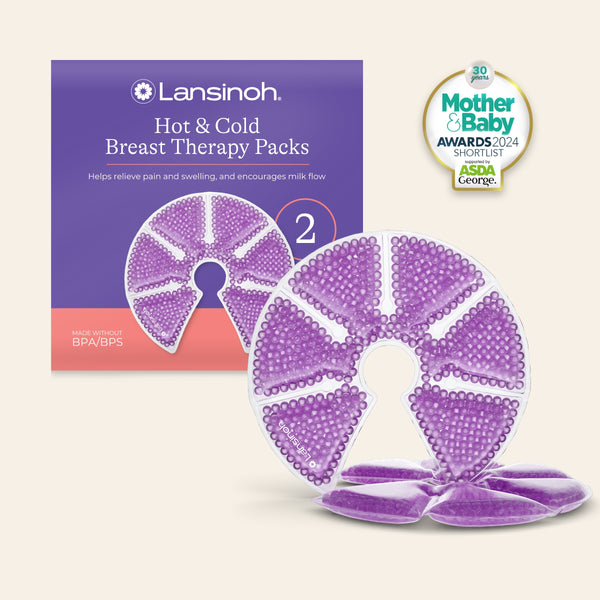
Products like the Lansinoh TheraPearl 3-in-1 Breast Therapy pads are reusable gel pads shaped to fit inside a nursing bra, usable warm (microwaved briefly) or cold (frozen), and marketed for engorgement, blocked ducts, mastitis symptoms and let-down support. Here's the part worth knowing before you reach for the microwave: current NHS guidance for mastitis recommends a cold compress — a cloth soaked in cold water, or a cold pad like this one, for around 10 minutes at a time — rather than heat, because heat can increase inflammation. Keep feeding or expressing if you can, since continuing to remove milk is part of NHS self-care advice, and take paracetamol or ibuprofen for pain if needed. See a GP if things don't improve within 24 hours of home treatment, or if you develop a fever that doesn't settle.
Milk collectors — for the let-down side, not for building a big stash
A silicone milk collector like the Haakaa Ladybug Silicone Milk Collector is a passive suction device — no pump, no batteries — that sits over the breast you're not actively feeding from and catches the let-down that would otherwise go into a breast pad. It's specced to hold 75ml (Haakaa also sells 40ml and 150ml sizes) and is boil, steam or dishwasher safe. It won't empty a breast the way a proper pump does, so don't rely on one if you actually need to build a frozen stash or relieve engorgement fully — for that, see our breast pump buying guide comparing manual, electric and wearable options.
Storage bags — only once you're expressing
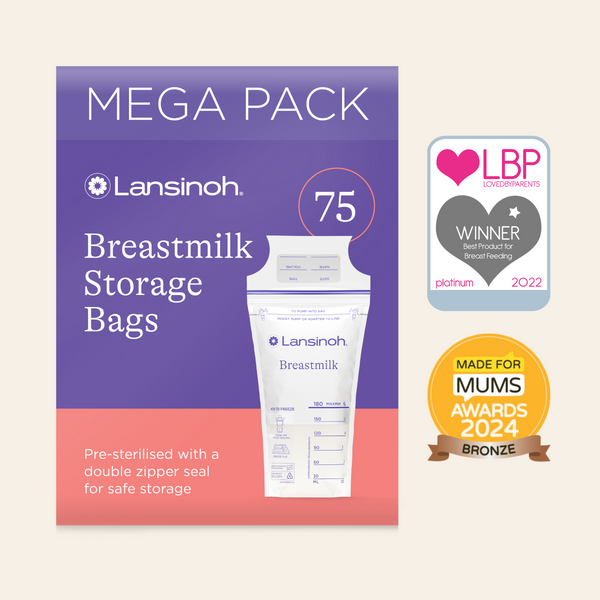
If you're expressing at all — for a partner to do a night feed, for return to work, or to build a small freezer stash — pre-sterilised, self-standing storage bags like the Lansinoh Breastmilk Storage Bags (specced to hold up to 180ml each, with a double zip seal) are the easiest way to freeze milk flat and label it by date. The dates matter more than the bag brand: the NHS's guidance on expressing and storing breast milk sets out that expressed milk keeps for up to 6 hours at room temperature, up to 8 days in the back of a fridge running at 4°C or below (3 days if you're not sure of the temperature, or it runs 5–10°C), and up to 6 months in a freezer at -18°C or below — though using it within 3 months keeps more of the fat and antibody quality. Don't store milk in the fridge door, since it's warmer there than in the body of the fridge, and never refreeze milk once it's been thawed. For the equipment you'll sterilise alongside this, see our steriliser buying guide.
Nursing covers — entirely optional, entirely personal
A nursing cover, like the Bébé au Lait 5-in-1 Multi Use Nursing Cover, is a piece of fabric with a boned neckline that holds it away from your baby's face while you feed — some parents want one for feeding in public or around family, plenty of others never use one at all. There's no safety or health guidance attached to this one; it's purely down to what makes you comfortable. If you do want one, a multi-use design that doubles as a car seat, trolley or stroller cover gets more use out of the same piece of fabric once you've stopped needing it for feeding.
What to actually buy, and when
| Accessory | Get it if… | Skip it if… |
|---|---|---|
| Nursing pads | You're leaking between feeds (common in the early weeks) | Your supply has settled and leaking has stopped |
| Nipple balm | You have mild soreness alongside working on attachment | Pain is severe or nipples are cracked — get help first |
| Breast therapy pads | You get engorgement, blocked ducts or mastitis symptoms — use cold, not heat | You've had no discomfort at all |
| Milk collector | You want to catch let-down without a full pumping session | You need a real stash — get a pump instead |
| Storage bags | You're expressing at all, even occasionally | You're exclusively feeding at the breast with no expressing |
| Nursing cover | You'd feel more comfortable feeding in public or around others with one | You're happy feeding without one — it changes nothing about safety or supply |
None of these are prerequisites for breastfeeding to go well — see our guide on how often a newborn actually feeds for what to expect in the early weeks, and breastfeeding vs formula feeding basics if you're still weighing up your approach. Buy the first one or two once you notice you actually need them, rather than stocking up on everything before your baby arrives.
Mentioned in this guide
Frequently asked questions
Do I need nipple shields or breast shells to breastfeed comfortably?+
Not necessarily. The NHS advises trying to avoid nipple shields or breast shells where possible, as they can affect how your baby attaches to the breast — if soreness persists, get help from a midwife or breastfeeding supporter to check positioning and attachment first.
Should I use heat or cold for a blocked duct or engorgement?+
Current NHS guidance recommends cold rather than heat — a cold compress or cold pad for around 10 minutes at a time — because heat can increase inflammation. Keep feeding or expressing where you can, and see a GP if symptoms don't improve within 24 hours.
How long can I keep expressed breast milk before it needs using or freezing?+
NHS guidance says expressed breast milk is fine for up to 6 hours at room temperature, up to 8 days in the back of a fridge at 4°C or below (3 days if the fridge runs 5–10°C), and up to 6 months in a freezer at -18°C or below, ideally used within 3 months for the best fat and antibody quality.
Do I need a nursing cover to breastfeed in public?+
No — it's entirely a personal comfort choice with no health or safety guidance attached. Plenty of parents feed without one; others prefer the extra privacy it gives.
Sources
Related guides
Best Bedside Cribs & Moses Baskets Compared (UK)
Six bedside cribs and Moses baskets compared on price, size and lifespan: Silver Cross Lunar, Shnuggle Air Lite, SnuzPod4, HALO BassiNest, Chicco Next2Me Forever and a Mamas & Papas Moses basket. Includes the British Standards the Lullaby Trust lists and NHS safer sleep rules.
Best Baby Carriers Compared (UK Guide)
Six baby carriers compared on price, age range and carry positions: Ergobaby Omni 360, Tula Free-to-Grow, Izmi, BabyBjörn Carrier Mini, Close Caboo and Momcozy Move2Fit. Includes the Lullaby Trust and RoSPA T.I.C.K.S. safety checklist.
Bronchiolitis in Babies: Symptoms & When to Worry
Bronchiolitis is a common winter chest infection in babies. Here is what the NHS says about the symptoms, the signs that mean call 999 or 111, how to care for your baby at home, and how to lower the risk, including RSV protection.

Written by
Sepehr
Software engineer, soon-to-be dad, uncle to four — the tech-obsessed half of the two of us testing this stuff. Currently building this site with my wife, ahead of our own baby arriving.