RSV Vaccine in Pregnancy: NHS Guidance for Winter Babies
The NHS offers the RSV vaccine from 28 weeks of pregnancy to pass protection to your baby before birth. Here's who it's for, when to get it, and the bronchiolitis warning signs to know once your baby arrives.
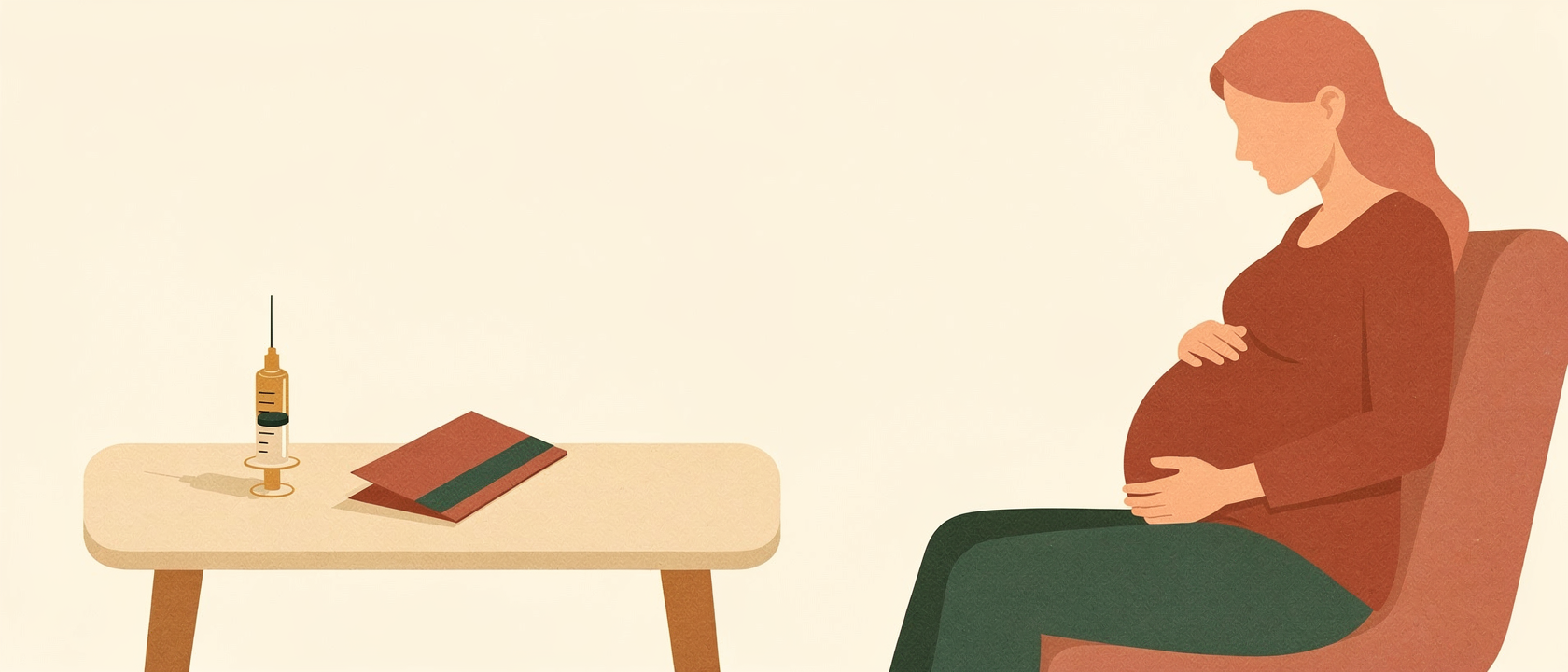
The NHS offers the RSV vaccine to every pregnant woman, ideally from 28 weeks, because it's the most effective way to protect a newborn from severe RSV infection in their first winter. The vaccine is free, given alongside your antenatal care, and the protection it creates crosses the placenta to your baby before they're even born.
What is RSV, and why does it matter for newborns?
Respiratory syncytial virus (RSV) is a common, highly contagious virus that, according to the NHS, affects nearly all children by the age of two. For most people it causes a cold. In young babies, though, it's the leading cause of bronchiolitis — an infection and swelling of the small airways in the lungs — which can make feeding and breathing difficult and, in some cases, requires hospital treatment. NHS England has reported that RSV accounted for nearly 7,000 hospital bed-days in England over a single winter, with babies born in late summer and autumn — heading straight into RSV season — most likely to be admitted.
When is the RSV vaccine offered in pregnancy?
Per NHS guidance, you should be offered the RSV vaccine around the time of your 28-week antenatal appointment, in every pregnancy. Getting it as soon as possible from 28 weeks gives your baby the best protection, but it can still be given later if you miss that window — including right up until you go into labour. The vaccine is a single dose, given as an injection, usually at the same appointment as other routine antenatal care.
How it protects your baby
When you have the RSV vaccine in pregnancy, the protective antibodies it triggers pass across the placenta to your baby, so they're already covered for severe RSV from the moment they're born — before their own immune system has had any chance to encounter the virus. The NHS states this means your baby is less likely to get severe RSV in their first six months. NHS England has cited maternal vaccination as around 72% effective at preventing RSV-related hospitalisation in newborns when it's given more than 14 days before delivery, underlining why timing it early in the third trimester matters.
How it fits with your other pregnancy vaccines
The RSV vaccine sits alongside two other vaccines the NHS routinely offers in pregnancy: the flu vaccine, recommended at any stage of pregnancy during flu season, and the whooping cough vaccine, ideally given between 20 and 32 weeks. All three are inactivated vaccines — they don't contain live virus — and can be given at the same appointment as each other if the timing lines up. Your midwife will talk you through the schedule at your antenatal appointments; if you're not sure what you've already had, ask at your next check rather than guessing, particularly if you're further along than 28 weeks and haven't been offered it yet.
None of the three requires a separate GP referral — in most areas your midwifery team can give the RSV and whooping cough vaccines directly at your antenatal appointment, and the flu vaccine is available from a pharmacy or GP surgery once it is in season. If your 28-week appointment has already passed and nobody has mentioned RSV vaccination, raise it yourself at your next contact rather than assuming it has been covered — the NHS is explicit that it should be offered in every pregnancy, not just flagged for those considered higher risk.
Autumn 2026 update
The NHS's autumn 2026 vaccination programme got underway on 1 September, with midwives specifically briefed on explaining the RSV, flu, and whooping cough vaccines to pregnant women at antenatal appointments, according to the Royal College of Midwives. Uptake has been building steadily since the RSV programme launched: NHS figures show 62.2% of women who gave birth in March 2026 had received the RSV vaccine during that pregnancy. If you're pregnant now and heading into autumn or winter, this is the point in your pregnancy where it's worth actively asking about it if it hasn't come up yet. UKHSA consultant midwife Greta Hayward has specifically flagged that babies born in late summer or autumn are the most likely to end up admitted to hospital with RSV, since they're newborn just as circulation of the virus is picking up for the season — which is exactly the group the 28-week timing is designed to protect.
If your baby is already here: bronchiolitis warning signs
If you've already had your baby this winter, or the vaccine timing didn't work out, it's still worth knowing what bronchiolitis looks like, because most babies will pick up some version of RSV in their first year or two regardless. The NHS says early symptoms look like a common cold — a runny nose, sneezing, a slight fever — before progressing to a cough, faster breathing, noisy breathing, and difficulty feeding. Symptoms typically peak around day three to five, and the cough can linger for up to three weeks.
Call 111 or contact your GP urgently if your baby is feeding much less than usual, has had a noticeably drier nappy for 12 hours or more, has a temperature of 38°C or higher under three months old (or 39°C or higher over three months), or seems increasingly tired or irritable. Call 999 or go to A&E straight away if your baby is struggling to breathe — grunting, or sucking their stomach in under their ribs — has pauses in their breathing, or their skin, tongue or lips look blue or grey (check the lips, tongue, and inside the mouth, or the palms and soles on darker skin, as this can be harder to spot). The NHS is clear that if you feel something is seriously wrong, trust that instinct and get help, rather than waiting to see if things improve.
For the full picture of what else is due when, see our guide to the UK vaccination schedule for baby's first year, and if you're putting together supplies for managing minor illness at home, our guide to building a baby first aid kit covers what's actually worth having in.
Frequently asked questions
When should I get the RSV vaccine in pregnancy?+
The NHS offers it around your 28-week antenatal appointment, in every pregnancy. Getting it as soon as possible from 28 weeks gives the best protection, but it can still be given later, right up until labour.
Is the RSV vaccine safe to have while pregnant?+
The NHS recommends it as routine antenatal care, alongside the flu and whooping cough vaccines. It's an inactivated vaccine, meaning it doesn't contain live virus.
What are the warning signs of bronchiolitis in a baby?+
According to the NHS, call 999 or go to A&E if your baby is struggling to breathe, has pauses in breathing, or their skin, tongue or lips look blue or grey. Call 111 or your GP urgently for reduced feeding, a dry nappy for 12+ hours, a fever of 38°C+ under three months (or 39°C+ over three months), or increasing tiredness.
Does the RSV vaccine actually stop babies getting seriously ill?+
NHS England has reported around 72% effectiveness against RSV-related hospitalisation in newborns when the vaccine is given more than 14 days before delivery.
Sources

Written by
Sepehr
Software engineer, soon-to-be dad, uncle to four — the tech-obsessed half of the two of us testing this stuff. Currently building this site with my wife, ahead of our own baby arriving.