Best Baby Sun Protection Compared: Cream, Hats & Swimwear
No single product protects a baby from the sun on its own. This guide compares six suncare products — sun creams, a UPF neck-flap hat, a pram parasol, a rash vest and a fleece-lined UV swimsuit — and explains the NHS rules for using them together.
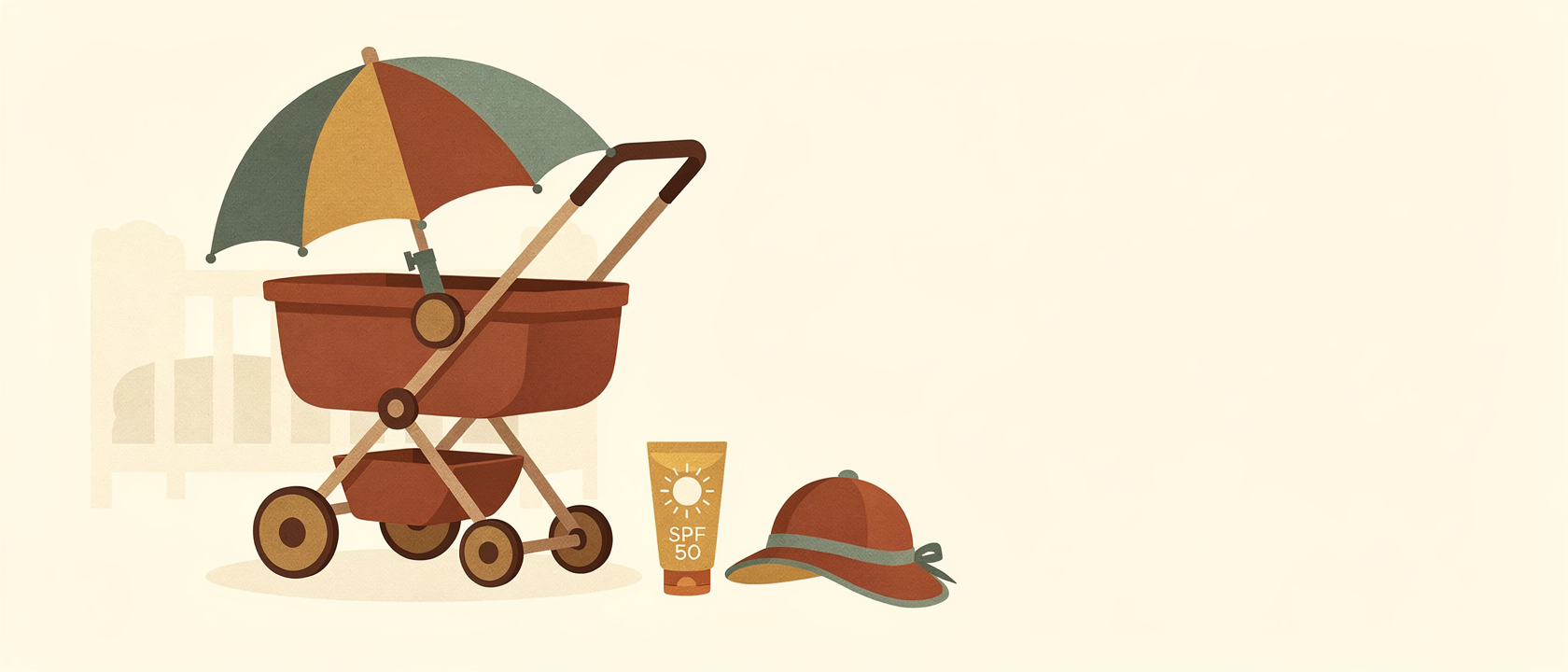
Baby sun protection isn't one product, it's a combination: shade first, then clothing that covers skin, then sun cream on whatever's left exposed. The NHS is explicit that babies under 6 months should be kept out of direct sunlight altogether — sunscreen isn't recommended for this age group at all. This guide compares six suncare products we list — two sun creams, a UPF hat, a pram parasol, a UV rash vest and a fleece-lined swimsuit — and explains what each one is actually for.
The NHS rules, before you buy anything
The NHS advises keeping babies under 6 months out of direct sunlight entirely, rather than relying on sunscreen. For babies 6 months and older, it recommends sunscreen with at least SPF 30 and a minimum 4-star UVA rating, reapplied every 2 hours and straight after swimming, sweating or towel-drying — even a “water resistant” product washes off in water. Alongside cream, the NHS recommends a parasol or sunshade on the pushchair, lightweight covering clothing, and a sunhat with a wide brim or a long flap at the back, and flags that the sun is strongest in the UK between 11am and 3pm.
That ordering — shade, then clothing, then cream — is why this list mixes product types rather than just ranking sun creams. A parasol or a UV swimsuit removes the need for cream on the skin it covers; cream is only doing the job on what's left bare.
Sun creams: Childs Farm SPF 50+ vs Green People SPF 30
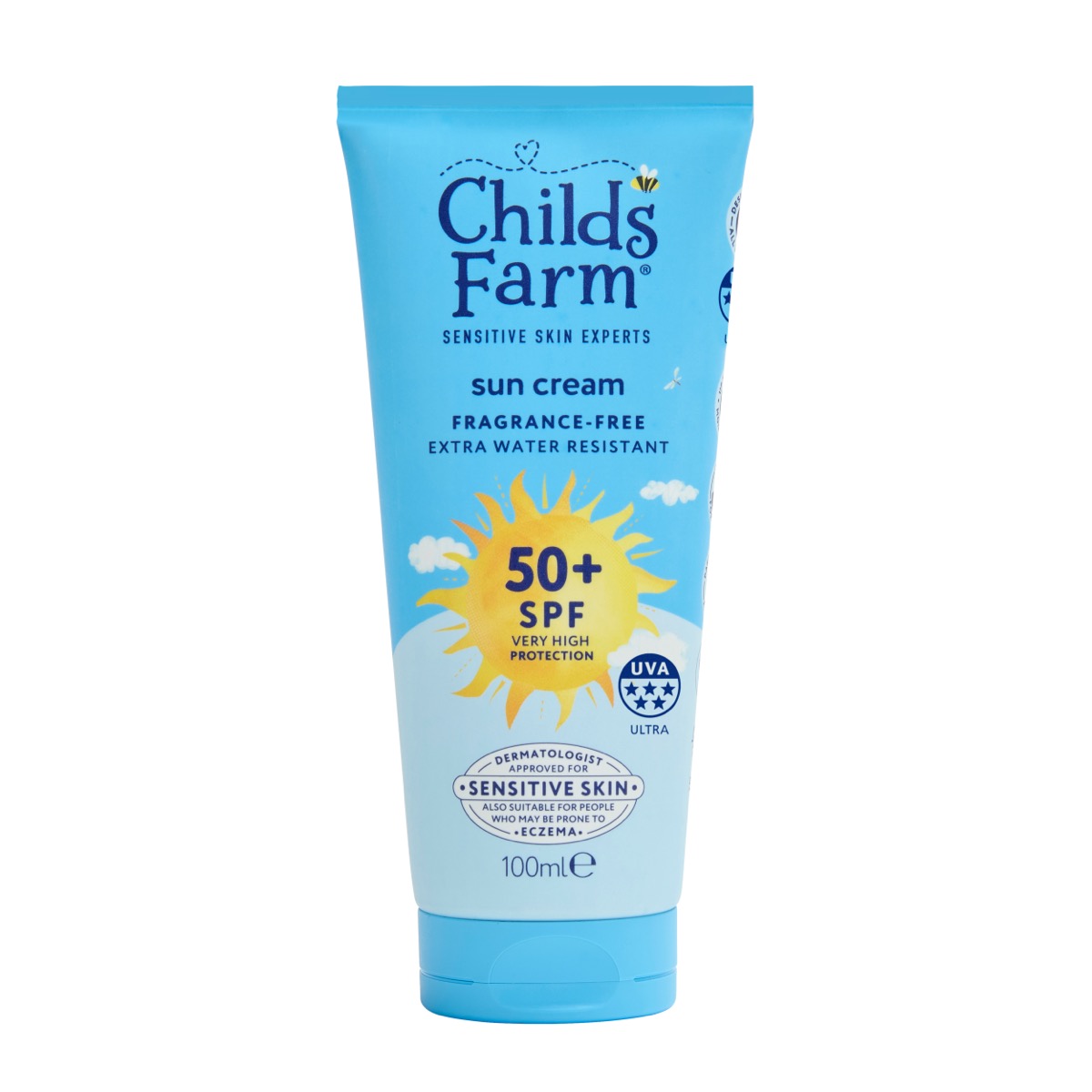
Childs Farm's SPF 50+ Sun Cream (100ml, roughly £12) is a fragrance-free, dermatologically tested lotion suitable from birth, and its main advantage is price: at around £12 it's one of the cheapest SPF50+ options on the UK high street, which matters because sun cream only works if you reapply it generously and often, and an expensive bottle tends to get rationed. The trade-off is that it's a lotion rather than a spray, so it needs a proper two-hand rub-in on a moving baby.
Green People's Organic Children Sun Cream SPF 30 (150ml, around £30) uses a certified-organic, fragrance-free formula with non-nano mineral filters, aimed at parents who want to minimise synthetic ingredients or whose baby has reactive skin. It costs roughly double per ml, and while SPF 30 meets the NHS's minimum threshold, it gives less margin above that minimum than Childs Farm's SPF 50+, and mineral filters can leave a visible white cast. Pick Childs Farm if you want maximum protection at minimum cost to reapply freely; pick Green People if avoiding synthetic filters is the priority regardless of price.
UPF clothing: the neck flap hat, the rash vest and the UV swimsuit
JoJo Maman Bébé's Flap Sun Hat (UPF 50, around £14) is a legionnaire-style hat with a fabric flap covering the neck and ears — the area a plain bucket hat leaves exposed, and a common sunburn spot for babies facing forward in a carrier or pushchair. It's sized from 0–6 months through to 4–6 years, so the same style can be rebought a size up each summer. The compromise is a chin tie some babies won't tolerate, and a determined toddler can still pull it off regardless of the flap.
Splash About's Premium Long Sleeve Rash Vest (UPF 50+, around £18) is a zip-front swim top that covers the torso and arms so cream never has to be reapplied there mid-swim. Unlike sun cream, it doesn't wear off, sweat off or get missed in a rushed reapplication — but it only protects the skin it covers, so hands, legs and face still need cream. Sizing starts at 1–2 years, so it suits toddlers rather than very young babies.
Konfidence's Splashy Swimsuit (UPF 50+, around £25, sizes 3–24 months) goes further: a fleece-lined, e-Flex (recycled-plastic neoprene alternative) suit that covers most of the torso and upper legs, not just a rash-vest strip, and keeps a baby warmer in UK sea and unheated-pool water — which matters for sun exposure because a warmer baby stays in the water, and therefore in the sun, for longer. It costs more than a basic two-piece UV set and can feel too warm for a heated indoor pool or a hot-country holiday.
Pram parasols: shade before any of the above
Hauck's Universal Baby Pram Parasol (SPF 50+ canopy, around £13) clamps onto almost any round or oval pushchair tube rather than a specific brand's fitting, which matters given how often families change pushchairs between the newborn and toddler stages — see our guide to choosing a pushchair travel system if you're still deciding on one. Against a full wraparound pram cover, the parasol is easier to angle as the sun moves and works for both a lie-flat carrycot and an upright toddler seat, but it leaves the pushchair's outer edges unshaded and the clamp can work loose over a long or bumpy walk, so it's worth an occasional check rather than fit-and-forget.
How to combine them by age and outing
| Situation | What actually helps |
|---|---|
| Under 6 months, out and about | Shade first — pram parasol or a covered pushchair — the NHS advises keeping this age group out of direct sunlight rather than relying on cream |
| Pram walks, carrier trips | UPF neck-flap hat plus cream on hands and face |
| Pool or beach, toddler+ | UV rash vest or fleece-lined swimsuit plus cream on face, hands and legs |
| Any outing, any age | Reapply cream generously after swimming, sweating or towelling dry, regardless of “water resistant” claims on the label |
None of these products is a substitute for the others — a hat doesn't replace cream on the face, and cream doesn't replace shade for a very young baby. For the wider hot-weather picture, including overheating risks, our sun safety for babies guide covers the NHS advice in full.
Sun cream application mistakes worth avoiding
The NHS recommends applying sunscreen twice before you actually go outside — once around 30 minutes beforehand, so it has time to bind to the skin, and again just before you leave the house. It's a small detail that's easy to skip in the rush to get a baby out of the door, but it's the difference between cream that's actually working and cream that's still sitting on the surface. After that, the reapply-every-2-hours rule applies regardless of SPF number: a higher SPF doesn't buy you a longer gap between applications, it buys you a wider margin if you miss one.
A second common mistake is treating “water resistant” as if it means waterproof. The NHS is clear that sunscreen should be reapplied straight after swimming, sweating or towel-drying, even on products labelled water resistant, because water genuinely washes it off — the cooling effect of water or a breeze can also mask the early signs of sunburn, which is part of why reapplying on a fixed schedule matters more than waiting until skin looks pink. And when a pram or pushchair is parked in the sun, the NHS specifically warns against draping a blanket or muslin over the hood to create extra shade, since it can trap heat and raise the risk of overheating — a clip-on parasol like Hauck's is the safer way to add shade without blocking airflow.
Building a suncare routine, not just a shopping list
For most families, the practical answer isn't one product from this list, it's two or three used together depending on the outing. A parasol clamped to the pushchair covers the everyday pram walk. A neck-flap hat and cream cover the hands, face and neck on top of that. For pool or beach days once a baby is old enough for the sizing, a UV swimsuit or rash vest cuts down how much bare skin needs cream at all, which matters most on a squirming toddler who won't sit still for a reapplication. None of it needs to be expensive — the cheapest items on this list, the parasol and the Childs Farm cream, cover the two situations (everyday shade and everyday cream) that come up most often, and the pricier pieces are worth adding only once you know you need them for a specific trip.
Mentioned in this guide
Frequently asked questions
What SPF should I use on a baby's sun cream?+
For babies 6 months and older, the NHS recommends sunscreen with at least SPF 30 and a minimum 4-star UVA rating, reapplied every 2 hours and straight after swimming, sweating or towelling dry.
Can babies under 6 months wear sun cream?+
Sunscreen isn't recommended for babies under 6 months at all — the NHS advises keeping this age group out of direct sunlight entirely, using shade, a pram parasol and covering clothing instead.
Do UV swimsuits and rash vests actually replace sun cream?+
Only on the skin they cover. A UPF rash vest or swimsuit protects the torso and arms without needing reapplication, but hands, legs and the face are still exposed and need cream — most parents use both together rather than one instead of the other.
Sources
Related guides
Baby Cold: Blocked Nose Relief & When to Worry (NHS)
Most baby colds clear up within 2 weeks, according to the NHS. Here is what the NHS advises for a blocked nose, which medicines to avoid, how long a cough lasts and the signs that mean calling NHS 111 or 999.
Best Double and Twin Buggies Compared (UK Guide)
Six double and twin buggies compared on price, width and newborn options: Ickle Bubba Venus Prime, Mountain Buggy Duet, Out n About Nipper V6, Baby Jogger City Select 2, iCandy Peach 7 and Bugaboo Donkey 6 Twin, plus RoSPA buggy safety checks.
Plush Toy Safety UK: Caterpillar Report and What to Check
On 13 October 2026 OPSS published a high-risk report on InteDesign plush caterpillar toys sold via Amazon: a torn seam exposing filling, a detaching loop and a too-thin plastic bag. Here is what it found and a 60-second check for any plush toy.

Written by
Sepehr
Software engineer, soon-to-be dad, uncle to four — the tech-obsessed half of the two of us testing this stuff. Currently building this site with my wife, ahead of our own baby arriving.