Do Stretch Mark Creams Actually Work in Pregnancy?
Products like Mama Mio's Tummy Rub Butter are a pregnancy staple, but the evidence that any cream or oil prevents stretch marks is genuinely weak. Here's what actually helps, and what a rub does for you anyway.
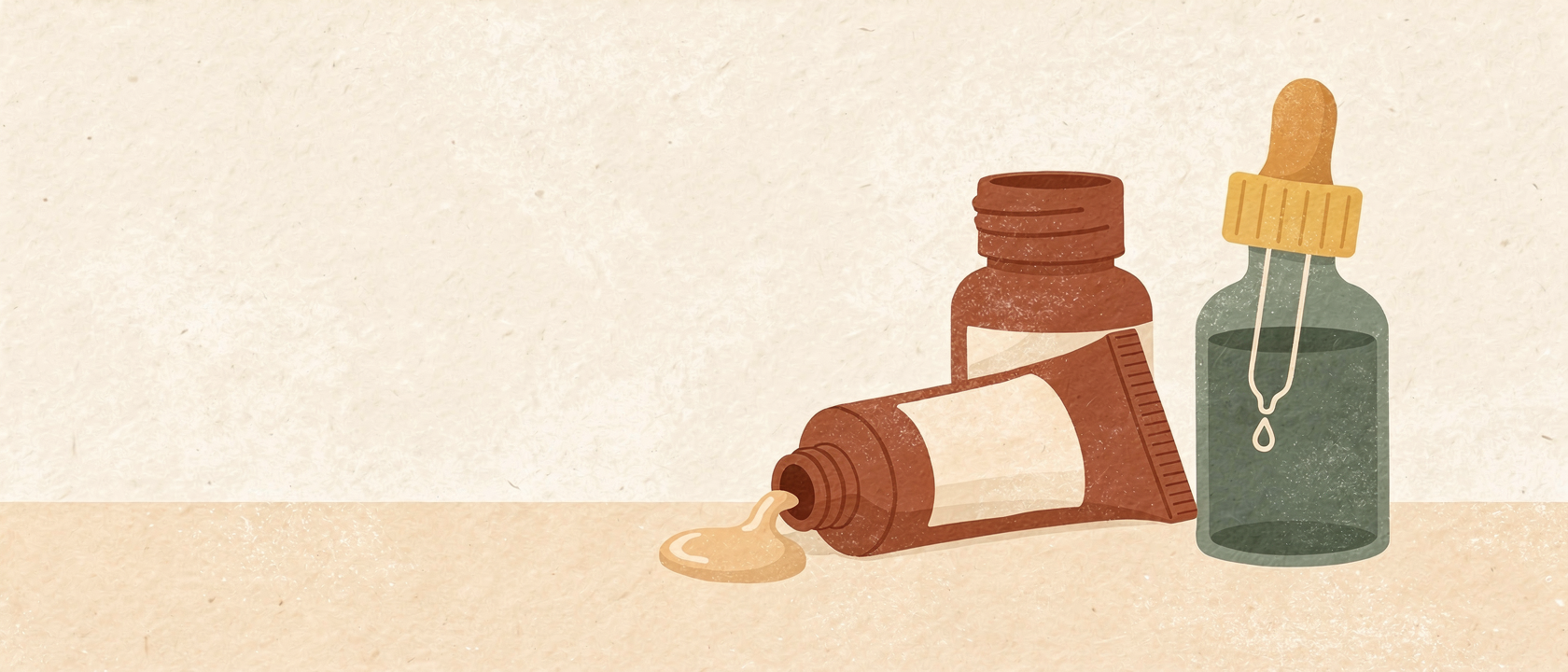
Whether you'll get stretch marks in pregnancy comes down mostly to genetics, how fast your skin stretches, and hormonal changes — not which cream you buy. The NHS is direct about this: there's limited evidence that any oil or cream prevents stretch marks from appearing, and a 2020 Cochrane review of six trials in 800 women found no high-quality evidence that any topical preparation — including those containing vitamin E, hyaluronic acid, olive oil or cocoa butter — prevents stretch marks in pregnancy. That includes popular products like Mama Mio's Tummy Rub Butter, Bio-Oil, and most of the pregnancy skincare aisle.
That doesn't mean these products are pointless — it means they're not doing what the marketing implies.
What the evidence actually shows
The NHS states plainly that some creams claim to fade stretch marks once they've appeared, but there is no reliable evidence that they work either. The Cochrane review's authors were similarly blunt: current trials are too small and inconsistent to prove any cream, oil or butter changes whether stretch marks form. A couple of ingredients — Centella asiatica extract and hyaluronic acid — have shown a modest signal in some smaller studies, and there's a weak association between regular massage (with almond oil, in one trial) and fewer, less severe marks. But none of this rises to the level of “this product prevents stretch marks” — it's a much softer, more provisional finding than the packaging usually suggests.
In practice, whether your skin marks is driven far more by things you can't control: your skin's natural elasticity, how much and how quickly your bump grows, your genetics (if your mother had stretch marks, you're statistically more likely to as well), and hormonal changes that affect collagen. Maintaining a steady, healthy rate of weight gain is the one factor the NHS specifically points to as within your control.
So what's the point of a tummy rub cream, then?
Even without prevention evidence, there's a real reason these products remain a pregnancy staple: comfort. Stretching skin is often genuinely itchy and tight, especially in the third trimester, and a rich, occlusive cream or oil applied regularly can meaningfully ease that itch and dryness — which is a legitimate benefit on its own, separate from whether it stops marks forming.
There's also a plausible (if not rigorously proven) case for the massage itself rather than the product. Daily massage increases local blood flow and gives you a moment to physically check in with your changing bump — some women find this the most valuable part of the routine, regardless of which butter or oil they're using.
If you already enjoy the ritual and the itch relief, there's no reason to stop. Just don't expect a £20 tub to guarantee mark-free skin — plenty of people who use these products every day still get stretch marks, and plenty who use nothing at all don't.
Does a more expensive cream work any better?
Since none of the trials in the Cochrane review found strong evidence for any specific product, there's no research basis for a premium price justifying better prevention results over a budget alternative — the honest answer is that price mostly buys texture, scent and packaging, not proven efficacy. If you're choosing between a supermarket cocoa butter and a branded tummy rub butter purely on the promise of fewer stretch marks, that promise isn't backed by evidence either way. It's reasonable to pick whichever one you actually enjoy using enough to apply daily, since consistency of use — and the massage that comes with it — matters more than which specific product is in the tub.
Building a routine that's easy to stick to
If you do want to use a cream or oil, the practical detail that matters most is consistency, not brand: applying it once won't do much for comfort or the massage benefit either. A short daily routine — a couple of minutes massaging cream or oil into your bump, hips and chest after a shower, while skin is still slightly damp so the product absorbs more easily — is more realistic to keep up through a full pregnancy than an elaborate multi-step routine you're likely to abandon by the second trimester.
Ingredients worth avoiding in pregnancy skincare
This applies more broadly than stretch mark products, but it's worth checking any pregnancy skincare routine, including facial products, against these: the UK Teratology Information Service (UKTIS) states that retinoid creams and gels should not be used in pregnancy. This is a precaution — higher, oral doses of retinoids are established causes of miscarriage and birth defects, and while only small amounts are absorbed through skin, absorption varies between individuals and can't be reliably predicted, so it's avoided altogether rather than risk-assessed case by case.
High-strength, leave-on salicylic acid products (such as peel pads or treatment serums, generally above around 2% concentration) are also usually avoided during pregnancy as a precaution; low-concentration, quick-rinse cleansers are considered lower risk by most guidance, but if you're unsure about a specific product, check with your GP, midwife or pharmacist rather than guessing from the ingredient list. Standard stretch-mark and body-moisturiser ingredients — cocoa butter, shea butter, vitamin E, hyaluronic acid, almond oil — don't carry this concern.
A sensible way to think about it
If you like using a tummy butter or oil, keep doing it for the itch relief and the massage — that's a real, evidence-backed comfort benefit, distinct from prevention. If you're buying one purely because you've been told it'll stop stretch marks, it's worth knowing upfront that the evidence doesn't support that claim, from any brand, at any price point. Whether you get stretch marks has much more to do with genetics and how your particular pregnancy unfolds than with what's in the tub.
If skin comfort is the main goal, it's worth thinking about this alongside the rest of your maternity wardrobe choices — loose, breathable fabric over a well-moisturised bump does a lot of the same comfort work as a cream on its own, and it's a similar low-cost, low-risk way to manage third-trimester physical comfort more broadly, alongside things like a well-chosen pregnancy pillow. One thing worth flagging to your midwife rather than treating as ordinary stretch-mark itch: itching that's severe, widespread, or affects your palms and soles specifically can occasionally signal a liver condition unrelated to skin-stretching, so it's always worth a quick check.
Frequently asked questions
Does Mama Mio Tummy Rub Butter actually prevent stretch marks?+
There's no good evidence that it does, and this applies to stretch mark creams generally, not just this brand. A 2020 Cochrane review of six trials found no high-quality evidence that any topical cream or oil prevents stretch marks in pregnancy. It may still help with itching and dryness from stretching skin, which is a real benefit, just not the same as prevention.
What actually causes stretch marks in pregnancy?+
Mainly genetics, how quickly your skin stretches, and hormonal changes affecting collagen — factors largely outside your control. The NHS notes that maintaining a steady, healthy rate of weight gain is the main thing within your control.
Is it safe to use retinol or retinoid creams while pregnant?+
No — the UK Teratology Information Service advises that retinoid creams and gels should not be used in pregnancy, as a precaution, since absorption through skin varies between individuals and higher oral doses of retinoids are a known cause of birth defects.
Do any ingredients have real evidence behind them for stretch marks?+
Some smaller studies show a modest signal for Centella asiatica extract, hyaluronic acid, and regular massage with almond oil, but none of this is strong enough to call any product proven prevention — it's a softer finding than most product marketing suggests.
Sources
Related guides
Black Friday Car Seat and Pram Deals UK: Safety Checks
Black Friday 2026 is Friday 27 November. Before you buy a discounted car seat or pram, check the approval label, search the model for recalls, make sure it fits your car, and buy new from a named seller. Here is the full checklist.
Black Friday Baby Deals UK 2026: What to Buy and Skip
Black Friday 2026 is Friday 27 November. A safety-led guide to baby deals in the UK: which newborn essentials are worth buying in the sales, which products to skip whatever the discount, and how to check a deal is genuine.
Best Maternity & Nursing Bras Compared (UK Guide)
Six maternity and nursing bras compared for UK parents, from a £20 two-pack to extended sizing up to a K cup, with NHS advice on tight bras and what to buy before and after birth.

Written by
Sepehr
Software engineer, soon-to-be dad, uncle to four — the tech-obsessed half of the two of us testing this stuff. Currently building this site with my wife, ahead of our own baby arriving.