Best Potties and Toilet Trainer Seats Compared (UK)
The NHS says families can use a potty or a toilet with a training seat, step and rails. This guide compares two home potties, two travel potties and two toilet trainer seats on price, design and best use, so you can choose the right setup.
The best potty setup for most families is one sturdy potty for home plus a compact travel potty for days out, adding a toilet trainer seat and step stool once your toddler is comfortable on the potty. The NHS says families can choose either a potty or a toilet with a training seat, step and rails, so there is no single right answer. This guide compares the six potties and toilet trainer seats we list, on price, design and what each one is actually for.
What the NHS says about potties and toilet seats
The NHS says almost all children can be potty trained between 18 months and 2 and a half years old, and that you can choose between a potty bowl or a toilet with a training seat, step and rails. Using the toilet from the start means there is no switch from potty to toilet later. If you go the toilet route, the NHS says the step should be high enough that your child's knees are higher than their hips when they sit. Not sure your child is ready yet? Our guide to the signs your toddler is ready for potty training covers the signals to look for before you buy anything.
The NHS also suggests clothes that are easy to pull up and down, such as joggers or leggings, rather than buttons, zips or tight skirts, and recommends starting handwashing as part of the toileting routine. For days out it suggests plenty of changes of clothes, a travel potty if you have one, and an absorbent seat liner if you drive.
Potties and toilet trainer seats compared
| Product | Price | Type | Best for |
|---|---|---|---|
| Ingenuity My Size Potty Pro | £24.99 | Home potty, topper converts to trainer seat | One purchase that carries through both stages |
| Fisher-Price Learn-to-Flush Potty | Around £18 | Home potty with flush sound and light | Toddlers who like sound and light feedback |
| My Carry Potty | £24.99 | Sealed travel potty | Days out and long car journeys |
| Potette Plus 2-in-1 | About £20 | Folding travel potty and trainer seat | Travel plus a toilet seat in one product |
| Angelcare Soft Touch Toilet Trainer Seat | Around £15 | Padded toilet trainer seat | Toddlers already confident on a potty |
| Bemata Toilet Training Seat with Step Stool | Around £22 for the set | Trainer seat plus folding step stool | Solving seat size and toilet height together |
Prices are as listed on our product pages and can change. None of these has been hands-on tested by us, so everything below comes from manufacturer specs and our research.
Home potties
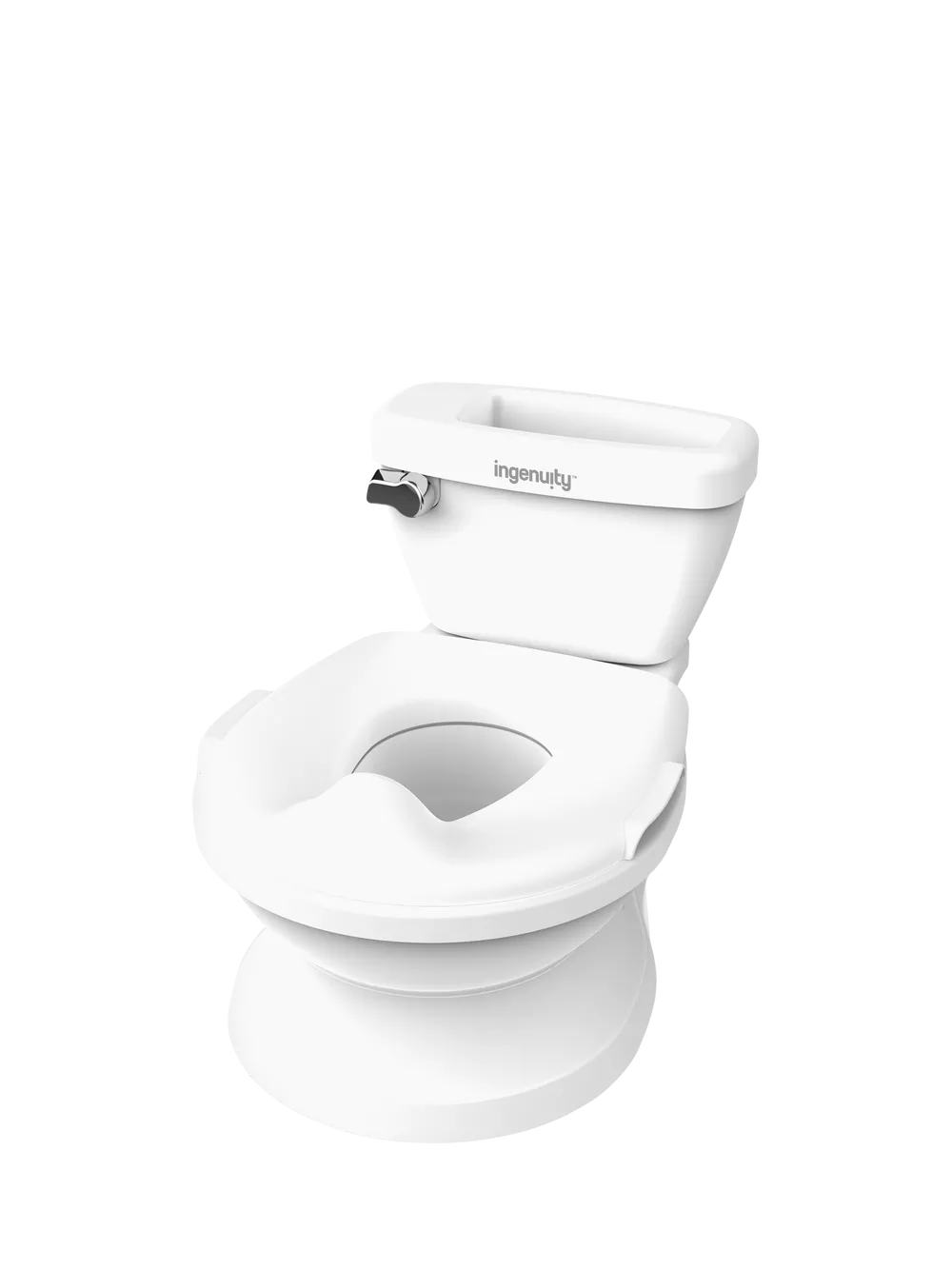
Ingenuity My Size Potty Pro (£24.99)
This is a realistic-looking potty with a flush sound effect and a splash guard. Its main selling point is the removable topper: once your toddler has mastered the potty, the topper lifts off and sits on a standard toilet seat as a trainer seat, so you get two stages from one purchase. The trade-offs are that it is bulky, it is not designed to be carried around, and the sound effects run on batteries that will need replacing.
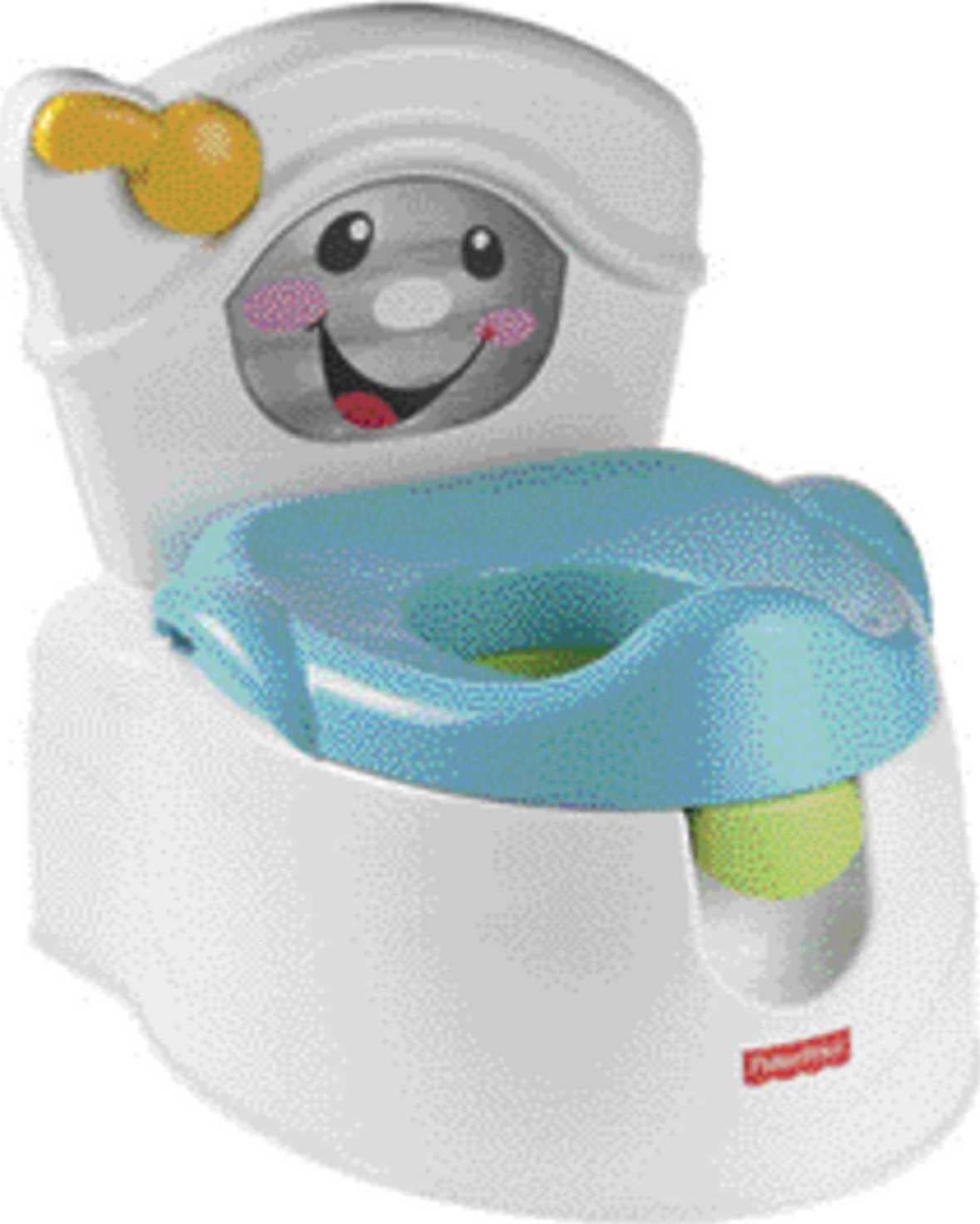
Fisher-Price Learn-to-Flush Potty (around £18)
A stationary potty with a button that plays a flushing sound and lights up, aimed at linking potty use with the eventual move to a real toilet. It has a wide, stable base and a removable splash guard for boys. It needs batteries, is not portable, and does not convert into a toilet seat, so it is a home base rather than an all-in-one. It is the cheaper option if you want the sound-and-light feedback without the topper.
Travel potties
My Carry Potty (£24.99)
A compact potty with a sealing lid, specced by the manufacturer as leak- and odour-proof. It is the one to buy if you are potty training while regularly out of the house, because it makes days out and car journeys realistic. It is smaller and less comfortable than a home potty, and it does not convert into a toilet seat, so its usefulness ends once your toddler is toilet trained. It works best as a companion to a home potty.
Potette Plus 2-in-1 (about £20)
A foldable travel potty that also unfolds onto a full-size toilet as a trainer seat, so one product does both jobs. It folds into an included bag (specced at 25.5 x 13 x 7cm folded) and comes with three disposable liners. The liners are an ongoing cost, and the folding design feels less sturdy underfoot than a solid floor potty, which may matter for bigger toddlers. Best for families training around travel, days out or time at grandparents' houses.
Toilet trainer seats
Angelcare Soft Touch Toilet Trainer Seat (around £15)
A padded, contoured seat with side handles that fits over a standard toilet seat. It suits a child who is already using a potty and is ready for the big toilet, rather than being a starting point. It has to be lifted on and off unless you leave it attached, and it does not come with a step stool.
Bemata Toilet Training Seat with Step Stool (around £22)
A padded trainer seat and a matching folding step stool sold together. It tackles both problems at once: the seat opening is too big and the toilet is too high to climb onto. It is better value than buying the two separately if you do not already own a stool, though the individual pieces feel less premium than dedicated products. The stool surface can get slippery when wet, so supervise your child on it. Remember the NHS advice that the step should be high enough for your child's knees to sit higher than their hips.
What to check before you buy
A few practical points apply whichever product you pick. First, decide where the potty will live: keeping it somewhere your toddler can reach easily makes it far more likely to get used. Second, check the fit of any trainer seat against your own toilet, since the Angelcare and Bemata are specced to fit most standard round and oval seats rather than all of them. Third, think about cleaning: a potty needs emptying into the toilet and cleaning after every use according to the NHS, so a simple shape with few crevices is easier to live with than one covered in moulded detail. Finally, budget for extras that are not in the table, such as spare pants, reusable training pants and a washable car seat liner, all of which appear on the NHS list of things to have ready.
Which setup should you choose?
- Starting with a potty at home: choose the Ingenuity My Size Potty Pro if you want the topper to double as a toilet seat later, or the Fisher-Price if you want a cheaper potty with sound and light feedback.
- Going straight to the toilet: the NHS lists a training seat, step and rails as a valid option. The Bemata set covers the seat and step together.
- Out and about a lot: add a My Carry Potty, or pick the Potette Plus if you would like one product that also works as a toilet seat.
- Already confident on the potty: the Angelcare Soft Touch is the cheapest way to make the move to the toilet.
Whichever you choose, the equipment is the easy part. Accidents are a normal part of learning according to the NHS, so keep spare clothes to hand, praise your child for trying whether or not anything happens, and build handwashing into the routine from the start. If your toddler is also nearing the end of the cot years, see our guide to moving from cot to toddler bed, since many families tackle both changes around the same age.
Mentioned in this guide
Frequently asked questions
What is the best potty for potty training in the UK?+
There is no single best one. The NHS says families can use a potty or a toilet with a training seat, step and rails. For most, a sturdy home potty such as the Ingenuity My Size Potty Pro plus a travel potty for outings covers the bases.
Do I need a potty or can I go straight to the toilet?+
Either works. The NHS says some families start with a toilet and a training seat, step and rails, which avoids switching from a potty later. If you choose this, the step should be high enough that your child's knees are higher than their hips when seated.
Is a travel potty worth buying?+
If you are out of the house a lot during training, yes. The NHS suggests taking a travel potty if you have one, plus spare clothes and an absorbent seat liner if you drive. A sealed potty like My Carry Potty or a 2-in-1 like Potette Plus fits that job.
What age can you start potty training?+
The NHS says almost all children can be potty trained between 18 months and 2 and a half years old. Readiness matters more than age, so look for the signs before buying equipment.
Sources
Related guides

Halloween Masks for Toddlers: OPSS Alien Mask Warning
OPSS has listed a soft plastic alien mask sold via Amazon as a serious asphyxiation risk because its ventilation area was well below the minimum for enclosed masks. Here's what the report says, how to check any Halloween mask for toddlers, and safer alternatives.
Best Toddler Car Seats Compared (UK Guide)
Six toddler car seats compared on price, fitting and rear-facing range: Joie Every Stage, Axkid Movekid, BeSafe Stretch², Cybex Pallas G3, Britax Advansafix Pro and Maxi-Cosi Titan Pro2. Includes gov.uk and RoSPA car seat guidance.
Toddler Ghost Costume Safety Report: Cord and Bag Risk
OPSS published a serious-risk safety report on 13 October 2026 for a toddler ghost costume sold via Amazon: its cord is too long for young children and its plastic bag is too thin. Here's what the report says, how to check yours and what to look for in any Halloween costume.

Written by
Sepehr
Software engineer, soon-to-be dad, uncle to four — the tech-obsessed half of the two of us testing this stuff. Currently building this site with my wife, ahead of our own baby arriving.